Bakers short on time
If you need to soften butter at short notice, it should give when pressed while still holding its shape. King Arthur Baking describes this consistency as easy to indent, but with some resistance.


To soften butter without melting it, you need to be able to select a low microwave setting and check it as it warms. A solo microwave is sufficient if you use a separate oven for baking; a combination model is worth considering if you regularly bake in it too, and its capacity, your tins and the available space are all suitable. Convection or grill functions won’t automatically soften butter more evenly.
If you need to soften butter at short notice, it should give when pressed while still holding its shape. King Arthur Baking describes this consistency as easy to indent, but with some resistance.
If you want to prepare butter and bake treats for the coming working days in the same appliance, assess the microwave and oven functions separately.
If you want to combine several cooking methods in one spot, check the external dimensions, usable internal space and the size of your existing baking tins.
A good fit if: you want to warm butter gently and use an existing oven for baking.
The trade-off: baking and browning functions aren’t included in the microwave.
A good fit if: you want to prepare butter and do some small-scale baking in the same appliance, and your tins fit inside.
The trade-off: the microwave controls matter when softening butter, while the convection function matters for baking. Internal dimensions and accessories vary by model.
A good fit if: you’ll regularly use the additional cooking methods for purposes beyond softening butter.
The trade-off: extra programmes don’t guarantee a particular result when softening butter. Check the programme requirements and accessories.
| What you need | What to check before buying | Who it matters most to |
|---|---|---|
| Warm butter gently | Low microwave settings and easy-to-use controls; check the butter as it warms. | If I need butter to be soft but not melted for my dough, I want to be able to control how it warms. Around 36% of consumers put butter consistency first. |
| Bake in the same appliance | Convection temperatures and suitable baking tins; give extra functions priority only if you’ll use them regularly. | If you want to bake lunchbox treats in a combination appliance, you’ll need a suitable oven function and tins that fit. Around 29% of consumers prioritise the baking function. |
| Space and baking tins | Compare external dimensions, usable internal space, door opening and installation requirements. | If space is tight, I want to know in advance whether the appliance and my existing tins will fit in my kitchen. Around 21% of consumers put available space and dimensions first. |
| Everyday use and cookware | Check how easy it is to use for reheating; make sure your cookware is suitable for each cooking mode and its temperature limits. | If you mainly want a straightforward way to reheat food, everyday ease of use and suitable cookware matter more than extra baking options. Around 14% of consumers prioritise everyday use. |
A high maximum power rating doesn’t tell you how gently the appliance can warm small portions. If your recipe needs soft rather than melted butter, consistency is what matters.
Check which low power settings are available and how easy the controls are to use. Keep an eye on the butter as it warms rather than relying on the wattage alone.
Microwave, grill and convection are different cooking modes, and the features and usable internal space vary by model.
Check the convection function, cavity dimensions and permitted accessories against your baking tins and planned recipes.
If the appliance doesn’t have the cooking mode you need or room for your existing tins, you may need an additional solution.
Being suitable for microwave use doesn’t automatically mean a container is safe to use with the grill or convection function. The Verbraucherzentrale (German consumer advice centre) warns that foods containing fat can get hotter in some spots than expected.
Check the markings and the temperature and wattage limits for the specific container. Follow the manufacturer’s guidance for each cooking mode.
The NN-CD58RS combines microwave, convection, grill and Air Fry functions for households looking for low microwave settings and a baking mode.
The MCG 25 Ceramic chef is designed for households looking for a combination appliance with a flat glass base and convection function.
The MC32DB7746KDE1 combines microwave, grill and convection functions with additional programmes.
The MW 7982 CrispyWave is a 25-l combination appliance for households looking to use convection, grill and Air Fry as well as microwave cooking.
The freestanding MW 3391 SX combines Rapid Convection with automatic recipes for households planning to use several cooking methods.
These combination microwaves offer microwave settings for preparing butter and a convection function for baking in the same appliance. Check the specific features and the dimensions of your tins before choosing.
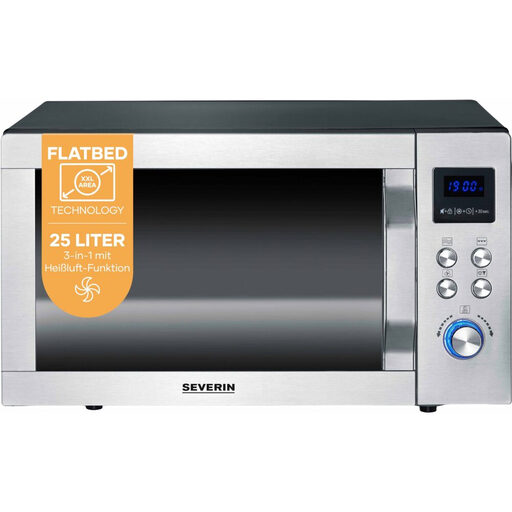 No image available
A good choice if you want to warm butter using adjustable settings and bake in the same appliance.
25 l capacity, 10 microwave power levels, convection up to 230 °C and a supplied baking tray. Check that your tins will fit in the usable cavity.
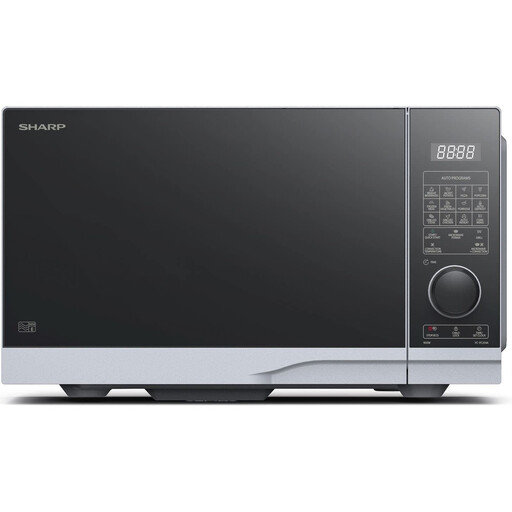 No image available
An option if you’re looking for adjustable microwave settings and a baking function in the same appliance.
25 l capacity, 10 microwave power levels, convection heating and a supplied baking tray. Check that your baking tins fit the internal dimensions.
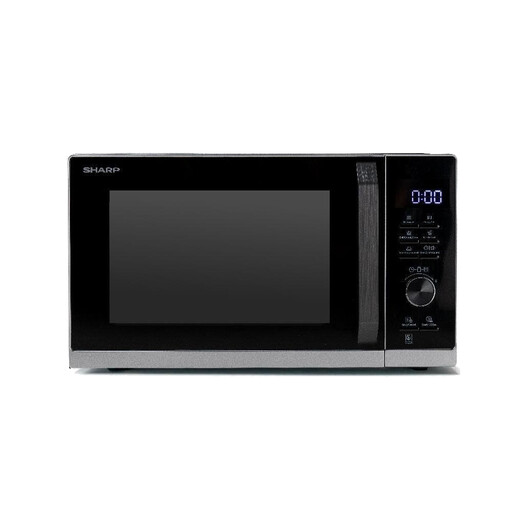 No image available
A good choice if you want to use microwave settings and convection heating for different tasks in one appliance.
27 l capacity, 6 microwave power levels, 900 W microwave power, 1,000 W grill power and 2,100 W convection power. The power ratings alone don’t guarantee a particular baking result.
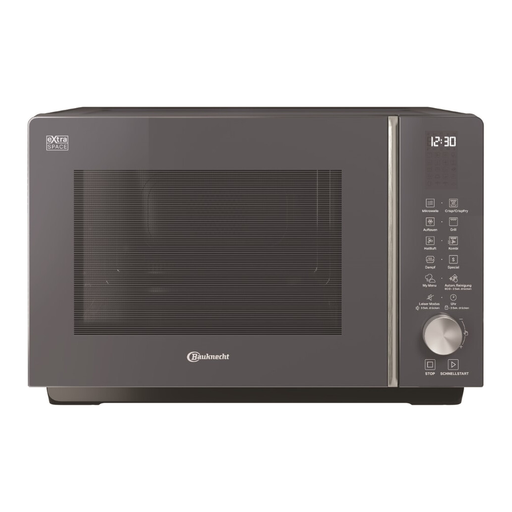 No image available
An option if you want a dedicated butter-softening programme and a convection function in one appliance.
25 l capacity, flat base with no turntable, 6 microwave power levels and convection. The programme is a feature, not a guarantee of a particular result.
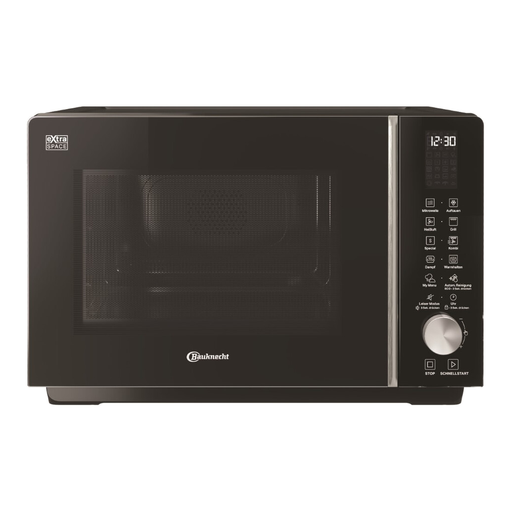 No image available
A good choice if you want a dedicated butter-softening programme and convection baking in the same appliance.
25 l capacity, flat base with no turntable, 6 microwave power levels and convection. Check that your tins will fit on the flat base.
You should be able to press a finger into it and feel some resistance; it shouldn’t feel greasy or liquid. King Arthur Baking describes this texture based on a particular baking test, but the timings can’t be applied universally to different portions and appliances.
No. Check the markings and the temperature and wattage limits for the specific container. The Verbraucherzentrale (German consumer advice centre) warns that foods containing fat can get hotter in some spots than expected. And being suitable for microwave use doesn’t mean a container is suitable for the grill or convection function.
Have the appliance checked if the door is visibly altered or worn from intensive use. The Bundesamt für Strahlenschutz (German Federal Office for Radiation Protection) recommends having any faults repaired by the service team where necessary, or replacing the appliance.
Your statutory rights are against the seller; a manufacturer’s warranty is separate and voluntary. If there’s a fault, the first step may be repair or replacement, as explained by the Verbraucherzentrale (German consumer advice centre).
As part of its market surveillance, the Bundesnetzagentur (German Federal Network Agency) checks matters including CE marking, manufacturer details, German-language instructions and declarations of conformity. Electrical waste is collected separately; the Umweltbundesamt (German Environment Agency) lists local collection points and certain retailers as return options. This general guidance doesn’t confirm that any individual model complies with the requirements.