
Lieferung heute & morgen

Qualitätsgarantie

Willkommens-Angebote freischalten: KOSTENLOSE Lieferung | Bis zu 80 % RABATT | Kostenlose 30-Tage-JoyPlus-Testphase
App herunterladen
Choosing a new microwave can quickly become overwhelming. The market is flooded with models boasting numerous features and a wide range of designs. However, not every advertised feature is practical for every household. Often, these superfluous extras or inadequate planning lead to buyer's remorse. Before you make a decision, it's helpful to know the most common pitfalls to find an appliance that truly fits your needs.
This guide focuses on the objective criteria that are crucial for your selection, helping you distinguish marketing promises from practical benefits.
Many buyers regret their decision because they fall for typical marketing claims or overlook fundamental aspects. Here are three common mistakes:
To avoid buyer's remorse, you should focus on a few crucial technical features. These determine whether a microwave is right for your household.
The first and most important decision concerns the appliance's design type.
The size of the interior cavity, specified in litres, determines what you can prepare in the microwave.
Honestly consider which functions you truly need in your daily routine.
Based on these objective criteria, we have identified a few models that represent a considered choice for specific user groups.
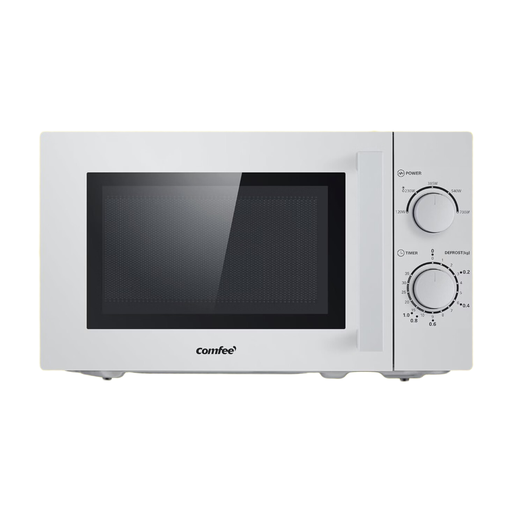
Why it's a match: Ideal for students, singles, or as a second appliance in the office. It focuses on the essentials: quick heating and defrosting in a compact design that fits on any countertop.
This appliance avoids "feature overload." It offers 5 clear power levels and a defrost function without complex menus or unused grill and convection features.
Operation via two mechanical dials is intuitive and durable. The 20-litre cavity volume is optimised for standard plates and small bowls.
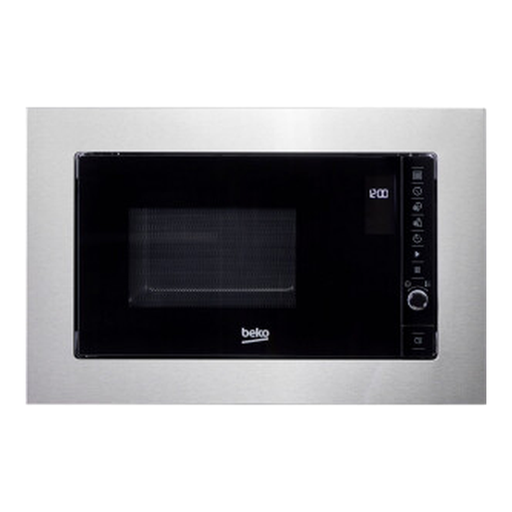
Why it's a match: Perfect for homeowners planning or renovating a new kitchen who want an appliance that integrates seamlessly into the cabinetry.
This model is a dedicated built-in microwave. It avoids the safety and aesthetic problems that arise from placing a freestanding microwave inside a cabinet.
Offers a solid range of functions for daily use with 800 watts of power, 8 auto-programmes, and digital controls, all in an elegant stainless steel finish.

Why it's a match: For anyone who wants to do more than just reheat. This combination microwave is a multi-talented appliance for baking, grilling, and steaming, and can replace the main oven for many dishes.
This appliance is a deliberate choice for versatility. It avoids the trap of paying for unused functions by targeting an audience that actively seeks the added value of a grill, convection, and steam cooking.
The ExtraSpace technology (microwave without a turntable) provides a flatbed interior that makes the entire 25-litre cavity usable—ideal for rectangular casserole dishes and easy cleaning.
We have compiled a complete, up-to-date list of products that fully meet these strict selection criteria and UK safety regulations.
1. How many watts should a good microwave have? For home use, appliances with a power output between 700 and 900 watts are generally perfectly adequate. Higher wattage shortens cooking time, but the number of power levels is more crucial for a good result. Multiple levels allow for more precise control, which is especially important for gentle defrosting or cooking delicate foods.
2. Can you install a freestanding microwave in a kitchen cabinet? This is strongly discouraged. Freestanding microwaves require adequate air circulation on the sides, back, and top to cool the electronics. Placing such an appliance in a tight cabinet without ventilation slots can lead to overheating, performance loss, and in the worst-case scenario, a fire. For installation, exclusively use a designated built-in microwave.
3. What is the advantage of a microwave without a turntable? A microwave without a turntable (flatbed microwave) offers two key advantages. First, the entire cavity floor can be used, allowing for the use of large, rectangular casserole dishes or multiple small containers at once. Second, cleaning is significantly easier, as there are no edges or moving parts in the way, and the smooth floor can be simply wiped clean.