
Lieferung heute & morgen

Qualitätsgarantie

Willkommens-Angebote freischalten: KOSTENLOSE Lieferung | Bis zu 80 % RABATT | Kostenlose 30-Tage-JoyPlus-Testphase
App herunterladen
Choosing a new microwave can be more complex than it first appears. The market is flooded with models advertising numerous features and technical specs. But not every advertised feature proves useful in daily life. In fact, the most tempting marketing promises often lead to buyer's remorse. This guide will help you identify the crucial criteria and find an appliance that truly meets your needs.
Before you decide on a model, you should be aware of the typical pitfalls that often lead to disappointment.
To make an informed decision, you should focus on the following three core aspects.
The specified volume in litres is a starting point, but the actual usable space is more critical.
Modern microwaves can do more than just reheat. Consider which functions are relevant to your daily routine.
The microwave should blend harmoniously into your kitchen.
Here are some models tailored to different user profiles.
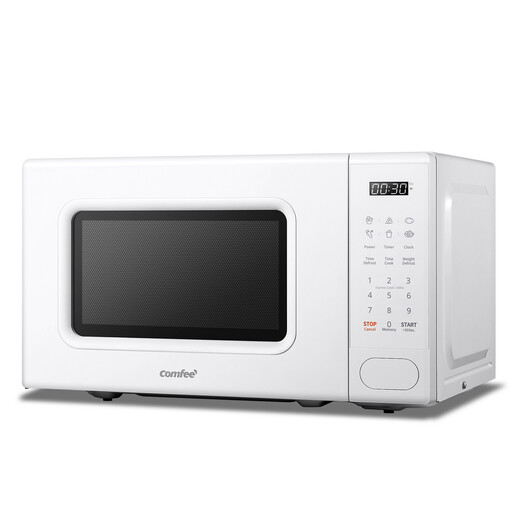
Why it's a good fit: Ideal for students or individuals looking for a compact and straightforward appliance for quick heating and defrosting. Operation is very simple thanks to digital controls and preset programmes.
This appliance is an honest solo microwave. It doesn't promise over-the-top combination features and focuses on its core task. The compact 20-litre capacity is appropriate and transparent for its intended purpose.
Six automatic programmes and an express cook function significantly simplify daily use. Operation is intuitive, even without studying the manual.

Why it's a good fit: A versatile combination microwave for families who want to do more than just reheat. It offers grill, convection, and steam functions and is also suitable for large, rectangular casserole dishes thanks to its flatbed design.
This model solves the capacity trap with its "ExtraSpace" technology, a flatbed microwave. The entire 25-litre floor is usable. The combination functions are solidly powered at 1300W (Grill) and 1500W (Convection).
The combination of a flatbed cavity and a Crisp function offers great flexibility and delivers crispy results often unachievable with standard combination models.

Why it's a good fit: For users who value aesthetics, modern technology, and seamless kitchen integration. This Samsung microwave combines a large 32-litre capacity with advanced cooking functions and smart controls.
This premium appliance avoids the all-in-one illusion by offering specialised, high-performance functions like AirFry and Healthy Steam. It's designed as a fully-fledged secondary cooking appliance, not a compromise.
The Smart Control function via an app allows for remote operation and monitoring. The Bespoke design in "Clean Navy" adds a modern accent that goes beyond pure functionality.
We've compiled a complete, up-to-date list of products that fully meet these strict selection criteria and all relevant safety standards.
For basic tasks like heating and defrosting, 700 to 800 watts is perfectly adequate. Models with 900 to 1000 watts will heat food faster. For a combination microwave, the power of the additional functions is just as important: a grill function should have at least 1000 watts and a convection function over 1200 watts to achieve effective results. However, even heat distribution is more important than the raw wattage number.
This is often problematic. A square plate can hit the corners of the cavity, blocking the turntable's rotation. This results in the food being heated on only one side. To avoid this, measure the diagonal of the cavity and compare it to the diagonal of your dish. A safer and more flexible solution is a flatbed microwave, where the entire floor space can be used.
Both are features of combination appliances but serve different purposes.