Taking a large casserole dish
If you want to reheat as much casserole as possible in one dish, compare the dish’s dimensions with the cooking cavity and, if applicable, the turntable.


A standard solo microwave should be enough for individual portions. For a larger casserole dish, check its dimensions against the usable space inside the microwave. You only need a grill or convection function if you want to brown the top after reheating. Whichever microwave you choose, and whether or not you want a crispy top, make sure the chicken casserole is heated through evenly.
If you want to reheat as much casserole as possible in one dish, compare the dish’s dimensions with the cooking cavity and, if applicable, the turntable.
If you want a browned top after heating the casserole through, you’ll need the right cooking function – capacity in litres alone isn’t enough.
If you can divide the casserole between smaller microwave-safe dishes, a basic solo microwave may be all you need to reheat it.
Suitable if: you’re transferring portions to another dish, or your dish fits on the turntable and can rotate freely.
Consider: a solo microwave doesn’t include grilling or baking functions, and a turntable can limit the size of large or rectangular dishes.
Suitable if: you want to use a fairly rectangular dish and have checked that it fits on the usable floor space.
Consider: a flat base doesn’t guarantee that every dish will fit or that the casserole will heat through evenly.
Suitable if: you’d also like to brown the top after heating the casserole through.
Consider: extra cooking functions aren’t needed just to reheat food. Make sure your dish and any accessories are suitable for the function you choose.
Measure your dish, including its handles, and compare the dimensions with those of the specific microwave. For chicken casserole, the German Federal Institute for Risk Assessment recommends heating food to at least 70 °C for 2 minutes throughout.
| What you need | What to check when buying | Who it matters most to |
|---|---|---|
| Heat food through evenly | Adjustable power and time; divide large portions if needed, stir, and check the coldest spots. | I want to avoid cold spots in my chicken casserole and be able to check its temperature. Around 33% of consumers put thorough, checkable heating first. |
| Fit the dish and portion size | Compare the internal dimensions, height, turntable diameter or usable floor space, and external dimensions. | If I want to reheat as much casserole as possible in my existing dish, the dish and microwave need to fit together. Around 27% of consumers prioritise space for their dish and portion size. |
| Brown the top | Check for a grill or convection function and make sure your dish or accessories are approved for use with it. | I want a browned top after reheating, without mistaking it for proof that the inside is hot enough. Around 20% of consumers prioritise a crispy top. |
| Easy to use and position | Compare the external dimensions, required clearance, door opening, and controls for setting the power and time. | If I’m reheating individual portions and space is limited, clear settings and a microwave that fits are important to me. Around 20% of consumers prioritise ease of use and a space-saving position. |
The stated capacity of the cooking cavity alone won’t tell you whether a rectangular dish will fit or rotate freely on a turntable.
Measure your dish, including handles and any lid. Compare its width, depth and height with the internal dimensions and – if there’s a turntable – check its diameter and that the dish can rotate freely.
If your dish doesn’t fit, you may need to divide the casserole between smaller dishes or reheat it in batches.
Grill and convection functions can brown the top, but they don’t show whether the chicken casserole is hot enough at its coldest points.
Heat the casserole through fully, whether or not you want a crispy top. The German Federal Institute for Risk Assessment recommends at least 70 °C for 2 minutes throughout. Check the temperature in several places.
According to the German Federal Institute for Risk Assessment, inadequate temperatures during transport and storage can encourage harmful bacteria to multiply.
Plan to keep the casserole chilled throughout transport or maintain it at a genuinely hot temperature. Reheating it later doesn’t make up for unsafe storage.
If you need to store it for longer, suitable equipment for chilling or keeping food hot may be required.
The MF 259 SG is an example of a combination microwave with a flat base and extra cooking functions.
The R-200WW is a compact solo microwave with mechanical controls.
The MW 7770 is a straightforward solo option for portions if you don’t need a grill.
The MS23B3515AS/EN is a 23-l solo microwave with preset programmes.
The microwaves below include solo and combination models for heating portions or a whole casserole, as well as options with extra functions for browning.
 No image available
An option if you want to reheat the casserole and then brown the top.
The product title lists a glass base without a turntable, a grill and convection, as well as a large usable area for square dishes.
Check your dish’s dimensions and make sure it’s suitable for the function you want to use.
 No image available
An option for individual portions if you’re looking for a solo microwave with adjustable power levels.
19 l, 700 W and six power levels; according to the product description, the turntable has a diameter of 24,5 cm.
Check that your dish fits on the turntable and can rotate freely.
 No image available
An option for individual portions if you’d like to set the power and time using rotary controls.
20 l, 700 W and six power levels; the product description lists a turntable and two rotary controls.
Compare your dish’s dimensions with the cooking cavity and turntable of the specific model.
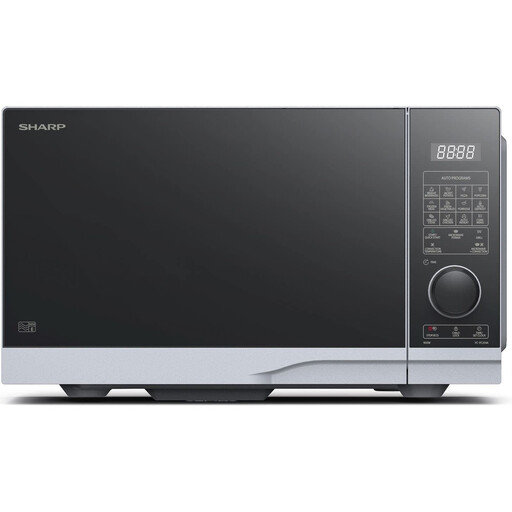 No image available
An option if you want to reheat the casserole and then use a browning function.
The product title lists a combination microwave with grill and convection. The product description also lists reheating as a suitable use.
Check your dish’s dimensions, the available space and that the dish is suitable for the function you want to use.
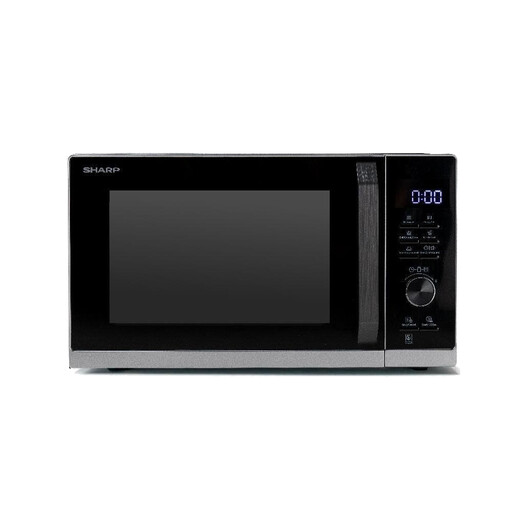 No image available
An option if you want to use a grill or convection function as well as the microwave.
27 l; the product title lists 900 W, a 1000-W grill and 2100-W convection heating. The product description lists a turntable with a diameter of 288 mm.
Check that your dish fits on the turntable and is suitable for the function you want to use.
Keep the perishable casserole chilled during transport or make sure it stays genuinely hot. The German Federal Institute for Risk Assessment recommends storing food at 2 °C to no more than 7 °C, or keeping it hot at a minimum of 60 °C throughout. Before serving, reheated food should reach at least 70 °C for 2 minutes throughout.
Only if the container is suitable for microwave use and for the power and temperature you’ve selected. Follow the container manufacturer’s instructions and stop using damaged dishes. Being labelled microwave-safe doesn’t automatically mean a container is suitable for the grill or convection function too.
Compare the microwave’s external dimensions with the space available and the door opening, and follow the positioning and cleaning instructions in the manual for your specific model. A removable turntable and a flat base may need different cleaning routines; neither is automatically more hygienic.
When you buy from a trader, EU consumer rules give you at least two years of legal protection from the seller from the date you receive the goods. Any additional manufacturer’s guarantee is separate; check its terms and conditions carefully.