People with limited space
If you have a small kitchen, the casing, door movement and installation guidance for the specific model all need to suit your available space. The stated capacity alone also won’t tell you whether your bowl will fit.


For heating portions of fruit compote, a freestanding solo microwave is a good starting point, provided the casing, door opening and available space suit your small kitchen. Power settings make it easier to heat food in short bursts; the consumer advice centre recommends stirring it in between. A grill or convection function is mainly worth considering if you also want to brown or bake food in the appliance.
If you have a small kitchen, the casing, door movement and installation guidance for the specific model all need to suit your available space. The stated capacity alone also won’t tell you whether your bowl will fit.
For a small amount, choosing the right power setting, using short intervals and selecting a suitable container are all important.
If you also use wide or square containers, compare how well they actually fit in a model with a turntable and one with a flat base.
First, check that the appliance and your bowl will fit in the space you have in mind. Then choose the controls and extra features that suit the way you actually cook.
A good fit if: you usually heat individual portions and your round bowl fits on the turntable.
Consider: The turntable limits the shape of containers you can use, so check its diameter and the interior dimensions.
A good fit if: you often use square or wider containers and a flat surface is important to you.
Consider: You’ll still need to check whether your bowl fits the specific model’s interior.
A good fit if: you regularly want to brown or bake food as well as reheat it.
Consider: These extra features aren’t necessary for compote alone. Also bear in mind the space required and the range of controls.
| Buying criterion | What to check | Who it matters most to |
|---|---|---|
| Space and bowl | Check the external dimensions, door movement and installation guidance against the space available; for your bowl, check the turntable diameter or usable flat surface. | If my worktop space is limited, the appliance and bowl both need to fit. Around 36% of consumers give top priority to space requirements and container fit. |
| Controlled heating | Check the power settings and timer; heat the compote in short bursts, stirring in between. | If I want to heat a portion of compote carefully, I want to be able to adjust the power and time and stir it in between. Around 36% of consumers prioritise controlled heating. |
| Ease of use | Look at the controls on the specific model and consider whether you’ll actually use any extra programmes day to day. | If I mainly want to reheat food without fuss, the settings and operation should be straightforward. Around 21% of consumers prioritise a practical, simple purchase. |
| Additional cooking functions | Decide in advance whether you’ll regularly want to grill or bake as well, and whether the appliance and its functions suit the space you have. | If I want to use the appliance for other cooking methods or container shapes, this extra flexibility matters. Around 7% of consumers put versatility first. |
Appliances with the same capacity can have different external dimensions and usable interior space. Whether your bowl fits on the turntable or flat surface is therefore something to check separately.
Measure your bowl and the space you have in mind. Also take the door opening and the installation guidance for the specific model into account.
A high wattage alone won’t ensure that compote heats evenly throughout; it may be very hot when you take it out.
Use a suitable power setting and short intervals. Stir in between and check the temperature carefully.
These settings are designed for additional cooking methods and aren’t needed to heat compote.
Choose extra features only if you regularly want to brown or bake food, and if the range of functions suits your space and needs.
The MW 7790 is a freestanding solo model with a 20 l capacity, 700 W of power and a rotary control.
The FFL023MS2 is a freestanding solo microwave with a 20 l capacity, programmes and a favourites button.
The range includes the M20 electronic, with a turntable, and the M 20 Cube Ceramic, with a flat base.
The NN-ST21 is a range of 20 l solo models with touch controls and a Quick-30 function.
This selection includes solo microwaves for heating portions; compare the external dimensions and interior with your kitchen and your bowl.
 No image available
Six power settings and a timer give you options for heating individual portions.
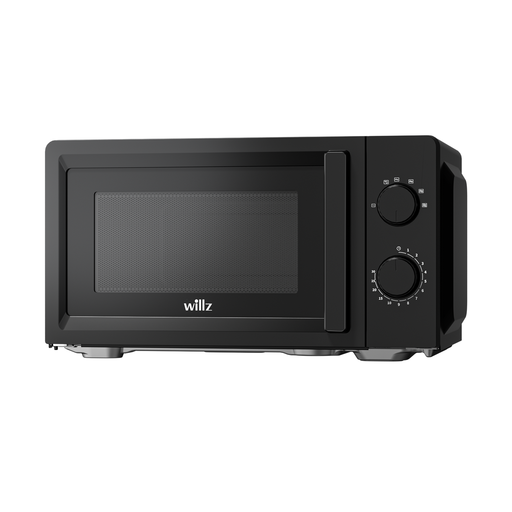 No image available
The product title describes this as a compact microwave for small spaces; check the external dimensions against the space you have available.
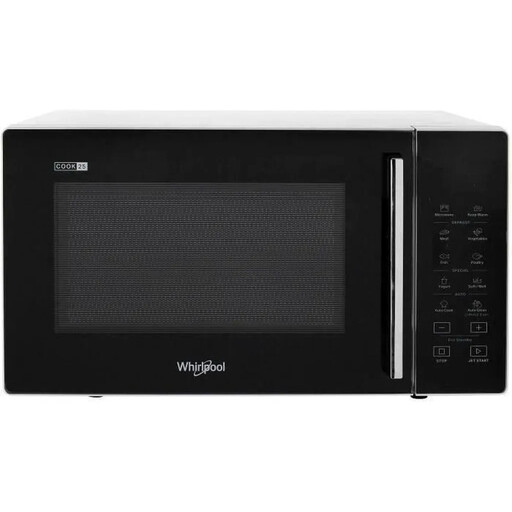 No image available
Compare the stated external dimensions carefully, especially if worktop space is limited, and check that the turntable suits your bowl.
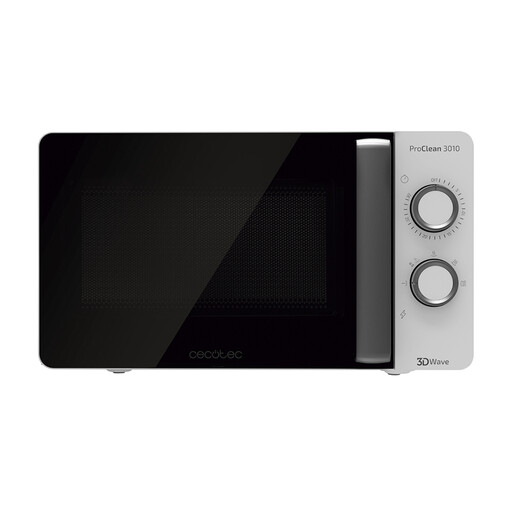 No image available
Six power settings let you choose the right level for heating individual portions.
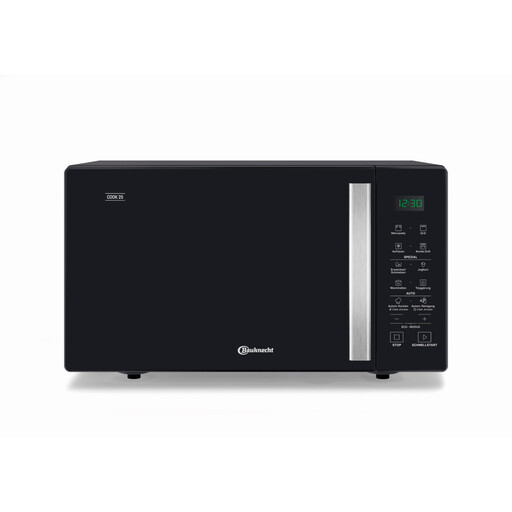 No image available
The Rapid-Start function and microwave power listed in the description are useful details for straightforward reheating.
Put the compote in a microwave-safe container and heat it in short bursts. Stir it in between and check the temperature carefully; compote can get very hot. The consumer advice centre recommends stirring to help distribute the heat more evenly.
No. You’ll also need to allow room for the door to open and follow the specific manufacturer’s installation and ventilation guidance. The casing dimensions alone don’t indicate the clearance required for every model.
Household appliances covered by the EU Low Voltage Directive, including equipment designed for 50–1,000 V AC, must meet the applicable EU requirements, including the required CE marking. The European Commission explains that the manufacturer is responsible for compliance; CE is not an independent quality or safety mark for an individual product listing.