Everyday portion warmers
If you’re reheating a single portion of leftover cooked carrots from the fridge, look for simple time and power controls, plus enough room for the dish you usually use.


For individual portions of properly refrigerated carrots, a straightforward solo microwave is usually all you need. Look for easy-to-adjust power and timing, and check that your dish will fit inside. If you freeze portions or use wide containers, a suitable defrost setting or the usable cooking area may also influence your choice. A microwave cannot make leftovers safe again if they have been stored for too long or incorrectly.
If you’re reheating a single portion of leftover cooked carrots from the fridge, look for simple time and power controls, plus enough room for the dish you usually use.
If you prepare carrots in advance and freeze portions for another day, an easy-to-use defrost setting can be helpful. Storage and thorough reheating are separate considerations.
If you use a wide or rectangular serving dish, check the usable cooking area rather than relying on the stated capacity alone. A flatbed design may be an alternative to a turntable.
Start by choosing controls that suit your usual portions, then check that your dish will fit. A defrost setting is most useful if you freeze portions of carrots.
| What you need | What to look for when buying | Who is it most relevant to? |
|---|---|---|
| Even heating | Check whether you can pause the heating process and adjust the time or power. Your dish should leave enough room for stirring. | When I heat carrot pieces, I want to be able to stir them and check for cooler spots. Around 36% of consumers put even, safe heating first. |
| Ease of use | Compare the time and power controls, along with the available power levels on the specific model. | For regular single portions, I want to set the time and power directly without having to work through unnecessary menus. Around 29% of consumers prioritise straightforward everyday controls. |
| Dish size and fit | Measure the dish you usually use and compare its dimensions with the interior and, if applicable, the turntable. | If my carrot dish is wide or rectangular, I want to be able to fit it inside without any difficulty. Around 21% of consumers pay particular attention to whether their dish will fit. |
| Defrosting portions | If you freeze carrots, check how the defrost controls work and whether your containers are suitable for defrosting and subsequent reheating. | For frozen portions prepared for the week, I need a suitable defrost setting and will plan for the reheating that follows. Around 14% of consumers put defrosting frozen portions first. |
The Too Good for the Bin! initiative recommends keeping cooked carrot dishes refrigerated in airtight packaging for two to three days. The German Federal Institute for Risk Assessment notes that the risk of microbial contamination increases the longer prepared food is stored.
Plan to eat refrigerated portions sooner and freeze any portions you’ll need later in good time.
Reheating alone cannot make up for longer storage in the fridge.
A capacity in litres doesn’t tell you whether a wide dish will fit or rotate freely on a turntable.
Compare the dimensions of your microwave-safe dish with the interior and, if applicable, the turntable of the specific model.
A programme alone doesn’t prove that the carrots have been heated sufficiently throughout.
Choose controls you can use confidently, and stir the portion while it’s heating.
For the LG MS2082H, LG’s German specifications list doesn’t mention a child lock, although a Joybuy product listing does.
If this feature matters to you, check the full model number and the manufacturer’s documentation before assuming it’s included.
Two solo models are worth considering for this use: the MW 7790 with dial controls and the MW 7761 with a flatbed design.
According to LG Germany, the MS2082H is a countertop solo microwave with two dials and a 20 l capacity.
According to the manufacturer, the M20 electronic combines manual controls with a display and cooking programmes.
A microwave comparison published by CHIP in collaboration with the F.A.Z. Kaufkompass includes a grill model and a model with an oven function.
The Joybuy products below include solo microwaves with manual or digital controls, as well as a model with a grill function. The right option for you will depend on factors such as the controls you prefer, the shape of your dish and whether you want extra features.
 No image available
An option if you’re looking for a manually operated solo microwave with a defrost function.
19 l, 700 W, six power levels, defrost function and turntable.
 No image available
An option if you want to compare models with several power levels and a defrost function for your portions.
20 l, 700 W, six power levels, 30-minute timer, defrost function and turntable.
Designed for freestanding use only; according to the product information, it isn’t suitable for built-in installation in a cupboard.
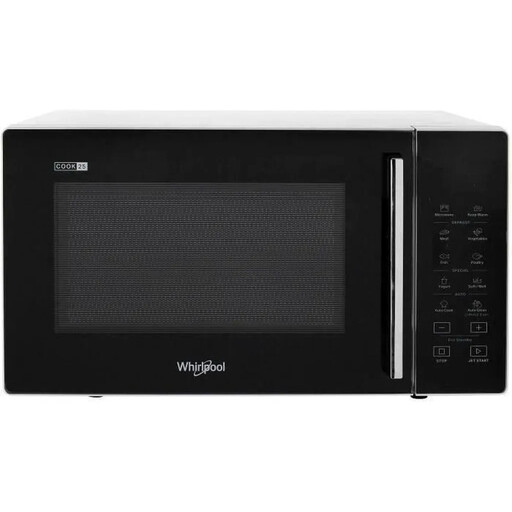 No image available
An option if you’re looking for a solo microwave with extra keep-warm and defrost functions.
25 l, 900 W, Jet Start, keep-warm and Auto-Clean functions, plus yoghurt and dough programmes.
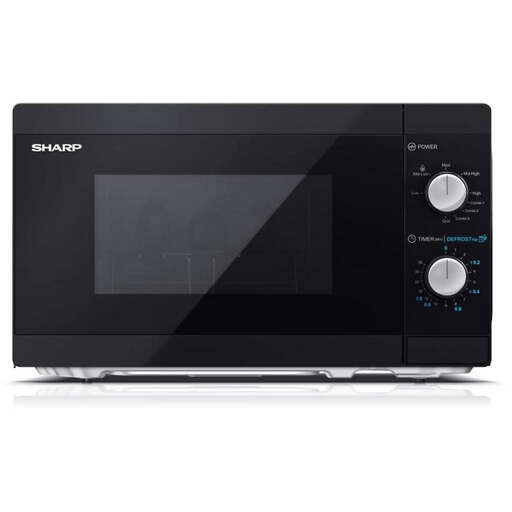 No image available
An option if you’d like to use a grill function as well as reheat food.
20 l, 800 W microwave power, 1,000 W grill power, 25.5 cm turntable and five power levels.
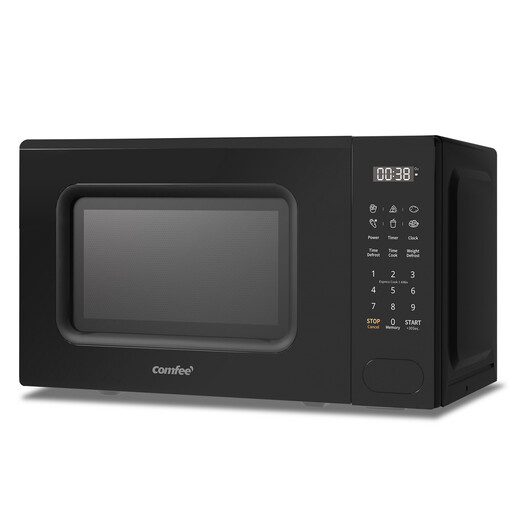 No image available
An option if you want to compare digital controls and several adjustable power levels.
20 l, 700 W, 11 power levels, six pre-set menus and defrosting by time or weight.
No, reheating alone isn’t enough. The Too Good for the Bin! initiative recommends keeping cooked carrot dishes refrigerated in airtight packaging for two to three days. If you’ll need portions later, freeze them in good time.
In its kitchen hygiene guidance from March 2026, the German Federal Institute for Risk Assessment recommends at least 70 °C for two minutes throughout. Stir the portion while it’s heating and, particularly if the pieces vary in size, check for cooler spots too. A pre-set cooking time doesn’t confirm the temperature.
Only if the instructions for that specific container say it’s suitable. For plastic containers, pay particular attention to the stated maximum temperature and wattage; don’t continue using damaged dishes. Glass or ceramic containers are suitable only if they’re explicitly labelled as microwave-safe.
Keep the ventilation openings clear and follow the positioning instructions in the appliance manual. If the door or shielding is visibly damaged, the German Federal Office for Radiation Protection recommends having the microwave checked by the service team and repaired or replaced if necessary.