Single portions of couscous for meal prep
If you want to reheat a chilled portion without any fuss, look for a suitable container and easy-to-adjust power and timer settings. Also make sure you store prepared food safely.


A straightforward solo microwave is usually enough to reheat chilled portions of couscous, as long as your microwave-safe container fits inside. A model without a turntable may be more practical for wide or rectangular containers. A grill or convection function is mainly useful if you want to cook other dishes too. No appliance feature can replace prompt cooling, hygienic storage and thorough, even heating.
If you want to reheat a chilled portion without any fuss, look for a suitable container and easy-to-adjust power and timer settings. Also make sure you store prepared food safely.
For wide or rectangular containers, check that they fit inside the microwave cavity, handles and all. A flat base may give you more flexibility when choosing a container shape, but the dimensions of the specific appliance are what matter.
If you want to use your microwave for grilling or baking too, extra functions may be important. Weigh them against the additional space they require and how you want to use the appliance day to day.
A good fit if: you usually reheat one portion in a container that fits on the turntable, handles and all.
Bear in mind: cavity capacity alone doesn’t tell you whether your container can rotate freely, and you won’t have grill or baking functions.
A good fit if: you use wide or rectangular containers and prefer a flat cooking surface.
Bear in mind: a flat base is no substitute for stirring or checking that the food is heated thoroughly all the way through.
A good fit if: you want to grill, brown or bake as well as reheat couscous.
Bear in mind: these extra functions aren’t needed just for reheating. Check the appliance’s size and whether your cookware is suitable for the cooking mode.
First check that your container fits and consider how you store your food. Then look at ease of use, and only after that consider extra functions. The figures below group consumers by their main priority when buying a microwave to reheat prepared couscous.
| Priority | What to look for when buying | Who is this especially important to? |
|---|---|---|
| Safe storage and thorough reheating | Adjustable power and timer; a container that’s easy to remove for stirring. | For consumers who want to store prepared portions safely and reheat them thoroughly, this is undoubtedly a key priority; they account for around 36% here. |
| Containers that fit your meal prep | Compare container dimensions with the cavity and, where applicable, the turntable; check that the material is suitable. | Anyone who wants to keep using their existing wide or rectangular containers will pay particular attention to fit. Consumers with this as their main priority account for around 29% here. |
| Easy to use and clean | Check the controls and whether you can pause the microwave to stir; look for easy-to-reach interior surfaces. | When reheating food regularly, I want to be able to set the power and time easily and clean the cavity without a fuss. Around 21% of consumers put this everyday convenience first. |
| Extra cooking functions | Choose only the grill or baking functions you need; check the external dimensions and whether your cookware is suitable. | If I want to grill or bake as well as cook couscous, extra functions may tip the balance. Around 14% of consumers here prioritise having more cooking options. |
The German Federal Institute for Risk Assessment (BfR) recommends heating food to at least 70 °C throughout for at least two minutes when reheating, and stirring it part-way through if using a microwave. Heating will not deactivate cereulide toxin that has already formed because of unsuitable storage.
First consider how the portion was chilled and how long it has been stored. Don’t try to make food that may have been stored unsafely safe by heating it for longer.
Cavity capacity alone won’t tell you whether a container with handles will fit or rotate freely on a turntable. Microwaves with turntables and models with flat bases offer different usable surfaces.
Measure your container and compare its dimensions with the specific cavity and, if there is one, the turntable.
Plastic containers can have different temperature and wattage limits. The Verbraucherzentrale (German Consumer Advice Centre) recommends following the manufacturer’s instructions and avoiding the highest power setting if no wattage limit is given.
Check the container’s labelling and instructions before using it to reheat food.
If your existing container isn’t suitable for the way you want to use it, you may need a different microwave-safe container.
Extra functions let you cook in other ways, but they won’t solve storage problems or remove the need to stir food while reheating.
Give a grill or convection function more weight only if you want to use it to cook other suitable dishes. Otherwise, start by comparing solo microwaves.
The FFL023MW0 is an example of a solo microwave with a turntable.
The MW 7761 is an example of a solo microwave with a flat base and two dials.
The M 20 Cube Ceramic is a solo microwave with a flat base; the MG 20 Cube Ceramic adds a grill.
The NN-SD37 is an example of a solo microwave with an inverter and several power levels.
The MG23T5018CW is an alternative with extra grill programmes.
The Joybuy models below include solo microwaves with turntables, as well as appliances with a grill or convection function. Before buying, check that your container will fit and consider which extra functions you’ll actually use.
 No image available
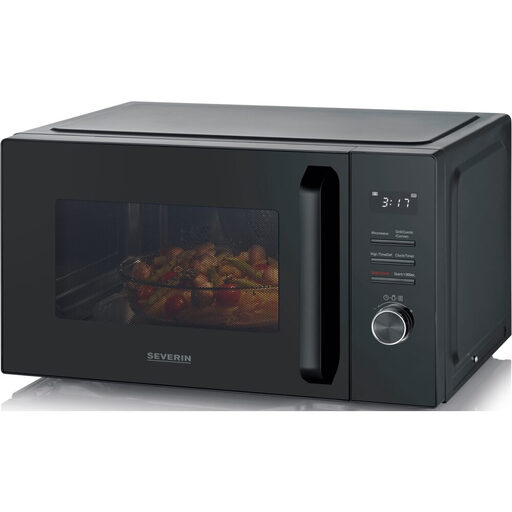
A good option if you want to grill or cook with convection as well as reheat food, and prefer a flat cooking surface.
The product name lists microwave, grill and convection functions, as well as a glass base without a turntable. Continue to stir food while reheating and check the temperature throughout; appliance functions are no substitute for safe storage.
 No image available
An option if you want to use grill and convection functions as well as reheat food.
The product name lists microwave, grill and convection functions. Stir food part-way through reheating and check that it is heated thoroughly all the way through; these functions are no substitute for safe storage.
 No image available
A good match if you’re mainly looking for a straightforward way to reheat food and your container fits on the turntable.
The product name lists a 19 l capacity, 700 W, six power levels, an inverter and a defrost function. Stir food part-way through reheating and check that it is heated thoroughly all the way through.
 No image available
A straightforward solo option for reheating a portion in a suitable container.
The product name lists a 20 l capacity, 700 W, six power levels, a 30-minute timer and a turntable. Pause to stir the food, then check the temperature throughout.
 No image available
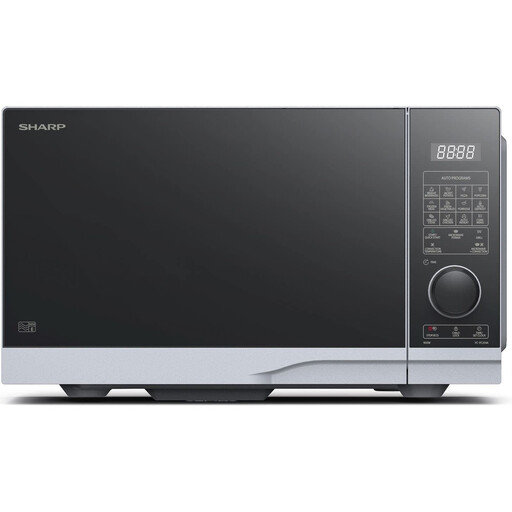
A good option if you want to grill or cook with convection as well as reheat food.
The product name lists a 25 l capacity, plus grill and convection functions; this version is silver. Check that your container is suitable for the selected cooking mode, and stir couscous part-way through reheating.
The BfR recommends heating food to at least 70 °C throughout for at least two minutes when reheating, and stirring it part-way through if using a microwave. This is a food hygiene recommendation, not an automatic programme setting; heating will not deactivate cereulide that has already formed because of improper storage.
The BfR recommends keeping leftovers in the fridge and eating them within two to three days. Divide larger quantities between several shallow containers to cool, then chill them to below +7 °C within a few hours. A microwave cannot make food that has been stored incorrectly safe again.
Only if that specific container is suitable for microwave use and for the temperature and power setting you’re using. The Verbraucherzentrale (German Consumer Advice Centre) recommends following the manufacturer’s limits and avoiding the highest power setting if no wattage limit is given.
The seller is generally responsible for the statutory warranty if a product is faulty. The Verbraucherzentrale (German Consumer Advice Centre) states that this lasts two years for new goods. It also describes a one-off extension of 12 months for sales contracts made from 31 July 2026, if you choose a repair when a fault occurs. A voluntary manufacturer’s guarantee has its own terms and conditions.
No. According to the German Federal Ministry for the Environment, old electrical appliances must not go in household rubbish; local collection points accept them. Retailers’ take-back obligations depend, among other things, on the size of the retailer and whether you’re buying a new appliance, so not every retailer has to accept every microwave without a new purchase.