People who take a pre-cooked lunch with them
If you take cooked couscous with you, you’ll need a reliable routine for keeping it chilled and reheating it, as well as a suitable microwave. The appliance’s power doesn’t replace safe food storage.


For individual portions of chilled couscous, a solo microwave is usually enough, as long as your lunchbox fits and you have enough room for the appliance. It should also be easy to adjust the time and power. You won’t need a grill or convection setting. However, stirring and heating food thoroughly are no substitute for proper refrigeration. According to the Federal Institute for Risk Assessment, reheating cannot reliably eliminate the risks posed by food that has been stored incorrectly.
If you take cooked couscous with you, you’ll need a reliable routine for keeping it chilled and reheating it, as well as a suitable microwave. The appliance’s power doesn’t replace safe food storage.
For a single portion, check both the outside dimensions to make sure the microwave fits in your chosen spot and the internal space available for your lunchbox and lid.
If you also want to grill or bake, weigh up the space and effort needed to use those functions against how often you’re likely to use them.
First, make sure you can store your food safely and that your lunchbox will fit. Then look for controllable heating and only the extra features you’ll actually use.
| What matters | What to check when buying | Who should consider this? |
|---|---|---|
| Safe storage | Plan how you’ll chill and transport your food separately from choosing an appliance. Check whether you can stir the portion in its container and monitor how it heats. | If I take cooked couscous with me, I plan for chilling and transport rather than relying on the microwave alone. Around 36% of consumers put safe storage and thorough reheating first. |
| Even heating | Look for easy-to-reach time and power controls, as well as enough room to stir the food. | If you want to heat a single chilled portion without leaving cold spots or overheating parts of it, you should be able to check on it as it heats. Around 29% of consumers prioritise even, controllable heating. |
| Lunchbox and available space | Measure your container, including the lid, and the space available for the microwave. Compare the internal dimensions or turntable size with the appliance’s external dimensions. | If my lunchbox needs to fit both in the kitchen and inside the microwave, I compare the actual measurements rather than looking at capacity alone. Around 21% of consumers put fit and space requirements first. |
| Controls and features | Check that the time and power are easy to set, and consider whether you’ll really use grill or baking functions. | If you mainly reheat lunch, you won’t want to pay for or operate features you don’t use day to day. Around 14% of consumers prioritise simple controls without unnecessary extras. |
The Federal Institute for Risk Assessment warns that bacteria can multiply and heat-stable toxins can form if food is stored incorrectly. Reheating cannot reliably make food that has been stored improperly safe to eat.
Plan how you’ll chill and transport your food first, then choose your appliance.
The stated capacity doesn’t tell you on its own whether your container will fit. The turntable, internal dimensions and container height all affect the fit.
Measure your lunchbox with the lid on and compare the dimensions with those of the specific appliance.
The Samsung MG23T5018CW tested by F.A.Z. Kaufkompass is not the same model as the Samsung MG23K3614AW/EG.
Check the full model number and version before applying a test result to a different appliance.
The MW 7790 solo microwave is an example of a model suited to individual portions and limited worktop space.
The NN-SD36 solo model is worth considering if you’d like a larger capacity and inverter power control.
The MG23T5018CW was reviewed as part of a microwave test; that doesn’t tell you how every model from the brand performs.
The MG 20 Ecostyle Ceramic has a flat base instead of a turntable, which may make it an interesting option for certain rectangular containers.
This selection features microwaves for heating individual chilled portions. The key things to consider are still the size of your lunchbox, the space you have available and the controls on each model.
 No image available
For individual chilled portions, with rotary controls for setting the time and power.
19 l capacity, 700 W, six power levels and a 24.5 cm turntable.
 No image available
For individual portions when you want to set the time and power using rotary controls.
20 l capacity, 700 W, six power levels, a 30-minute timer and a turntable.
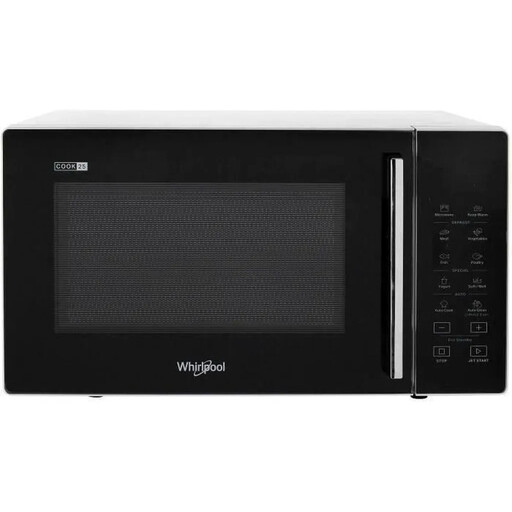 No image available
An option for chilled portions if you prefer touch controls.
25 l capacity, 900 W, seven power levels and a 27 cm turntable.
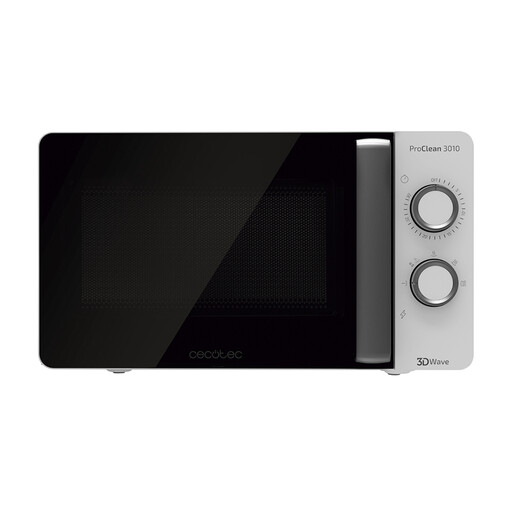 No image available
For chilled portions, with six power levels according to the product details.
20 l capacity and 700 W. When positioning the appliance, leave the stated clearances: 10 cm at the back, 5 cm at the sides and 20 cm above.
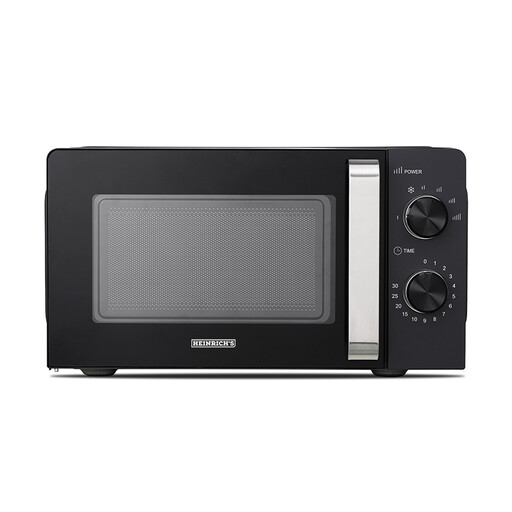 No image available
For individual portions if a timer is one of the controls you’re looking for.
20 l capacity and 700 W.
No, you shouldn’t rely on that. The Federal Institute for Risk Assessment warns that Bacillus cereus can multiply if food is stored incorrectly, and that the toxin cereulide is particularly heat-stable. Cool cooked food quickly and keep it properly chilled until you reheat it.
Use an undamaged container that’s suitable for microwave use and the power setting you’ve chosen. Stir the food and check that it has heated through. For reheating cooked food, the Federal Institute for Risk Assessment recommends reaching at least 70 °C throughout for at least two minutes; this assumes the food has been stored safely beforehand.
Not if you’re just reheating it. A solo microwave will do the job; a grill or convection function is only an extra reason to buy if you also want to use those cooking methods.
If you notice visible damage or wear on the door, the Federal Office for Radiation Protection recommends having the microwave checked by customer services and repaired or replaced if necessary.