Those reheating individual portions
You want to reheat cooked pasta in individual portions without fuss after your weekly shop. Look for easy-to-adjust power and time settings.


If you mainly reheat individual portions of cooked pasta, an easy-to-use solo microwave will usually do the job, as long as your usual bowls fit inside. A flatbed without a turntable can be handy for square containers. A grill or convection function is most useful if you also want to brown pasta bakes or cook other dishes. No appliance feature can make unsafe storage safe: keep leftovers chilled, stir them while reheating and heat them through completely.
You want to reheat cooked pasta in individual portions without fuss after your weekly shop. Look for easy-to-adjust power and time settings.
If your usual pasta containers are wide or square, the usable cooking space and whether your container fits matter more than the stated capacity alone.
If you want to brown pasta bakes or cook other dishes as well as reheat food, compare the extra features designed for those tasks.
A good fit if: You mainly reheat individual portions and your bowl, with its cover, fits on the turntable.
What to consider: These models have simpler features, and the turntable may limit the size of wide or square containers.
A good fit if: You often use square food containers or wider dishes.
What to consider: A flatbed can make it easier to position your dish, but it doesn’t tell you how large the appliance is on the outside.
A good fit if: You regularly want to brown pasta bakes or cook other dishes.
What to consider: You don’t need the extra cooking methods just to reheat food. Modes and compatible accessories vary by model.
| Priority | What to check when buying | Who it matters most to |
|---|---|---|
| Reheat portions easily | Compare the controls, adjustable power levels and the size of your usual bowl. | If I want to reheat individual portions of pasta without complicated settings, straightforward controls are important. Around 36% of consumers prioritise reheating portions with ease. |
| Store and reheat leftovers safely | Choose a container that lets you stir the pasta while it reheats; don’t rely on an appliance feature to compensate for how food is stored. | If I’m keeping cooked pasta for later, I want to store it chilled and heat it through evenly. Around 29% of consumers prioritise using up leftovers safely. |
| Find the right fit for your container and kitchen | Check your container against the cooking cavity, door opening or turntable, and leave the ventilation clearances specified in the manual at the intended location. | If my food container is square or worktop space is limited, both need to suit the appliance. Around 21% of consumers prioritise the fit of their container and the available space. |
| Make use of extra features | Check whether you really want to grill or bake, and which accessories are permitted in each mode. | If I want to brown pasta bakes or cook other dishes as well as reheat pasta, extra cooking methods may be useful. Around 14% of consumers prioritise these features. |
The cooking cavity’s capacity alone won’t tell you whether a wide or square container will fit through the door or sit on the turntable.
Measure the container you use most often and compare its dimensions with the interior, turntable and door opening of the specific model.
The German Federal Institute for Risk Assessment points out that certain bacterial toxins are not reliably deactivated by heating.
Cool cooked leftovers after preparation and keep them chilled until you reheat them. Stir the food while reheating and heat the portion through completely.
These features give you extra ways to cook, but they won’t make your container fit or ensure the pasta heats evenly.
Consider extra features if you regularly want to brown or bake food. If you simply want to reheat individual portions, start by comparing solo models.
The MW 7885 is an example of a compact solo microwave with rotary controls and a glass turntable.
The M 20 Cube Ceramic is an example of a solo microwave with a flat glass base instead of a turntable.
The NN-CD575M is an example of a combination microwave with grill and convection functions.
The Galiato 221090010 is an example of a small solo microwave with mechanical controls.
The range includes solo and combination microwaves for reheating cooked pasta, including models with a flat cooking cavity or a turntable.
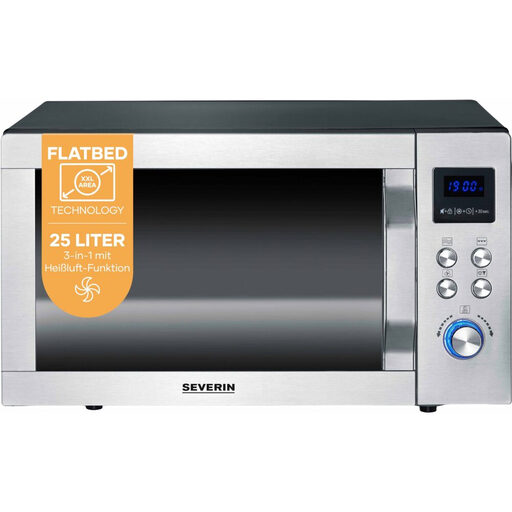 No image available
The flat glass base without a turntable can make it easier to position square or larger dishes.
The product title lists a grill and convection function as extra cooking methods. Don’t use metal containers or utensils in microwave mode.
 No image available
This solo model could suit individual portions if your bowl fits on the turntable.
The product title lists a 19 l capacity and 700 W. Check your container’s dimensions against the specifications for the exact model before buying.
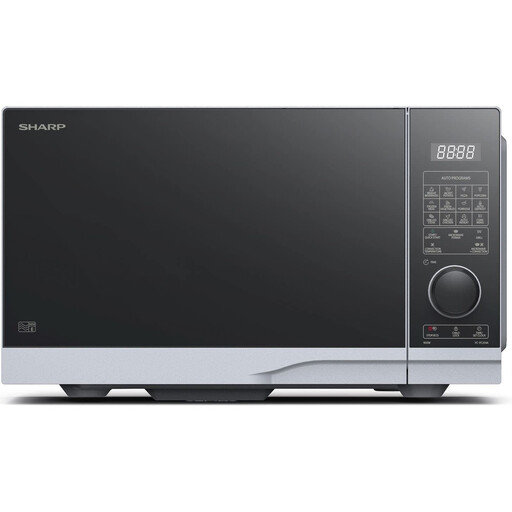 No image available
If you want to grill or bake as well as reheat food, this combination appliance gives you extra cooking methods.
The product title lists a 25 l capacity, plus grill and convection functions. Use only suitable containers in microwave mode; according to the product description, metal and containers with metallic decoration are not suitable.
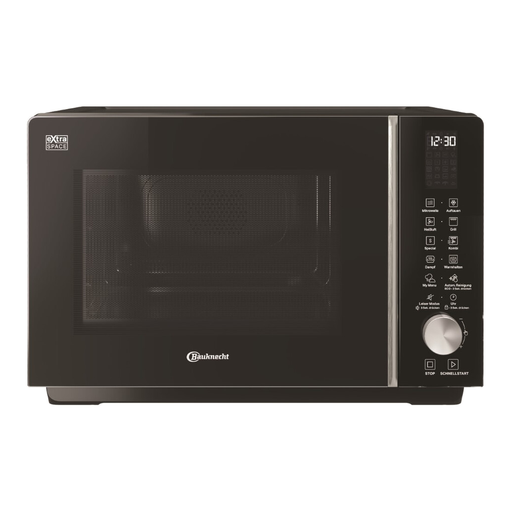 No image available
The flat cooking cavity without a turntable could be a good option if you often use square or wider dishes.
The product title lists a 25 l capacity, plus grill and convection functions. Don’t put metal objects in the cooking cavity when using microwave mode.
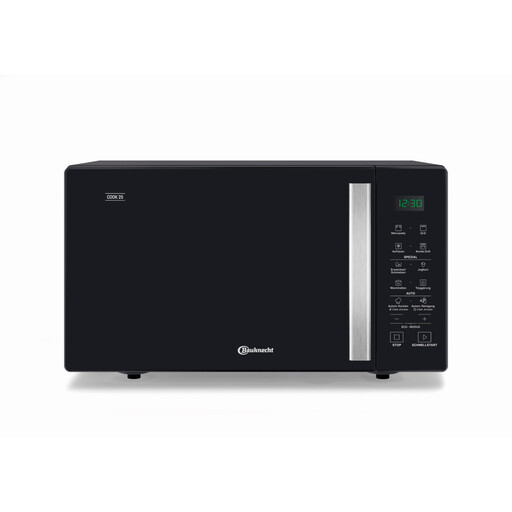 No image available
The product title lists a quick-start function and automatic programmes for straightforward reheating.
The product title gives the cooking cavity a capacity of 20 l. Compare the interior dimensions with the container you usually use for pasta.
Cool cooked leftovers after preparing them and keep them in the fridge until just before reheating. Stir the pasta as it heats and make sure the whole portion is piping hot. The German Federal Institute for Risk Assessment points out that reheating does not reliably make certain bacterial toxins harmless.
No. The container must be suitable for microwave use and for the intended purpose. For plastic containers, follow the manufacturer’s temperature and wattage limits, and stop using any that are damaged. Glass or ceramic containers may also be suitable, provided the specific item is microwave-safe and undamaged. The consumer advice centre recommends following the use instructions and temperature limits for your crockery.
Follow the clearances specified in the manual for your chosen model. For the Severin MW 7885/7886/7887, Severin specifies 7,5 cm at the sides, 10 cm at the back and 30 cm above. This appliance must not be installed in a cupboard. These measurements do not automatically apply to other microwaves.
According to the German Environment Agency, microwave ovens are not currently covered by energy-consumption labelling. When comparing costs, the specific appliance’s electricity consumption and standby use may be relevant; you can’t work out running costs from the microwave output power alone.