For individual portions of frozen mashed potato, a solo microwave with adjustable power and enough room for your container is a good place to start. A defrost programme can make it easier to use, but it won’t replace stirring or checking that the food has heated evenly. For larger bowls, the usable interior space and turntable matter more than the stated capacity alone. Extra features are most worthwhile if you’ll use them for other dishes too.
Which microwave is right for you?
For heating individual portions
If you freeze individual portions of mashed potato, choose a model that lets you adjust the time and power and pause the process to stir. Germany’s Federal Institute for Risk Assessment (BfR) recommends stirring food from time to time while heating it in a microwave. Sharp lists five power levels for the R-200WW.
For households with a large bowl
If you’re heating several portions in one container, make sure the bowl, usable interior space and available worktop space are all compatible. Sharp lists a 25.5 cm turntable diameter for the R-200WW, while Panasonic gives the NN-SD37 a 29-l cooking capacity and a 288-mm turntable.
For frequent defrosting
If you often use frozen portions, a defrost programme may be useful, but don’t assume it will give the right result for your particular mash. Samsung lists Quick Defrost for the MS23K3513AW/EN, while Panasonic lists defrost and reheating programmes for the NN-SD37.
What should you look for when buying?
Measure your container first, then decide whether you’d rather set the power and time yourself or use defrost programmes regularly. A larger or combination model is mainly worth considering if you also want to fit containers and dishes beyond individual portions of mash.
| What matters |
What to check when buying |
Who is it important to? |
| Even heating |
Adjustable power levels and controls that let you pause the process to stir. The BfR recommends a temperature of at least 70 °C for two minutes throughout the food. |
When I heat individual portions, I want to be able to spot and avoid cold patches. Around 36% of consumers put even heating first. |
| Bowl and available space |
Measure your container, including its cover, and compare it with the appliance’s interior, turntable and external dimensions. |
If you heat several portions in a larger bowl, you’ll need enough room in both the microwave and the kitchen. Around 29% of consumers prioritise a good fit for their container and available space. |
| Convenient defrosting |
Check the programme description and power settings for the specific model. Also check the container’s approved temperature and wattage limits. |
If I regularly use frozen portions, I want to find the defrost settings quickly. Around 21% of consumers prioritise this convenience. |
| Simple features |
Compare the controls and the extra features you actually need. Consider voluntary manufacturer warranties separately from your statutory rights. |
If you mainly use the microwave for reheating, you won’t want to pay for features you’re unlikely to use day to day. Around 14% of consumers prefer a simple model with the right features. |
Avoid common buying mistakes
-
Choosing based only on wattage or an automatic programme
The stated power and available programmes don’t prove that a particular frozen portion will be heated thoroughly throughout.
Choose an appliance that’s easy to pause. Stir the food during heating and check that it’s heated evenly. The BfR recommends a temperature of at least 70 °C for two minutes throughout the food.
-
Assuming freezer-safe means microwave-safe
Approved temperature and wattage limits vary from one container to another. So a container that’s suitable for freezing isn’t automatically safe to use in the microwave.
Check the label on your specific container. Only use it if the instructions cover microwave use and the relevant temperature and wattage limits.
-
Assuming the stated capacity means every bowl will fit
The stated capacity alone doesn’t tell you whether a container will fit or whether the turntable can rotate freely.
Measure your bowl and its cover, then compare the dimensions with the interior and turntable of the specific model.
-
Taking extra features at face value
Convection or other cooking modes don’t necessarily offer an advantage when you’re simply reheating mashed potato. Features may also vary between model versions.
Check the full model code and the features you need against the manufacturer’s information.
Key brands at a glance
The examples below refer to specific product lines and aren’t recommendations for a brand’s entire range.
Sharp
Sharp describes the R-200WW as a compact solo microwave with mechanical controls.
- Sharp lists a 20 l capacity, five power levels and a 25.5 cm turntable diameter for this model.
- These specifications don’t prove that it will heat frozen mashed potato to a particular standard.
Samsung
The MS23K3513AW/EN is a solo microwave with Quick Defrost.
- Samsung lists a 23 l capacity, Quick Defrost and a ceramic enamel interior.
- Manufacturer descriptions of defrosting aren’t an independent comparison of how well a microwave heats mashed potato.
Panasonic
Panasonic says the NN-SD37 combines a larger cooking capacity with several power levels, as well as defrost and reheating programmes.
- Panasonic lists a 29 l capacity, a maximum rated output of 1.000 W and a 288 mm turntable diameter.
- Claims about the benefits of inverter technology for even heating come from the manufacturer and aren’t based on a comparison of mashed potato.
Bosch
Bosch describes the FFL020MW0 as a freestanding solo microwave with several power levels.
- Bosch lists a 20 l capacity and power levels of 90, 180, 360, 600 and 800 W.
- According to the footnote, the maximum output is regulated to 600 W during extended use.
Bauknecht
The MF 255 B is a larger combination model for households that want to use additional cooking functions as well as reheating.
- Bauknecht lists a flatbed interior with no turntable and convection cooking for this model.
- These features don’t prove an advantage when simply reheating mashed potato.
Joybuy products for frozen portions
This Joybuy selection includes solo microwaves for defrosting and heating individual portions, as well as a larger combination model for households that want to use additional cooking functions.
 No product image available
Severin MW 7580 solo microwave, 19 l, 700 W
An option for defrosting and heating individual portions, with several adjustable power levels.
19 l capacity, 700 W, six power levels and a defrost function, according to the product name.
View at Joybuy
 No product image available
Heinrich’s solo microwave, 20 l, 700 W
A compact option if you want to set the time and power yourself for frozen portions.
20 l, 700 W, six power levels, a defrost function and a 30-minute timer, according to the product name.
View at Joybuy
 No product image available
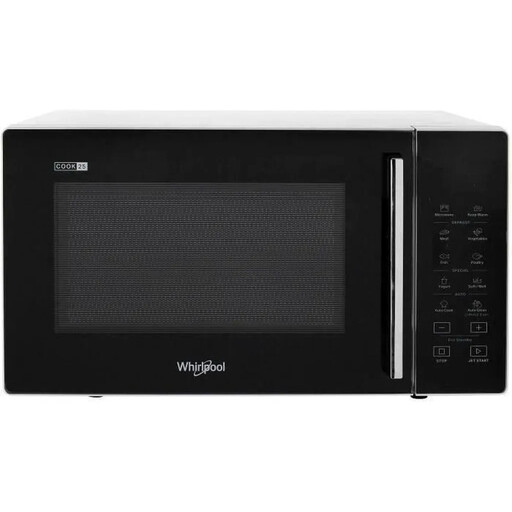
Whirlpool MWP 251 SB solo microwave, 25 l, 900 W
A solo model with a defrost programme if you regularly heat frozen portions.
25 l, 900 W and seven power levels, according to the product name and specifications.
View at Joybuy
 No product image available
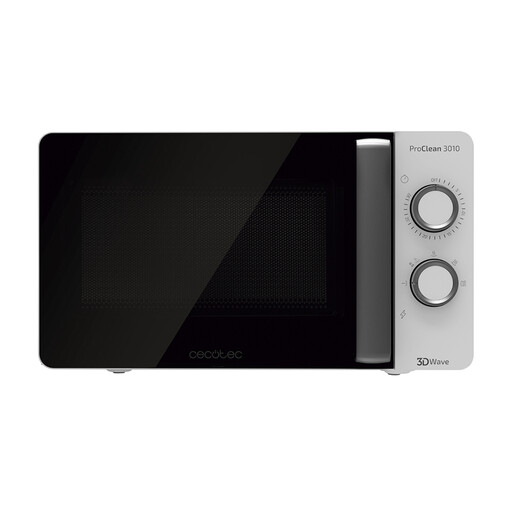
Cecotec microwave, 20 l, 700 W
An option for individual portions if you want adjustable power and a defrost function.
20 l, 700 W, six power levels and a defrost function, according to the product name and specifications.
View at Joybuy
 No product image available
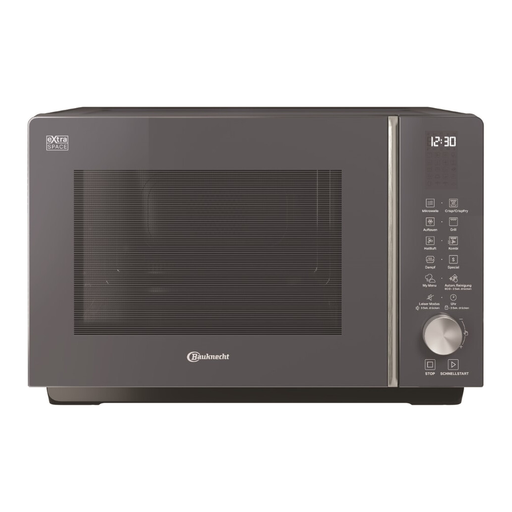
Bauknecht MF 259 SG combination microwave, 25 l
A combination model if you want to use additional cooking functions as well as reheating.
25 l, flatbed interior with no turntable, convection and grill, according to the product name.
View at Joybuy
Frequently asked questions
Should I stir frozen mashed potato while it’s heating in the microwave?
Yes. Germany’s Federal Institute for Risk Assessment (BfR) recommends stirring food from time to time while heating it in a microwave and checking that it heats evenly. For reheated food, the BfR recommends a temperature of at least 70 °C for two minutes throughout; check the temperature if in doubt. This is a food hygiene recommendation, not a performance guarantee for any appliance.
Can I use the freezer container to reheat the food?
Only if the instructions for that specific container say it’s suitable for both freezing and microwave use. Check the stated temperature and wattage limits. Germany’s Verbraucherzentrale consumer advice service recommends following the instructions for microwave-safe containers.
How much space should I allow for the microwave?
Check the footprint, door clearance and installation instructions for the model you choose. Interior capacity and external dimensions are different measurements, and you can’t determine a general ventilation clearance from them alone.
Are a manufacturer’s warranty and statutory rights the same thing?
No. In Germany, statutory rights for faulty goods are generally against the retailer; a manufacturer’s warranty is voluntary and subject to its own terms. Germany’s Verbraucherzentrale generally states a two-year period for statutory rights. For sales contracts from 31 July 2026, choosing a repair may extend the period once by 12 months.
Which marking matters for a household microwave?
For household electrical appliances covered by the relevant harmonised EU rules, the CE marking is relevant. It is the responsible manufacturer’s declaration that the appliance meets the applicable requirements; no central EU body grants individual approval. This does not confirm that a specific product listing is compliant.


