If you batch-cook portions of pasta
If you freeze cooked pasta in individual portions, make sure to defrost it and then heat it through thoroughly. The BfR recommends heating food to 70 °C or above throughout for at least two minutes.


For individual frozen portions of pasta, a solo microwave with adjustable power and a defrost function is usually all you need; you don’t need a grill or convection oven. Remember to stir the food and check it afterwards: the German Federal Institute for Risk Assessment (BfR) recommends heating food to 70 °C or above throughout for at least two minutes. A combi microwave is a better choice if you also want to use the grill or convection function for other dishes.
If you freeze cooked pasta in individual portions, make sure to defrost it and then heat it through thoroughly. The BfR recommends heating food to 70 °C or above throughout for at least two minutes.
If you usually heat one container at a time, compare the appliance’s external and internal dimensions with your dishes. If it has a turntable, the container will also need enough room to rotate.
If you want to use your microwave for more than portions of pasta, such as browning toppings or preparing other dishes, a model with a grill or combi function could be a good choice. Check whether you’ll actually use these features.
When choosing a microwave for portions of cooked, frozen pasta, your priorities will depend on whether you’re looking for even heating, defrosting, a suitable size or additional cooking functions.
Suitable if: You mainly want to defrost and heat individual portions that fit inside the cooking cavity. Sharp lists the YC-MS02E-S as having a 20 l capacity, 800 W power and timed and weight defrost functions.
The trade-off: Your container also needs to fit on the turntable and rotate freely; there’s no grill function for browning.
Suitable if: You want to use suitable rectangular containers or find a turntable gets in the way when loading the microwave. CASO describes the MG 20 Ceramic menu as having a flatbed and a 20 l cooking cavity.
The trade-off: The CASO model mentioned also has a grill, which you don’t need just to heat pasta.
Suitable if: You want to use the grill to cook other dishes as well as frozen portions. The Panasonic NN-GD38 and LG MH6535GIS are examples from manufacturers of appliances with inverter technology and a grill.
The trade-off: Extra features are only worthwhile if you’ll use them. Manufacturer specifications don’t remove the need to stir and check your particular portion of pasta.
| Priority | What to look for | Who it matters most to |
|---|---|---|
| Even, controlled heating | Adjustable power levels, easy-to-use time controls and a container you can safely remove to stir the food. | If I want to avoid the middle of my portion staying cold, I need to be able to adjust the time and power. Around 36% of consumers prioritise being able to control how thoroughly food is heated. |
| Defrosting individual portions | A defrost function, as well as the option to set the time and power yourself afterwards. | If I take portions of different sizes out of the freezer, I want to be able to set the defrosting process easily. Around 29% of consumers say straightforward defrosting is their main priority. |
| A suitable size for the appliance and container | Compare the internal and external dimensions with your existing dishes; for turntables, check the usable diameter and that there’s enough room to move. | If you want to keep using your existing portion containers, check their size and shape before buying. Around 21% of consumers prioritise finding an appliance and container that fit their available space. |
| Additional cooking functions | Only opt for a grill or combi function if you’ll actually use it; check how the specific model works and what accessories it needs. | If I want to brown toppings as well as heat portions of pasta, a grill could be useful. Around 14% of consumers prioritise additional cooking functions over simply reheating food. |
Defrosting alone doesn’t mean the whole portion has been heated sufficiently. The BfR recommends heating food to at least 70 °C throughout for two minutes.
Stir the portion while heating, then check that it’s hot enough all the way through. Don’t rely on the preset cooking time alone.
A capacity stated in litres doesn’t tell you whether your container will fit or rotate freely on a turntable.
Measure your existing dishes and compare their dimensions with the cooking cavity and, where applicable, the turntable.
The BfR points out that heating won’t deactivate a heat-stable toxin that has already formed.
Cool cooked portions quickly before storing them, and keep them safely. Don’t use the microwave as a substitute for safe storage.
The YC-MS02E-S is an example of a digital solo microwave for individual portions that fit inside.
The MS23K3513AW/EN is a solo microwave with a 23 l capacity, Quick Defrost and a ceramic enamel interior.
The MG 20 Ceramic menu combines a flatbed with a grill function.
The NN-GD38 is an example of an inverter microwave with a grill and automatic defrost.
The MH6535GIS is a 25 l grill microwave with Smart Inverter.
This selection includes solo microwaves for defrosting and reheating, as well as models with additional grill or convection functions.
 No image available
The glass base may suit certain rectangular containers; check the dimensions of your dish and the cooking cavity first.
The product name lists a microwave, grill and convection function. If defrosting is important to you, check whether this specific model has a suitable programme.
 No image available
The product name lists a defrost function and adjustable power levels, which are useful for defrosting food separately before heating it through. Stir and check your portion afterwards.
It has an inverter, 6 power levels and a turntable; the model is described as a solo microwave.
 No image available
The defrost function and 6 power levels are useful for defrosting food separately before heating it through; stir the portion before checking it.
The product name also lists a 360° turntable and a 30-minute timer. Check that your container fits on the turntable.
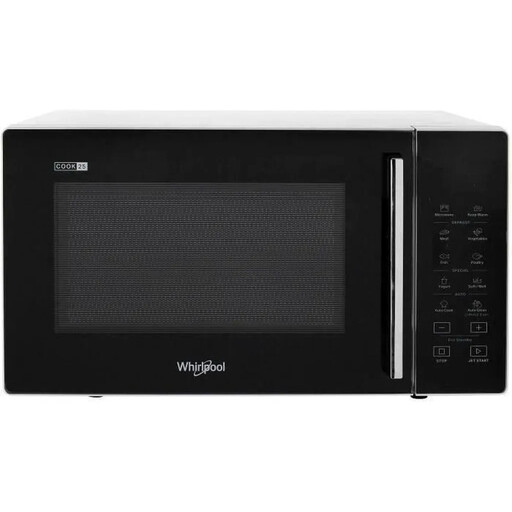 No image available
Described as a solo microwave for defrosting and reheating. If you’re preparing a frozen portion, stir it and then check that it has heated through.
The product name also lists Jet Start, keeping warm and automatic cleaning. Consider whether these extra features would be useful in your day-to-day life.
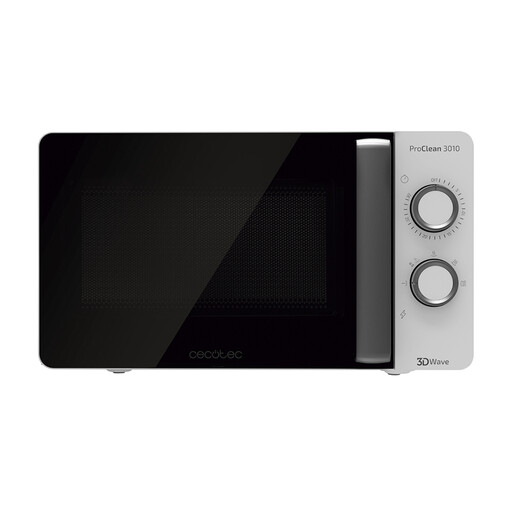 No image available
Defrosting and reheating are listed as uses. Stir the portion after defrosting and check that it has heated through completely.
The product name lists 6 power levels.
No. Defrosting and reheating food thoroughly are separate steps. Stir the portion while heating and check any cooler spots. The BfR recommends heating food to at least 70 °C throughout for two minutes; an appliance programme can’t guarantee this temperature.
Only if that specific container is suitable for microwave use. The BfR advises against using crockery made from melamine-formaldehyde resin to heat food in a microwave. Check the material label and the manufacturer’s instructions; a freezer container isn’t automatically microwave-safe.
Cool hot food quickly before storing it for later, and keep it safely. The BfR points out that reheating won’t deactivate a heat-stable Bacillus cereus toxin that has already formed because of unsuitable storage. So a microwave can’t make poorly stored pasta safe after the fact.
Your statutory rights and a voluntary manufacturer’s guarantee are different things. The consumer advice centre recommends keeping them separate; if you have a guarantee, check which parts it covers and the conditions that apply. A guarantee covering one component doesn’t automatically cover the whole appliance.