For individual portions of cooked peas, a straightforward solo microwave is usually all you need, as long as your container fits and can move around inside. For larger or square containers, you may want more usable space or a model without a turntable. However, defrost programmes and power settings are no substitute for stirring the food and checking that it has heated through evenly. The German Federal Institute for Risk Assessment (BfR) recommends stirring food partway through microwave heating and heating it to at least 70 °C throughout for at least two minutes.
Which type of microwave is right for you?
For heating individual portions
If you take individual portions of cooked peas from the freezer, look for suitable power settings and make sure you can stir the food while it heats. The BfR recommends heating food evenly and stirring it in the microwave.
For batch cooking several portions
If you prepare several portions at once, check that your containers fit inside the microwave and are easy to handle. The Verbraucherzentrale (German consumer advice centre) recommends following the care instructions and temperature limits for your crockery.
For kitchens with limited worktop space
If you’re short on worktop space, compare the microwave’s external dimensions with the space available and check the ventilation guidance in the relevant manual. Requirements can vary between models.
What should you look for?
The figures relate to consumers who heat individual portions of cooked peas from the freezer. First, measure the container you plan to use, then consider the controls and extra features.
| What matters |
What to look for |
Who it matters to |
| Even heating |
Power settings; a container that’s easy to handle when stirring. |
When I heat peas a portion at a time, I want to be able to check the temperature throughout. Around 33 % of consumers put even heating first. |
| Defrosting frozen portions |
A defrost function and adjustable power settings. |
If you’re preparing a portion straight from the freezer, you’ll want controls that support defrosting followed by reheating. Around 27 % of consumers place particular importance on ease of use. |
| A suitable container |
Usable space and turntable dimensions; guidance on whether the container is suitable for freezing and microwave use. |
If I want to reuse my storage container, it needs to fit inside the microwave and be suitable for both uses. Around 20 % of consumers say having enough space for their container matters most. |
| Worktop space and ease of use |
External dimensions and required clearance; controls that suit the way you use the microwave. |
With limited kitchen space, I want to know before buying whether the microwave can be positioned safely and is easy to use. Around 20 % of consumers prioritise worktop space and simple controls. |
Which buying and usage mistakes should you avoid?
-
Assuming a defrost programme heats food evenly
A programme name or selected power setting doesn’t prove that the peas have heated through sufficiently.
Stir the portion partway through and check the temperature in several places. The BfR recommends heating food to at least 70 °C throughout for two minutes.
-
Buying based on capacity in litres alone
The stated cavity capacity doesn’t tell you whether your particular container will fit on the turntable or be able to rotate.
Compare your container’s dimensions with the usable space and follow the Verbraucherzentrale’s guidance on crockery.
You may need an additional container that’s suitable for both the freezer and the microwave.
-
Assuming you need a grill for peas
A grill adds browning. There’s no evidence that this extra feature is needed just to defrost and heat peas.
Choose a grill function only if you also want to use it to cook other foods.
-
Taking conflicting model specifications at face value
The stated cavity capacity of the Severin MW 7886 varies: the description says 17 l, while the technical table says 19 l. This could make it harder to decide if you need a particular container to fit inside.
Before choosing, check your container’s dimensions and the official specifications in the manual for the specific model.
Which brands and models are worth considering?
Bosch FFL020MW0
A freestanding solo microwave for simple, everyday portions. Bosch Hausgeräte Deutschland lists a 20 l capacity, a maximum power of 800 W and five power settings.
- Bosch lists the external dimensions as 260 × 442 × 345 mm; the model has rotary controls.
- Check the exact model number and features against the manufacturer’s information before comparing different product descriptions.
Panasonic NN-SD38
A solo microwave with inverter technology and a larger cavity. Panasonic Deutschland lists a capacity of 29 l, 1,000 W and seven power settings.
- A larger cavity can be useful for bigger containers, provided their dimensions are suitable for the microwave.
- The manufacturer’s specifications don’t demonstrate any particular hygiene or quality advantage specifically when heating cooked peas. Stirring partway through is still important.
Severin MW 7886
A solo microwave with rotary controls, a defrost function and 700 W, according to the manufacturer’s technical table.
- The model range offers straightforward operation with rotary controls.
- The manufacturer gives conflicting capacity figures: 17 l in the description and 19 l in the technical table. Check whether your container will fit instead of relying on either figure alone.
Caso MG 20 Ecostyle Ceramic
A microwave with a flat cavity floor and no turntable, plus an additional grill function. CASO Design lists a capacity of 20 l, 700 W microwave power and 1,000 W grill power.
- The flat floor can be a useful alternative if it’s difficult to fit a square container on a turntable.
- Check the microwave’s dimensions and whether you’re likely to use the grill for other foods.
Samsung MG23T5018CW
A model named as the top recommendation in the F.A.Z. Kaufkompass general microwave test, dated 28 September 2026.
- The F.A.Z. Kaufkompass highlighted its easy-to-understand automatic programmes and everyday usability.
- A general microwave test doesn’t prove that this model is better for cooked peas than a basic solo microwave.
Joybuy products for frozen portions
This selection includes solo microwaves for defrosting and heating, as well as a model without a turntable. Before buying, compare your container’s dimensions with the usable space inside the microwave.
 No image available
Severin MW 7580
This solo microwave is an option if you want to defrost frozen portions and choose the power level when heating them.
19 l capacity, 700 W and six power settings; with a defrost function and a 24.5 cm turntable.
View at Joybuy
 No image available
Heinrich's solo microwave, 20 l
A solo microwave with a defrost function if you want to defrost frozen portions before heating them.
20 l, 700 W, six power settings and a 360° turntable.
View at Joybuy
 No image available
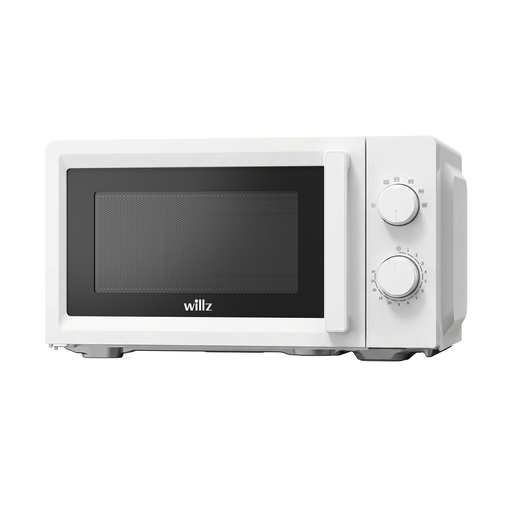
Galanz compact microwave, 20 l
A 20 l microwave for anyone who puts cavity capacity high on their list of priorities.
20 l capacity, according to the product name.
View at Joybuy
 No image available
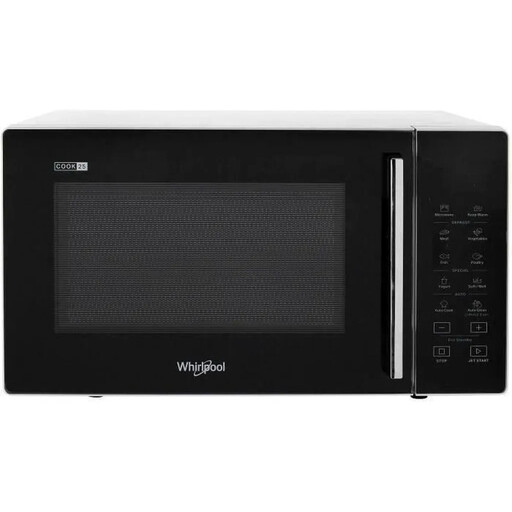
Whirlpool MWP 251 SB
This freestanding solo microwave could suit you if you want a larger cavity and adjustable power settings.
25 l, 900 W, seven power settings and a 27 cm turntable; with a defrost function.
View at Joybuy
 No image available
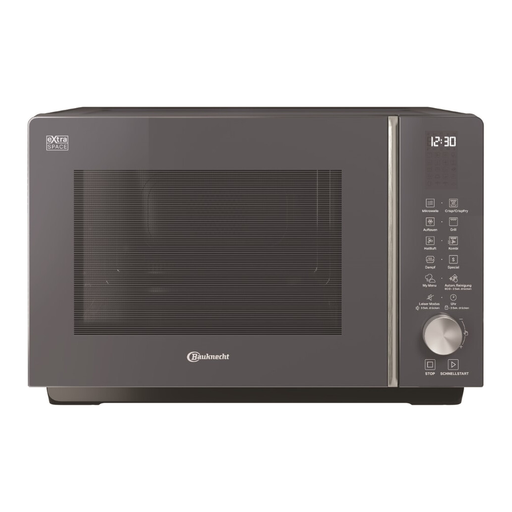
Bauknecht MF 259 SG
This model without a turntable could be a good fit if you want to place a container on a flat surface.
25 l and 800 W microwave power; no turntable.
View at Joybuy
Frequently asked questions
Do I need to defrost cooked peas completely before heating them?
No. You can use a microwave to defrost them too. If you’re serving the peas hot, stir them partway through heating and check that they’re hot enough throughout. The BfR recommends heating food to at least 70 °C throughout for two minutes; this doesn’t establish a single cooking time for every portion size.
Can I use the same storage container for freezing and heating?
Only if the container’s instructions say it’s suitable for both freezing and microwave use. Check the temperature limits and, where applicable, the permitted microwave power. The Verbraucherzentrale points out that being microwave-safe doesn’t automatically mean a container is suitable for freezing.
How should I position my microwave?
Follow the manual for your specific model and place the microwave on a stable, flat, heat-resistant surface with enough room for air to circulate. The instructions for the Severin MW 7886 specify these requirements; don’t assume its model-specific clearances apply to other microwaves.
What are my rights if the microwave develops a fault, and how should I dispose of my old one?
When you buy from a business seller in the EU, you generally have a statutory right to a minimum two-year guarantee of conformity from the date you receive the goods. This is separate from any voluntary manufacturer’s warranty. The German Environment Agency advises that electrical waste must not be put in household rubbish. Instead, take it to a local collection point or use a retailer’s take-back scheme.


