If you freeze pudding in batches
If you want to defrost portions later, bear in mind that the pudding can become watery. The Verbraucherzentrale notes that its texture may change.


A solo microwave is generally enough for frozen portions of pudding, provided you can set the power and cooking time appropriately and pause the heating to stir. A defrost function or a combination microwave with a grill and convection function is not proven to restore the original texture: the Verbraucherzentrale notes that pudding can become watery when defrosted. Also check that your container is suitable for microwave use and the temperatures involved.
If you want to defrost portions later, bear in mind that the pudding can become watery. The Verbraucherzentrale notes that its texture may change.
If you want to stir your food part-way through and keep an eye on the heating, easy-to-use power and time settings are useful. The Federal Institute for Risk Assessment recommends heating food evenly in a microwave and stirring it part-way through.
If you want to brown or bake other foods as well as reheat them, grill or convection functions may be useful. The F.A.Z. Kaufkompass discusses these functions on certain combination models; this does not apply to all models or specifically to pudding.
A good fit if: you mainly want to defrost and heat individual frozen portions.
The trade-off: a defrost programme has not been specifically validated for pudding and does not replace checking and stirring it.
A good fit if: you also want to use the extra functions to brown or bake other foods.
The trade-off: there is no proven benefit for pudding; the F.A.Z. Kaufkompass notes that the combination model it reviewed takes up space.
| What you need | What to look for when buying | Who is this important to? |
|---|---|---|
| Texture after freezing | Check whether freezing is suitable for the dessert you want to make; don’t expect an appliance programme to restore its texture. | If texture after defrosting matters to me, I want to know whether my recipe is suitable for freezing. Around 36% of consumers make this their main consideration. |
| Even heating | Look for easy-to-adjust power and time settings, and check that you can pause the process to stir. The BfR recommends heating food evenly and stirring it. | I want to be able to stir my portion and heat it evenly. Around 29% of consumers give this priority. |
| Container and space | Measure your container and the space available; follow the container manufacturer’s guidance on temperature and microwave use. | If I want to heat batch-frozen portions in a particular container, it needs to fit in the cooking compartment and be suitable for the job. Around 21% of consumers prioritise this. |
| Controls and extra functions | Compare the settings you actually need; choose a grill or convection function only if you’ll use it for other foods too. | I want to defrost and heat food easily, without paying for functions I won’t use. Around 14% of consumers focus on this. |
The Verbraucherzentrale notes that pudding can become watery when defrosted. An appliance programme does not prove that this change in texture can be reversed.
Check whether your recipe is suitable for freezing before choosing an appliance based on an assumed improvement in texture.
Being suitable for the freezer does not automatically mean a container can withstand microwave power and heating temperatures. Follow the Verbraucherzentrale’s guidance on containers and how to use them.
Check the manufacturer’s instructions for freezing and microwave use, and don’t exceed the temperature limits for that specific container.
If your storage container is not microwave-safe, you’ll need a suitable container for heating.
These extra functions are for other cooking methods and offer no proven benefit for pudding. The F.A.Z. Kaufkompass also notes that the combination model it reviewed takes up space.
Choose a combination microwave only if you’ll use its baking or browning functions for other foods too.
The German product page describes the MW 7790 solo microwave as having a 20 l cooking compartment, 700 W of power and five power levels.
Bosch lists a 20 l cooking compartment and selectable power levels from 90 to 800 W for its freestanding FFL023MS2 solo microwave.
Panasonic describes the NN-SD36 solo microwave as featuring inverter technology, seven power levels and a 29 l cooking compartment.
The F.A.Z. Kaufkompass reviews the MG23T5018CW for everyday heating and the MC32DB7746KDE1 as a model with an additional baking option.
LG describes the MS2595CIS solo microwave as having a 25 l cooking compartment, 1000 W of power, Smart Inverter and adjustable programmes.
The models below include solo microwaves for defrosting and heating, as well as a combination microwave with extra functions for other foods.
 No image available
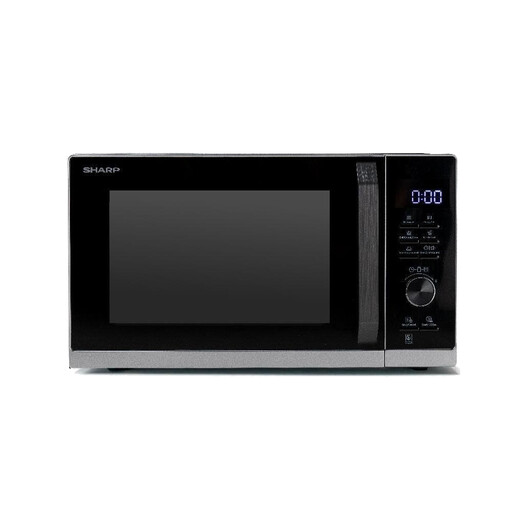
A solo microwave with a defrost function for defrosting and heating individual portions.
19 l cooking compartment; 700 W; six power levels; inverter technology; turntable.
 No image available
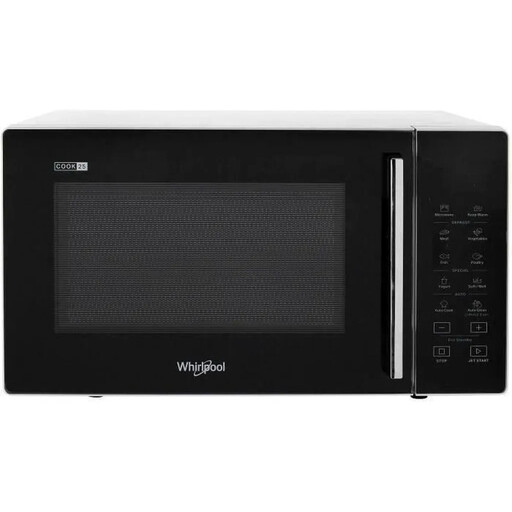
A combination microwave for defrosting and heating, with grill or convection functions for other foods.
27 l cooking compartment; 900 W microwave power; 1000 W grill power; 2100 W convection power.
 No image available
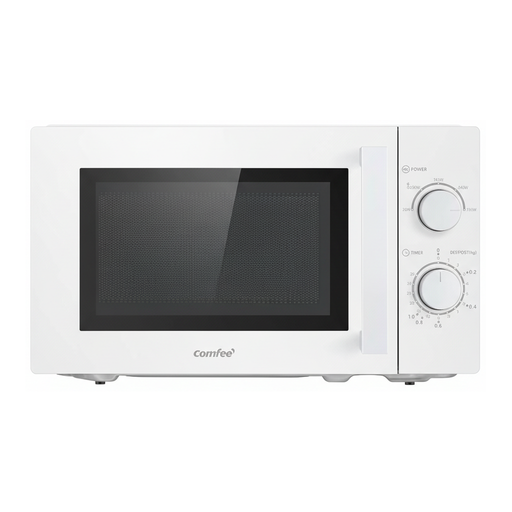
A solo microwave with a defrost programme for portions; other programmes are designed for different uses.
25 l cooking compartment; 900 W; seven power levels; Jet-Start; keep-warm and Auto-Clean functions.
 No image available
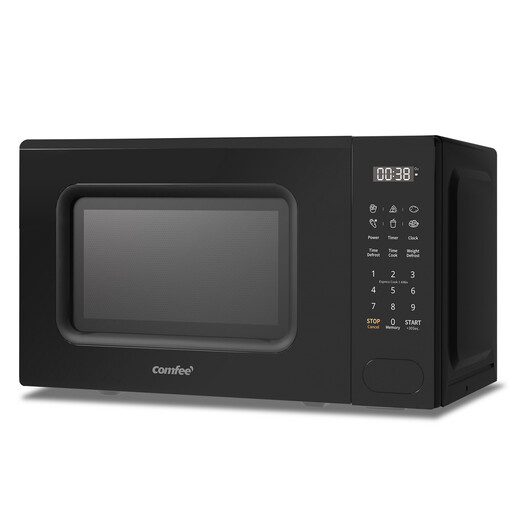
With a defrost function and mechanical controls, this model is a straightforward option for defrosting and heating.
20 l cooking compartment; 700 W; five power levels; interior light.
 No image available
This digital model offers timed or weight-based defrosting and adjustable power levels.
20 l cooking compartment; 700 W; 11 power levels; six preset menus.
There’s no evidence that it will. The Verbraucherzentrale notes that pudding can become watery when defrosted. So don’t choose a microwave on the promise that it will restore the original texture.
Use a suitable container, pause the process and stir the pudding part-way through. When reheating food, the Federal Institute for Risk Assessment recommends heating it to at least 70 °C for two minutes throughout, and paying particular attention to even heating when using a microwave. This is food hygiene advice, not a guarantee about a particular appliance.
Only if the manufacturer’s instructions confirm that it can withstand the microwave power and temperature you plan to use. The Verbraucherzentrale advises that containers must be suitable for their intended conditions of use; being suitable for freezing alone does not mean a container is suitable for heating.
When you buy from a business seller in the EU, you generally have a minimum two-year legal guarantee from the date you receive the goods, which you can claim from the seller. Your Europe distinguishes this legal guarantee from a voluntary manufacturer’s warranty.
According to guidance from the Bundesnetzagentur, a retailer may only offer an electrical appliance for sale once, among other things, the correct CE marking and the required product and user information have been ensured. This is a general requirement, not proof about a specific model or its heating results with pudding.