Families with a large bowl of compote
If you want to heat a portion in your usual bowl, check its dimensions, including the cover. Capacity in litres alone won’t tell you whether it will fit inside the microwave or on the turntable.


If you mainly want to heat fruit compote, a solo microwave is a sensible place to start; you won’t need grill or convection functions for that. What matters is that your covered, microwave-safe bowl fits inside and that you can adjust the power to suit. Stir the compote while heating, as sugary foods can become particularly hot in some places.
If you want to heat a portion in your usual bowl, check its dimensions, including the cover. Capacity in litres alone won’t tell you whether it will fit inside the microwave or on the turntable.
If you regularly heat compote and other foods, look for clear, easy-to-use power and time settings. The Verbraucherzentrale recommends stirring food regularly when heating it in a microwave.
If you’d like to use your microwave for other types of cooking as well as reheating, weigh up the extra features against the space it takes up and how easy it is to use. Grill and baking functions aren’t essential for compote alone.
First, check that your bowl and cover will fit. Then choose the controls and features to suit your reheating routine.
| What matters when buying | What to check | Who will find this important? |
|---|---|---|
| Controlled heating | Power levels and time settings; check the bowl’s permitted power and temperature limits. | If I want to heat compote just right and stir it partway through, I need settings I can adjust easily. Around 36% of consumers put controlled heating first. |
| Room for the family bowl | Compare the diameter and height of the bowl and cover with the usable interior space and turntable. | If I want to heat a family-sized portion in a particular bowl, whether it actually fits matters more to me than the capacity in litres. Around 29% of consumers prioritise a large appliance that can accommodate their bowl. |
| Ease of use | Check whether the power and time settings are clear, and whether dials or electronic controls are a better fit. | If I reheat food regularly, I want to find the settings I need without having to work through a complicated choice of programmes. Around 21% of consumers prioritise ease of use. |
| Features for other dishes | Consider whether you’ll actually use grill or baking functions, and whether the space and effort involved are worthwhile. | If I want to prepare other dishes in the appliance too, extra features may be useful to me. Around 14% of consumers put this versatility first. |
The capacity in litres won’t tell you whether your bowl and cover will fit. Turntable and external dimensions also vary from one model to another.
Measure your bowl and cover, then compare them with the usable interior space and turntable. Otherwise, you may need to use a different bowl that fits.
Sugary foods can develop particularly hot spots. Not every container is suitable for microwave use, the temperature or the power level.
Check the information on the container, stay within the stated limits and stir the compote while it heats.
Grill and baking functions are designed for other types of cooking and won’t automatically improve how compote heats up.
Consider extra features only if you also want to use them for other dishes.
Bosch Hausgeräte’s German product sheet lists the freestanding FFL020MS2 solo model, with a 20 l capacity and maximum microwave power of 800 W.
Panasonic Germany lists the NN-SD38 solo model with a 29 l capacity, seven power levels and inverter technology.
According to the manufacturer, the MW 7770 solo model has a 20 l capacity, 700 W power, five power levels and a 35-minute timer.
Sharp Electronics’ data sheet lists the R-242BKW solo model with a 20 l capacity, 800 W power and electronic controls.
F.A.Z. Kaufkompass included the MG23T5018CW in a microwave test that also looked at appliances with grill and automatic functions.
The models below include solo microwaves for reheating, as well as appliances with grill or convection functions for other types of cooking.
 No image available
An option if you’d like to use grill and convection functions as well as reheat food.
Functions listed in the product name: microwave, grill and convection.
 No image available
A solo option if you want to adjust the power and time using the listed levels and timer.
20 l, 700 W, six power levels, 30-minute timer and defrost function.
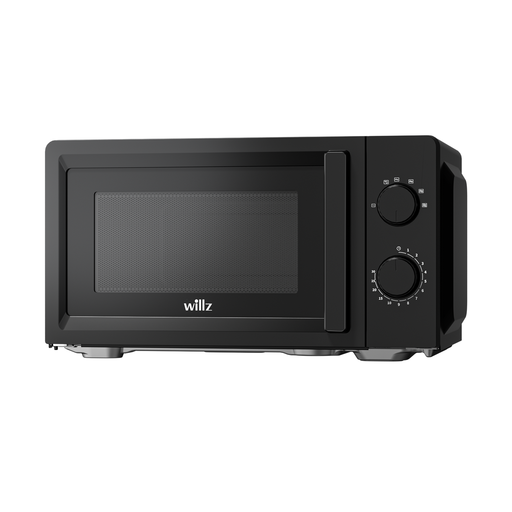 No image available
An option if you’re looking for a microwave with the compact, square design described in the product name.
20 l; square design according to the product name.
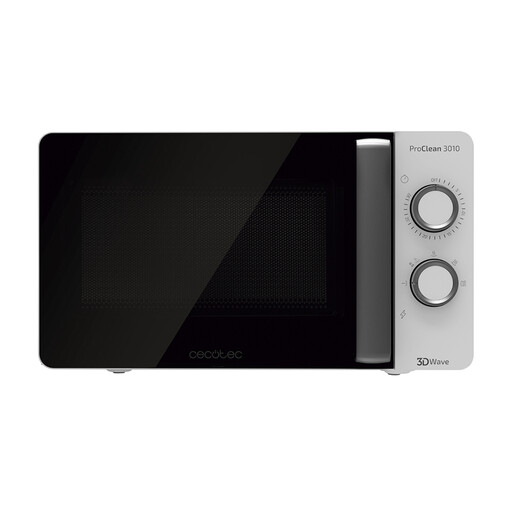 No image available
A solo option if you want to choose between the stated power levels when reheating.
20 l, 700 W and six power levels.
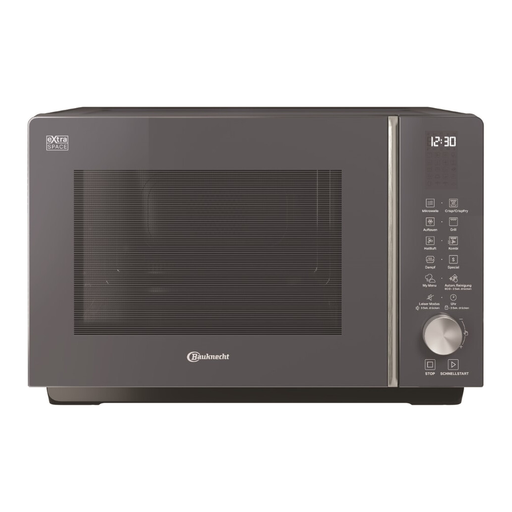 No image available
An option if you’d like to use other cooking functions as well as reheat food.
25 l; flatbed interior according to the product name. The product name also lists grill, convection and steam functions.
Only if the container manufacturer’s instructions confirm that it’s suitable for microwave use and specify the permitted temperature and, where applicable, wattage. Don’t assume a plastic container is microwave-safe. The Verbraucherzentrale notes that foods with a high sugar content can develop particularly hot spots.
Use a suitable container, pause to stir the food while it’s heating, and check the temperature before serving. The Verbraucherzentrale recommends stirring regularly; this doesn’t mean there’s one heating time that works for every quantity and container.
Compare the appliance’s external dimensions with the space you have available, and follow the model’s instructions on clearances and cleaning. Don’t continue using damaged microwave-safe cookware. If the appliance door is visibly damaged, the Bundesamt für Strahlenschutz recommends having it checked by the service team.
No. Statutory rights for faulty goods generally apply against the seller; a guarantee is an additional voluntary promise with its own terms. Under § 438 BGB, claims for defects in ordinary purchased goods are generally subject to a two-year limitation period from delivery.