People who bring lunch every day
If you bring pre-cooked portions, it’s important to have a practical routine for chilling, transporting and reheating them, with enough time to stir your food.


For individual portions brought from home, a solo microwave with easy-to-adjust power settings and enough room for your container is a sensible place to start. An inverter model may be worth considering if power control matters to you for other foods, too; grill functions are mainly for preparing other dishes. Whichever appliance you choose, keep the mash chilled until you’re ready to heat it, and stir it part-way through. The German Federal Institute for Risk Assessment recommends heating food to at least 70 °C for two minutes throughout.
If you bring pre-cooked portions, it’s important to have a practical routine for chilling, transporting and reheating them, with enough time to stir your food.
If you’re heating a single portion and have limited worktop space, the appliance’s dimensions and how well your lunchbox fits matter more than its capacity in litres alone.
If you prepare or reheat dishes other than mash, you can weigh up whether a solo model will meet your needs or whether extra functions would be useful.
Best for: heating individual portions, when you don’t need to brown food.
Things to consider: There are fewer extra functions; your container still needs to fit on the turntable, and you’ll still need to stir your food.
Best for: heating different portion sizes and using power control for other foods, too.
Things to consider: Inverter technology doesn’t guarantee that mash will heat evenly throughout without stirring.
Best for: regularly cooking dishes with a browned surface, as well as heating mash.
Things to consider: The extra function isn’t needed just to reheat mash; also check the space available and which accessories are suitable.
| Buying criterion | What to look for | Who is this particularly important to? |
|---|---|---|
| Keeping food chilled and heating it thoroughly | Check whether you can easily pause the heating process to stir your food; plan how to keep it chilled separately from the appliance. | When I bring my lunch with me, I want to keep it chilled until mealtime and then heat it thoroughly throughout. Around 36% of consumers prioritise safe storage and thorough reheating. |
| Lunchbox and worktop space | Measure your microwave-safe container, including its lid, and compare it with the turntable, cooking cavity and appliance dimensions. | With limited kitchen space, I want to know whether my lunchbox will fit in the appliance and whether the microwave will fit on the worktop. Around 29% of consumers prioritise how well the container and appliance fit their space. |
| Ease of use | Compare the power settings, timer and cleaning instructions for the specific model. | When I regularly reheat individual portions, I want straightforward settings and an interior that’s easy to clean. Around 21% of consumers prioritise a simple routine. |
| Extra functions | Consider whether you regularly use other cooking modes or a browning function, as well as heating mash. | When I prepare other dishes, I want to make proper use of any extra functions. Around 14% of consumers prioritise additional cooking options. |
A keep-warm function is no substitute for chilling food during storage and transport. Leaving food out for too long and keeping it at unsuitable temperatures can encourage bacteria to multiply.
Keep perishable food chilled until your lunch break, and heat it shortly before eating. The German Federal Institute for Risk Assessment recommends storing perishable foods in the fridge at between 2 °C and 7 °C, and keeping them chilled when you’re out and about, too.
The capacity in litres alone won’t tell you whether your lunchbox will fit on the turntable or whether there’s enough room inside the cavity.
Compare your container’s dimensions with the turntable, usable height and external dimensions of the appliance.
Depending on your lunchbox, you may also need a suitably sized microwave-safe container.
Appliance features are no substitute for stirring your food or checking that it’s heated sufficiently throughout.
Choose power controls that are easy to use for your portions, and pause the process to stir your food. The German Federal Institute for Risk Assessment recommends ensuring food is heated evenly when reheating it in a microwave.
The MW 7886 solo microwave has dial controls and is designed for straightforward heating of individual portions.
The MS23K3513AW/EN solo model offers an alternative with automatic programmes and a coated interior.
The freestanding FFL020MS2 is a useful point of comparison for appliance dimensions and microwave-only use.
The range includes solo and grill models with inverter technology.
This selection features solo microwaves for heating individual portions brought from home, from models with manual controls to options with extra functions.
 No image available
This solo model is designed for heating and reheating food.
It features two dials, a 30-minute timer and a 24.5 cm turntable.
 No image available
The manual controls may be useful if you regularly reheat individual portions.
Features include six power settings, a 30-minute timer and external dimensions of 44.6 × 36.3 × 24.3 cm.
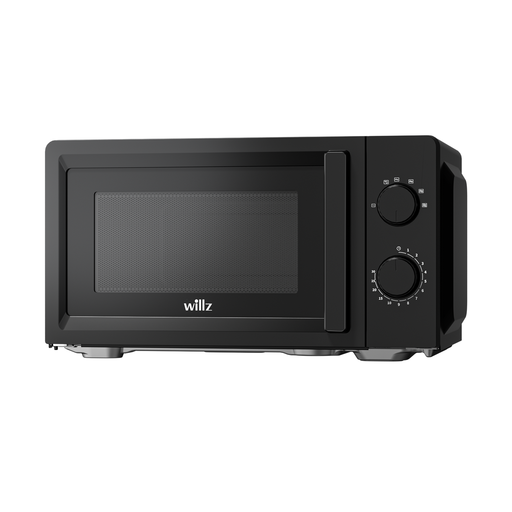 No image available
Described as a compact microwave with basic functions for heating meals.
It has a stated capacity of 20 l. Before buying, check that the dimensions suit your container and the space you have available.
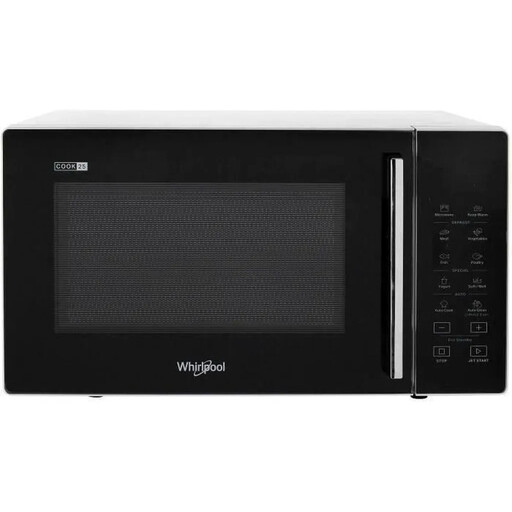 No image available
This freestanding solo microwave is described as suitable for reheating; extra programmes are only useful if you’ll actually use them.
It features seven power settings and a 27 cm turntable.
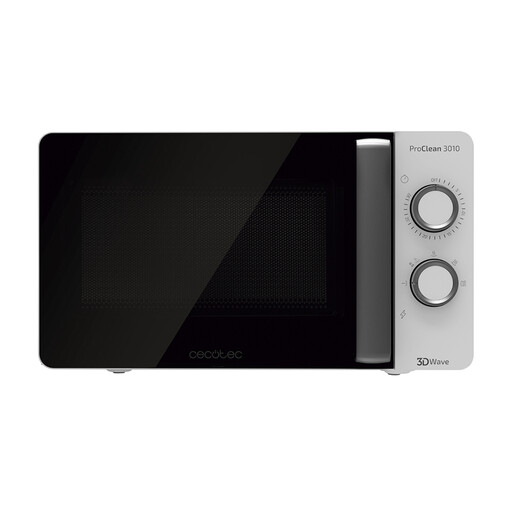 No image available
This microwave is described as suitable for heating and defrosting, and has an Easy-Clean coating.
It has six power settings. For installation, the instructions specify a minimum clearance of 10 cm at the rear, 5 cm at the sides and 20 cm above.
Keep the prepared food chilled until mealtime, and only heat it when you’re ready to eat. The German Federal Institute for Risk Assessment recommends heating food to at least 70 °C for two minutes throughout. Stir the mash part-way through heating it in the microwave, and check the temperature if you’re unsure. These are food hygiene steps, not a guaranteed appliance function.
Only if the instructions state that both the container and lid are suitable for microwave power and temperatures. Check whether the lid should be opened or removed while heating, too. You can’t tell whether a particular lunchbox is suitable just from the microwave specifications.
You don’t need a grill just to reheat mashed potato. It may be useful if you also want to brown other dishes; check which containers are suitable for use with the grill.
If a product is faulty, your statutory rights generally apply against the seller. A manufacturer’s warranty is a separate, voluntary offer with its own terms and conditions. Before buying, check who the seller is and what additional warranty terms apply.
Electrical equipment covered by the EU Low Voltage Directive must meet the requirements set out in it. CE marking is not an individual EU product approval. At the end of its life, electrical waste must be taken to a separate collection point, not put in household rubbish.