People with a temporary kitchen
If you have limited worktop space during the renovation, check the appliance’s external dimensions and make sure its installation requirements can be met at your chosen location.


For chilled mashed potato and other leftovers, a freestanding solo microwave is an obvious place to start. What matters is having a suitable spot for it, microwave-safe cookware and the option to stir your food part-way through heating. A grill or convection function is only worth considering if you also want to brown or bake food during the renovation; it won’t replace the even reheating of leftovers.
If you have limited worktop space during the renovation, check the appliance’s external dimensions and make sure its installation requirements can be met at your chosen location.
If you reheat chilled mashed potato and other leftovers at different times, stir the food while it heats and make sure it has been kept properly chilled. The Verbraucherzentrale recommends stirring regularly, while the Federal Institute for Risk Assessment highlights the importance of suitable refrigeration.
If you also want to brown or bake food during the renovation, grill or convection functions may come in handy. Weigh these against the space available and the requirements for each cooking mode.
| Criterion | What to check before buying | Who is this relevant to? |
|---|---|---|
| Even heating | Will your bowl fit inside the microwave, and can you pause the heating cycle to stir your food? The Verbraucherzentrale recommends stirring food regularly when heating it in a microwave. | When I reheat chilled leftovers, I want to stir them part-way through and check how warm they are. Around 36 % of consumers put even heating first. |
| Positioning and moving | Check the external dimensions and installation requirements against the actual space available. Bosch’s instructions for freestanding microwaves highlight the need for ventilation clearances. | In a temporary kitchen, the appliance needs to fit the available space and be easy to move later. Around 29 % of consumers prioritise where it will go. |
| Controls and consistency | Check whether you can set the time and power for your portion and pause the cycle to stir. For plastic cookware, follow the relevant temperature and wattage guidance. | If I want to adjust the consistency by stirring as the food heats, easy-to-use controls matter. Around 21 % of consumers prioritise controls and consistency. |
| Extra functions | Consider whether you’ll actually use the grill or oven functions as well as reheating, and check that you have enough space and suitable cookware for those cooking modes. | If you want to brown or bake food during the renovation, these functions are more useful than they are for someone who only reheats leftovers. Around 14 % of consumers name extra functions as their top priority. |
You don’t need to brown mashed potato to reheat it. Stirring it and using suitable cookware still matter.
Choose extra functions only if you also want to use them to cook other food during the renovation.
A large interior doesn’t tell you whether the appliance will fit in your available space or how much clearance it needs.
Measure the space and the bowl you use, then check the installation requirements in the instructions for the specific model.
Microwave-safe plastic containers can have different temperature and wattage limits.
Check the details on the specific container and stop using any that are damaged.
The MW 7770 is an example of a freestanding solo microwave with rotary controls for reheating and defrosting.
The FFL023MS2 is a freestanding solo microwave with electronic controls.
The MS23K3515AK/EG is an example of a 23-l solo microwave; the MG23T5018CW is a different, tested model with a grill.
The MH6535GIS is an example of a microwave with a grill and inverter technology, for households that also want to brown food during the renovation.
The range includes freestanding solo and combination microwaves. Combination models are mainly worth considering if you also want to grill or bake using convection during the renovation.
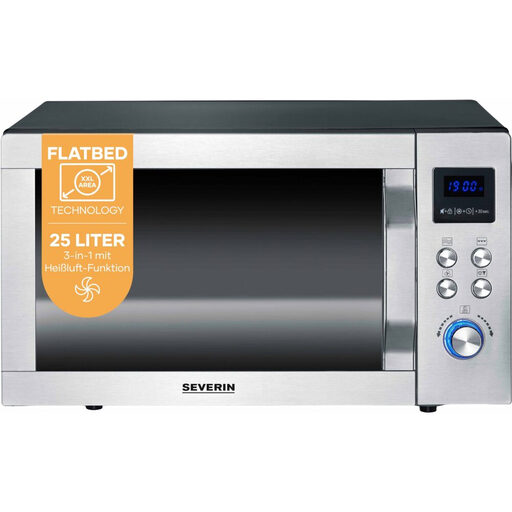 No image available
For leftovers and extra grilling or convection cooking during the renovation.
25 l; 900 W microwave power; 10 power levels; grill and convection; glass base. Do not use metal containers or utensils in microwave mode.
Place on a flat, stable surface with sufficient ventilation.
 No image available
For reheating portions and defrosting, with simple rotary controls.
19 l; 700 W; six power levels; inverter and defrost function; two rotary controls; turntable.
Place on a flat, stable, heat-resistant surface with sufficient ventilation. Do not use metal containers or utensils.
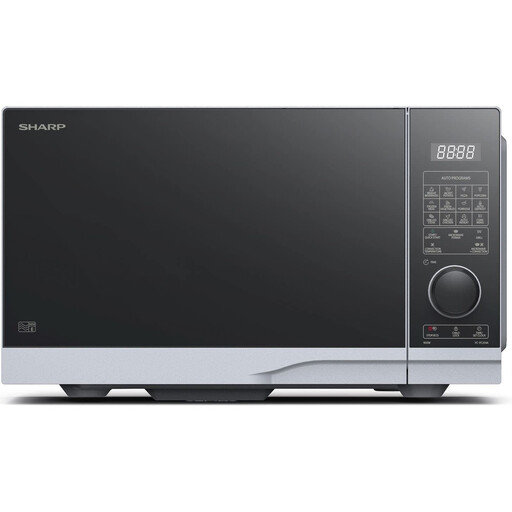 No image available
An option if you want to use the grill and convection functions as well as reheating.
25 l; 900 W microwave power; six microwave power levels; grill and convection; 14 automatic programmes.
The instructions specify sufficient ventilation and a flat, stable surface. Use only suitable cookware in microwave mode; metal and aluminium foil are not allowed.
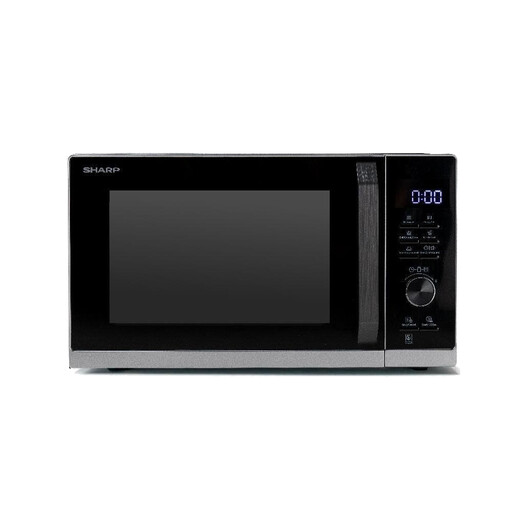 No image available
For households that want to use the grill and convection functions as well as the microwave during the renovation.
27 l; 900 W microwave power; six microwave power levels; 1000 W grill; 2100 W convection; 19 automatic programmes; rotary controls and touch controls.
The instructions specify sufficient ventilation and unobstructed vents. Use only microwave-safe cookware in microwave mode; metal containers and aluminium foil are not allowed.
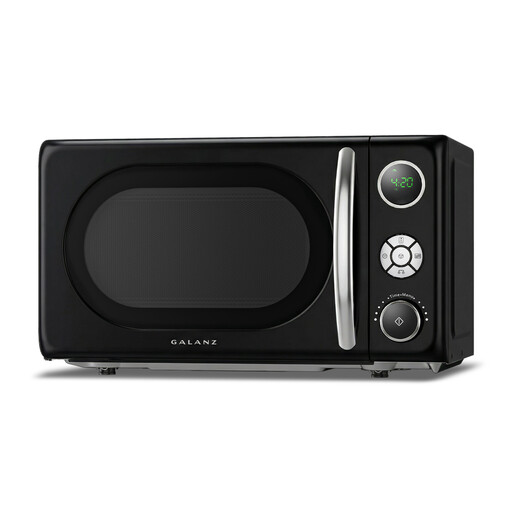 No image available
For reheating and defrosting food, with several power levels to choose from.
20 l; six power levels; reheating and defrosting functions.
Use a container that’s suitable for microwave use and the power setting you’ve chosen. Heat the mash in stages, stirring it in between; the Verbraucherzentrale recommends stirring regularly. To adjust the consistency, stir in a little milk, a plant-based alternative or butter to taste. Keep leftovers properly chilled until you’re ready to use them, rather than leaving them lukewarm for a long time.
Don’t decide based on the appliance’s dimensions alone. Check the installation and ventilation requirements in the instructions for the specific model. Bosch’s instructions for its freestanding appliance specifically mention ventilation clearances when installing it in fitted furniture.
The Bundesnetzagentur lists checks including correct CE marking, identifiable manufacturer details and an instruction manual in German with the required warnings. The CE mark is the manufacturer’s declaration of conformity, not an independent quality assessment of how well the appliance heats food.
A voluntary manufacturer’s guarantee is not the same as your statutory rights against the seller. The Verbraucherzentrale explains that, if a product is faulty, the first step may be to request a repair or replacement.
An old microwave should be disposed of separately as electrical waste. The Umweltbundesamt lists local collection points and recycling centres as free return options; some retailers also offer take-back services.