Heating individual portions
If you take a small portion of milk pudding with you for your lunch break, precise heating and straightforward controls are important.


Start with an easy-to-use solo microwave with adjustable power and a cavity large enough for your microwave-safe container. You won’t need a grill just for pudding. Pudding that needs to be kept chilled must stay sufficiently cold until your break. When reheating food, the German Federal Institute for Risk Assessment recommends stirring it partway through.
If you take a small portion of milk pudding with you for your lunch break, precise heating and straightforward controls are important.
If you’re transporting pudding that needs to be kept chilled, you’ll also need to consider how to store it until your break and whether your reheating container is suitable. The German Federal Institute for Risk Assessment highlights the importance of keeping food sufficiently chilled during transport and storage.
If space is limited, make sure the appliance’s dimensions and controls, as well as the shape of your microwave-safe container, are right for the kitchen.
First, check how the pudding and its container will be stored until your break. Then compare the cavity size and controls. Extra features are mainly worth considering if you plan to use the microwave for other dishes too.
| What you need | What to check before buying | Who is this important to? |
|---|---|---|
| Heating a portion with control | Check that you can set the power and time; stir the food while it’s heating. The German Federal Institute for Risk Assessment recommends stirring food partway through when using a microwave. | If I want to heat a small portion during a short break, I need to be able to adjust the power and check the result. Around 36 % of shoppers prioritise this. |
| Keeping food chilled and choosing a container | Follow the pudding’s storage instructions and check the container’s labelling and temperature limits. The consumer advice centre recommends staying within the temperature ranges specified for microwave-safe dishes. | If I take pudding with me, I want it to stay chilled until my break and need a container that’s suitable for microwave use. Around 29 % of shoppers put chilling and the container first. |
| Controls and worktop space | Check the appliance’s external dimensions and controls against the space available, and make sure your container fits inside the cavity. | If space is limited, I want to be able to position the appliance easily and fit my microwave-safe container inside. Around 21 % of shoppers prioritise worktop space and ease of use. |
| Preparing other dishes | Think ahead about whether you’ll actually use a grill or other extra features in everyday life. | If I regularly prepare other dishes as well as pudding, extra features could be useful. Around 14 % of shoppers prioritise this. |
Insufficient chilling during transport and storage can allow germs to multiply in perishable foods.
If your pudding needs to be kept chilled, first work out how you’ll keep it sufficiently cold until your lunch break. Heating it doesn’t make up for inadequate storage.
Plastic containers have different usage instructions and temperature limits. A container designed for taking food out isn’t automatically suitable for reheating.
Check the labelling on your specific container and, if necessary, transfer the pudding to a suitable one.
Manufacturer claims about inverter technology, a flat base or power output don’t prove that milk pudding will heat evenly without stirring.
Choose controls that suit your needs and check the portion after heating. Stir it partway through.
The FFL023MS2 featured here is a freestanding solo microwave designed for a simple reheating routine.
The MW 7761 is a solo microwave with a flat cavity base and no turntable, operated using two dials.
The range considered here includes a solo microwave and a grill microwave, each with different features.
The NN-SD38 is a solo inverter model for shoppers considering several power levels and a larger cavity.
The microwaves below could be suitable for heating portions you’ve brought with you. Before choosing, check that the controls, power levels and cavity size work for your container and your everyday needs.
 No image available
A good option if you’re looking for a solo microwave with several power levels for small portions.
19 l, 700 W, six power levels, defrost and reheat functions, turntable and inverter technology.
 No image available
This could be an option if you’d like to consider power levels and a defrost function.
20 l, 700 W, six power levels, 30-minute timer, defrost function, interior light and 360° turntable.
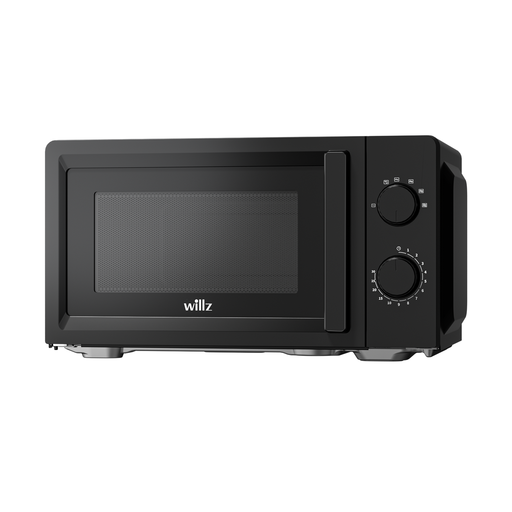 No image available
This could be a good fit if you’re considering a compact microwave for a small kitchen.
20 l; described as a compact microwave oven.
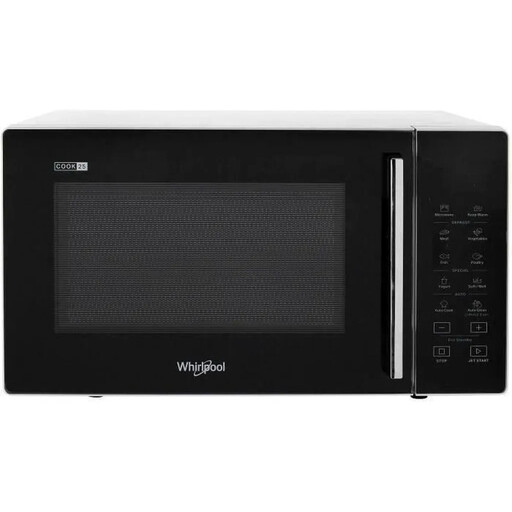 No image available
This could be worth considering if you want extra features as well as adjustable power.
25 l, 900 W, seven power levels, Jet-Start, Keep-Warm, Auto-Clean, plus yoghurt and dough programmes.
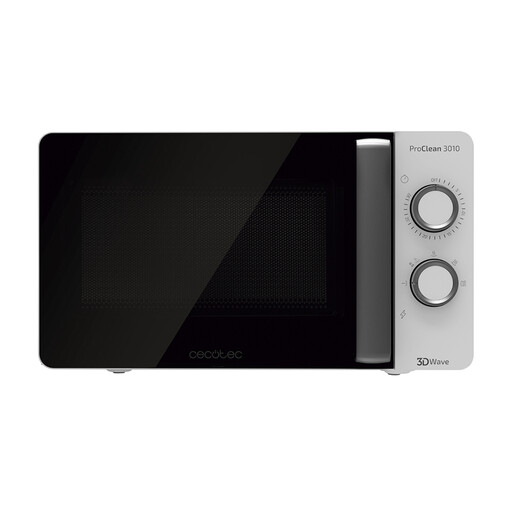 No image available
This could be a good choice if you’re looking for a worktop microwave with several power levels.
20 l, 700 W, six power levels, 3D-Wave heating technology and Ready2Clean coating.
Only if the instructions on that specific container say it’s suitable for microwave use. Follow the stated temperature and wattage limits. Glass or ceramic containers may also be suitable. Don’t continue using a damaged plastic container.
Pudding that needs to be kept chilled should stay sufficiently cold during transport and storage. Stir it partway through heating in the microwave and check the temperature in several places. To reduce the risk of infection, the German Federal Institute for Risk Assessment recommends reheating food to at least 70 °C for at least two minutes. This doesn’t make up for incorrect storage.
No, you don’t need a grill function to heat pudding. It’s an extra feature to consider if you’d also like to grill other foods in the same appliance.
Check the appliance’s external dimensions against the space available, and follow the positioning and ventilation instructions in its manual. The cavity capacity alone won’t tell you whether your bowl will fit.
For appliances covered by relevant EU product regulations, the manufacturer uses the CE marking to declare that the product complies with those regulations. It isn’t an independent quality mark. For electrical household appliances, the German Federal Network Agency checks details including the marking, product identification and manufacturer information.