Instructors preparing several portions
If you’re reheating sauce for participants repeatedly, you’ll need a good fit for your dishes and a process you can control easily.


A solo microwave with adjustable power and easy-to-set time intervals is a good starting point for onion sauce. The size of the actual sauce dishes you’ll be using and stirring during heating also matter, though. Grill or convection functions are mainly useful if you’ll be using them to prepare other dishes in the class.
If you’re reheating sauce for participants repeatedly, you’ll need a good fit for your dishes and a process you can control easily.
A more compact appliance may be enough for individual dishes. Even so, compare the space you have available with the dimensions of your sauce bowls.
If several people will use the microwave, clear power and time settings are important. Simple dials or labelled programmes can help you choose the right model.
A good choice if: You heat sauce in portions and want to set the power level and short intervals yourself.
The trade-off: This type of appliance doesn’t cover grilling or convection cooking; you’ll still need to make sure your dish fits inside the cavity.
A good choice if: Your actual dish won’t fit in a smaller cavity, or you regularly heat other foods as well.
The trade-off: A larger appliance may take up more worktop space; check the internal and external dimensions of the specific model.
A good choice if: You plan to grill, brown or bake other dishes during the class.
The trade-off: These extra functions offer no proven benefit for simply reheating onion sauce; also consider the controls and accessories required for each cooking mode.
| What you need | What to look for | Who is it important to? |
|---|---|---|
| Evenly heated sauce | Power levels and intervals you can pause; stir the sauce and check its temperature. | If you heat sauce in several batches for participants, it’s important to check that it’s hot throughout. Around 36% of consumers put this need first. |
| Dishes that fit | Compare the external dimensions, including handles and cover, with the cavity and turntable. | If you also want to use larger sauce bowls, making sure they actually fit is essential. Around 29% of consumers prioritise this. |
| Easy-to-understand controls | Check the power and time settings, and whether you can pause the microwave, on the specific appliance. | If different people will use the microwave during the class, the settings should be easy to follow. Around 21% of consumers prioritise ease of use. |
| Cleaning up splashes | Check how easy it is to access the cavity, whether the turntable can be removed and what the care instructions say. | If you heat several portions one after another, you may need to clean the microwave between batches. Around 14% of consumers put this first. |
The sauce may not be evenly hot after microwaving. The appliance’s power alone doesn’t tell you whether it has been heated sufficiently throughout.
Heat it in intervals you can control, stir between them and check the temperature.
The capacity in litres doesn’t tell you by itself whether a wide bowl, including its handles and cover, will fit on the turntable and inside the cavity.
Measure the dish you’ll actually use in class and compare its dimensions with the specifications for the specific model.
LG excludes commercial use from the additional magnetron parts warranty for the MS2535GIR. A voluntary warranty is also not the same as your statutory consumer rights.
Before buying, check that the intended use is covered by the terms for the specific model.
The M20 Ecostyle Pro is a solo microwave with manually adjustable power levels.
The MW 7886 is a compact solo alternative with rotary controls.
The freestanding FFL023MW0 has programmes and a setting you can save.
The MS2535GIR is a larger solo option, provided the dish and available space are the right size.
The MS23DG4504ATE1 adds a solo microwave with a 23 l capacity and 800 W to the selection, according to the German product page.
The Joybuy products below include solo and combination microwaves for reheating sauce. Combination models are mainly worth considering if you also plan to use their extra functions in your class.
 No image available
An option if you want to reheat sauce and also use the grill or convection functions in your class.
The product title mentions a glass base and a large usable area for square dishes. Compare your bowl’s dimensions with the appliance beforehand.
 No image available
A solo option if you want to reheat sauce using adjustable power levels.
The product title lists a 19 l capacity, 700 W, six power levels and a turntable. Check that your dish will fit.
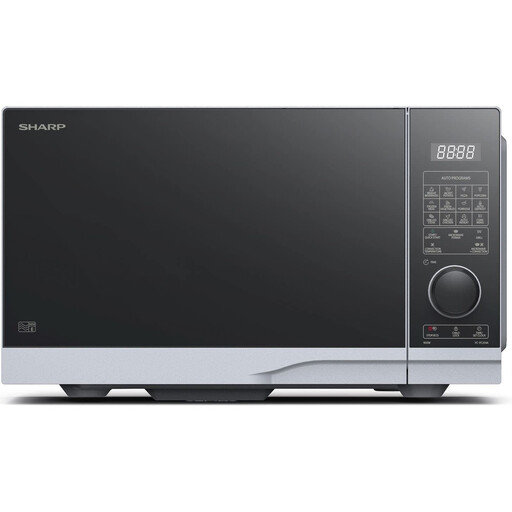 No image available
Worth considering if you also want to use the grill or convection functions in your class, as well as reheating sauce.
The product title lists a 25 l capacity. Compare the internal and external dimensions with your dish and the space where you plan to put the appliance.
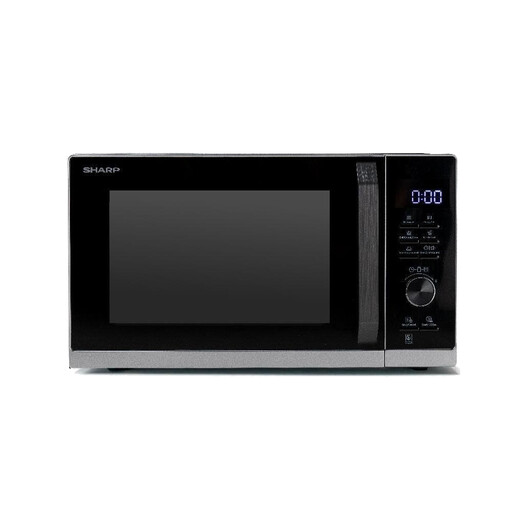 No image available
A combination option if you want to grill or use convection in your class, as well as using the microwave function.
The product title lists a 27 l capacity, 900 W, a 1000 W grill and 2100 W convection power. These figures alone don’t determine how long sauce will take to reheat.
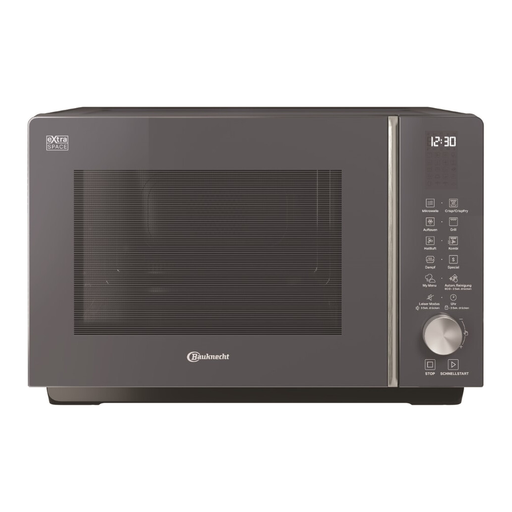 No image available
A combination microwave for classes where you need functions beyond simply reheating sauce.
The product title lists a 25 l capacity. Before choosing, check that the dimensions and features of the specific model suit your dishes and planned uses.
For simply reheating the sauce, a solo microwave is a good starting point. A grill or convection function is mainly useful if you need it for other dishes in the class.
Heat the sauce in suitable cookware, pausing to stir, and check that it’s hot enough throughout. The Verbraucherzentrale recommends a minimum temperature of 70 °C for thorough, even heating. If food is then kept hot, the Federal Institute for Risk Assessment recommends keeping it at a minimum of 60 °C throughout until it is eaten. These refer to different processes and are not interchangeable appliance settings.
Check that the specific dish and lid are suitable for microwave use, and observe their temperature and wattage limits. Don’t use metal containers in microwave mode, and follow the instructions for the model you’re using.
You can’t tell from the term “cookery class” alone. The federal portal describes a registration requirement for food businesses that produce, process or distribute food. Check with your local authority whether those requirements apply to your class.
No. The Verbraucherzentrale distinguishes statutory consumer rights from a voluntary manufacturer’s warranty, which has its own terms and conditions. If you’ll use the appliance commercially in a cookery class, check the terms for the specific model. LG excludes this type of use from the additional magnetron parts warranty mentioned for the MS2535GIR.