People with limited worktop space
Don’t just allow for the width of the casing: you’ll also need to consider the appliance’s installation requirements and leave enough room to open the door where you plan to put it.


A freestanding solo microwave is generally all you need to cook peas in a covered bowl. What matters is the space available where you plan to put it, and whether the bowl and lid will fit. Measure the bowl with its cover in place. If the microwave has a turntable, check that the bowl can rotate freely; a flat base may be an alternative for wider dishes, but it doesn’t automatically mean a smaller outer casing. Both the bowl and its cover must be suitable for microwave use and used according to their instructions.
Don’t just allow for the width of the casing: you’ll also need to consider the appliance’s installation requirements and leave enough room to open the door where you plan to put it.
If you want to keep using your existing dish, compare its dimensions, including the cover, with the cooking cavity and, if fitted, the turntable.
For cooking peas in a covered bowl, the most important things are suitable power and time settings, and easy-to-understand controls. A grill function isn’t essential for this.
First check the space where you’ll put the microwave, then make sure your dish and cover will fit, and finally consider how easy it is to set the right programme for the type of peas you’re cooking.
| What matters | What to check before buying | Who it matters to |
|---|---|---|
| Space and ventilation | Check the appliance’s width, depth and height, the installation clearances specified in the instructions, and the space needed to open the door. | If worktop space is limited, remember to allow for the clearance needed around the appliance too; around 31% of consumers put available space first. |
| Will the bowl fit? | Compare the bowl’s diameter or width and its height with the cover on against the cooking cavity and, where applicable, the turntable. | If you want to keep using your covered bowl, you’ll need enough room for it to rotate freely; around 25% of consumers prioritise this. |
| A suitable bowl and cover | Check the instructions for each item separately, including any temperature and wattage limits. | If I’m heating food in a covered bowl, I want to use both items in line with their instructions; around 31% of consumers put this first. |
| Easy-to-use controls | Check the type of controls and the power levels, and consider whether the peas are fresh, frozen, pre-cooked or dried. | If you prefer a few clear settings for small portions, pay particular attention to the controls; around 13% of consumers prioritise ease of use. |
The cooking cavity’s capacity alone won’t tell you whether your bowl and cover will fit, or whether the turntable can rotate freely.
Measure the whole dish and compare its dimensions with the interior and, where applicable, the turntable of the specific model.
A freestanding appliance may need extra clearance where you plan to put it. Remember to allow for the door to open and follow the installation instructions.
Measure the space and check the instructions for your chosen model before planning to fit it into a tight alcove.
A bowl’s suitability doesn’t automatically mean its lid is suitable too. Plastic items may also have their own temperature and wattage limits.
Check the instructions for the bowl and cover separately, and follow the limits for each.
A model without a turntable may offer a different usable floor area, but it won’t necessarily be more compact on the outside. For example, the manufacturer lists the Caso MG 20 Ecostyle Ceramic’s external dimensions as 465 × 275 × 400 mm (W × H × D).
Compare the usable interior area and external dimensions separately. Only consider a grill function if you’d also use it for other dishes.
The MW 7883 is a freestanding solo microwave with a 17 l cooking cavity; the MW 9188 has a 25-litre cavity and no turntable.
The FFL020MW0 is a freestanding solo microwave with a 20 l cooking cavity.
The MG 20 Ecostyle Ceramic combines a flat cooking cavity without a turntable with a grill function.
According to the German manufacturer’s datasheet, the R-200WW is a mechanically operated solo microwave with a 20 l cooking cavity.
The MS20A3010AL/EG is a 20-litre solo microwave with two rotary controls.
These product suggestions include freestanding microwaves with turntables, so you can compare the space they need, bowl compatibility and ease of use. Before buying, check the dimensions of your bowl with its cover on, as well as the installation requirements for the model you’re considering.
 Image unavailable
An option to compare if you prefer manual settings when cooking in a bowl.
The product information lists 700 W, six power levels, two rotary controls and a 30-minute timer. Listed external dimensions: 44.6 × 36.3 × 24.3 cm (W × D × H).
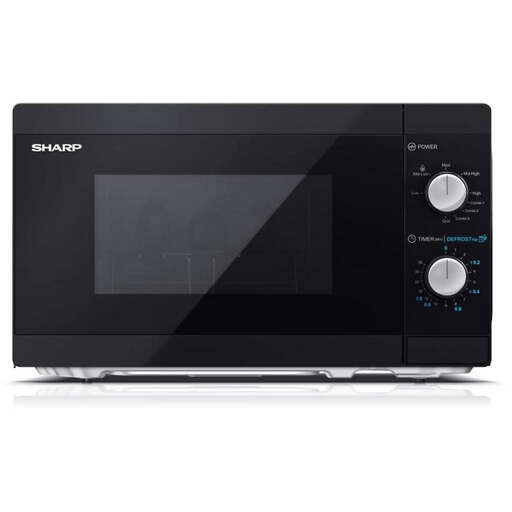 Image unavailable
This model is worth considering if you’d like a grill function as well as microwave cooking.
The product information lists microwave power of 800 W, five power levels and a 25.5 cm turntable. Approximate external dimensions listed: 44 × 25.8 × 32.4 cm (W × H × D).
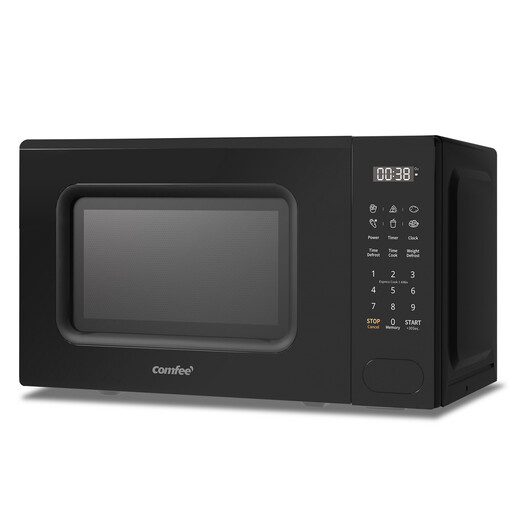 Image unavailable
A digital microwave to compare if you’d like a choice of power levels.
The product information lists 700 W, 11 power levels and a defrost function. Listed external dimensions: 440 × 319 × 259 mm.
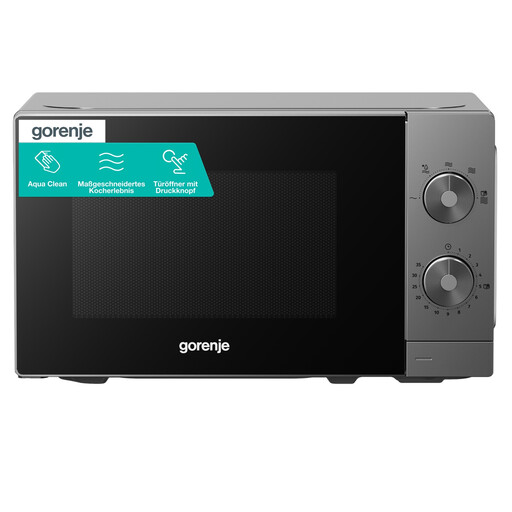 Image unavailable
Compare this freestanding microwave with other appliances by checking its external dimensions and manual power settings.
The product information lists 700 W, five power levels, a 25.5 cm turntable and a defrost function. Listed external dimensions: 44 × 25.9 × 34.6 cm.
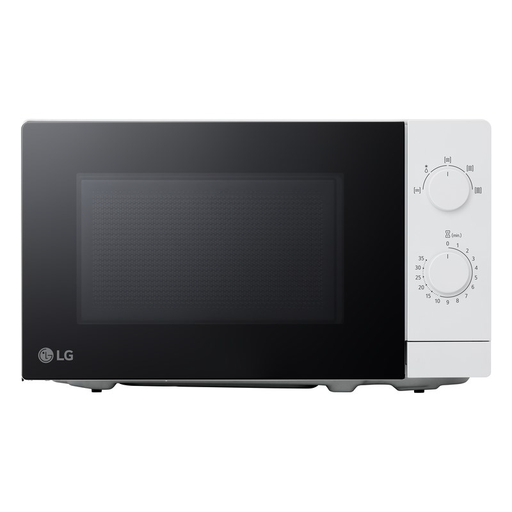 Image unavailable
An option for anyone comparing manually operated solo microwaves with a turntable.
The product information lists two rotary controls and a 255 mm turntable. Listed external dimensions: 439 × 258 × 339 mm (W × H × D).
Not for this purpose alone. You can use a solo microwave to cook food, provided the bowl and cover are suitable and you follow their instructions. There’s no one-size-fits-all cooking time without knowing the type and quantity of peas and the appliance settings.
Check the lid separately from the bowl: according to the Verbraucherzentrale, some lids aren’t suitable for microwave use. With plastic dishes, follow the stated temperature and wattage limits. If no wattage limit is specified, the Verbraucherzentrale recommends not using the highest power setting. Stir the peas afterwards and remove a hot cover carefully.
Don’t assume so based on the external dimensions alone. Check the instructions for the specific model to see where it can be installed and what ventilation clearances it needs. Also allow room to open the door. You can’t simply apply the clearances for another model.
If a purchase is faulty, your statutory rights are against the seller; a manufacturer’s guarantee, by contrast, is voluntary. Under § 438 BGB, claims for defects on ordinary new goods generally become time-barred two years after delivery. Special rules may apply in individual cases; the Verbraucherzentrale explains the difference between statutory rights and a guarantee.
CE marking is required when the appliance falls under relevant harmonised EU rules that expressly require it. As part of its market surveillance, the Bundesnetzagentur lists checks for CE markings, product identification and manufacturer details, among other things. CE marking is not an independent quality mark for cooking results.