Meal-prep enthusiasts
If you prepare peas and other ingredients in advance, choose suitable cookware and make sure food is heated thoroughly and evenly. The BfR recommends heating food to at least 70 °C throughout for two minutes.


For pre-cooked peas and prepared ingredients, a solo microwave with adjustable power is usually sufficient. What matters is using suitable containers and ensuring there’s enough room inside the microwave. A grill is mainly useful if you also want to brown food. No appliance feature can replace prompt chilling, microwave-safe cookware, stirring and thorough heating.
If you prepare peas and other ingredients in advance, choose suitable cookware and make sure food is heated thoroughly and evenly. The BfR recommends heating food to at least 70 °C throughout for two minutes.
If you mainly reheat individual portions, the appliance’s external dimensions matter just as much as the size of your container. Check how much clearance the installation instructions for your chosen model require for ventilation.
If you’d also like to brown food from time to time, consider a model with a grill function. This extra feature isn’t necessary just to reheat pre-cooked peas.
First, check that your usual containers fit inside the microwave. Then choose the controls and any extra features to suit your needs.
When heating food, the German Federal Institute for Risk Assessment recommends a temperature of at least 70 °C throughout for two minutes. Stir the food partway through and check that it’s hot enough everywhere. This recommendation doesn’t translate into a set heating time for peas.
| Buying consideration | What to check | Who should pay particular attention? |
|---|---|---|
| Even heating | Adjustable power; a container that gives you room to stir the contents. | If I want to heat prepared peas thoroughly, I’ll make sure to stir and check them. Around 40% of consumers put even heating first. |
| Container and available space | Compare your container’s dimensions with the interior and turntable; check the installation dimensions. | If my bowl and its contents don’t fit comfortably inside, the capacity in litres and a large turntable won’t help on their own. Around 30% of consumers focus mainly on container size and space requirements. |
| Ease of use | Check the power levels and timer on the specific model. | If I often reheat the same kind of food, I want to set the power and time without unnecessary faff. Around 20% of consumers prioritise ease of use. |
| Extra browning | Check the grill function and appliance dimensions; weigh up the extra space it requires. | If I prepare dishes to brown as well as peas, a grill could be useful. Around 10% of consumers prioritise this extra cooking option. |
Food can still heat unevenly in a microwave. A high wattage rating alone doesn’t tell you whether it will be hot enough throughout.
Stir the food partway through and check the result. The German Federal Institute for Risk Assessment recommends a temperature of at least 70 °C throughout for two minutes.
Manufacturer information gives different interior capacities for the Severin MW 7885: the current German product page states 19 l, while a 2023 data sheet gives 17 l. For the Bosch FFL020MW0, a Joybuy title mentions a touch display, whereas the manufacturer describes it as having “rotary controls only”.
Before buying, check the full model name, the version on offer and the controls against the details for the specific appliance. To see whether your container will fit, interior dimensions and the turntable are often more useful than the capacity in litres alone.
Containers and lids may have different temperature and wattage limits. Damaged microwave-safe cookware should no longer be used.
Check the instructions for the container and lid separately, and only use cookware that’s suitable for microwave use.
The FFL020MW0 is a freestanding solo model with a 20 l capacity.
The MW 7885 is an example of a compact solo microwave with manual controls.
LG lists the MS2535GIR as a solo microwave and the MH6535GIB as a microwave with grill; both models are stated to have a 25 l capacity.
The options below include solo microwaves, as well as models with a grill and, in some cases, a convection function. Choose based on the shape of your container, adjustable power and whether you need extra browning.
 No image available
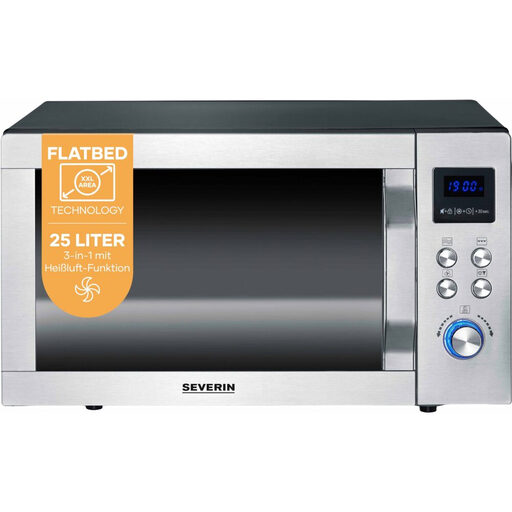
The described flat glass base, with no turntable, could be useful for unusually shaped containers. Check that your container fits in the actual cooking space.
Features listed include 10 power levels and microwave, grill and convection functions. Don’t use metal containers or utensils in microwave mode.
 No image available
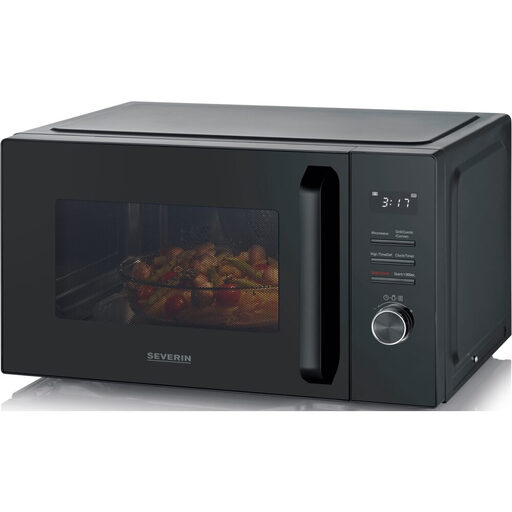
The stated 29 l capacity and 31,5 cm turntable give you specific measurements to check whether your bowls will fit.
Features listed include 7 power levels, a grill and a convection function. Don’t use metal containers or utensils in microwave mode.
 No image available
Described as a solo microwave with defrost and reheat functions, this model could suit individual prepared portions, provided your container fits on the turntable.
Features listed include a 19 l capacity, 700 W, 6 power levels, a 24,5 cm-diameter turntable and a 30-minute timer. Don’t use metal containers or utensils in microwave mode.
 No image available
The stated compact design and turntable could be useful when planning for a smaller kitchen. Compare the dimensions with your available space and container.
Features listed include a 20 l capacity, 700 W, 6 power levels and a 30-minute timer. Only use microwave-safe containers in microwave mode.
 No image available
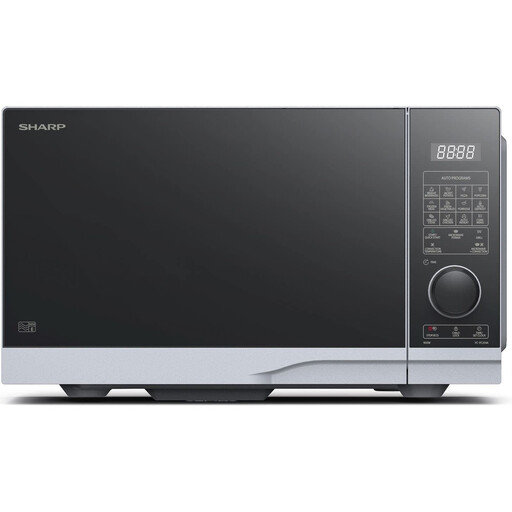
The grill function could be useful if you want to brown food as well as reheat it. Check that the stated turntable size suits your containers.
Features listed include a 25 l capacity, a 288 mm-diameter turntable, 10 power levels, a grill, convection and defrost functions. Use only suitable containers in microwave mode: no metal, aluminium foil or ceramics with metallic decoration.
Don’t rely on it. The German Federal Institute for Risk Assessment recommends quickly cooling hot food to below 7 °C if it’s going to be stored for a longer time, and keeping perishable foods chilled. Reheating is no substitute for safe storage.
Use a microwave-safe container, stir the food partway through and check that it’s hot enough throughout. The German Federal Institute for Risk Assessment recommends a temperature of at least 70 °C throughout for two minutes; this doesn’t give you a set heating time for peas.
No. Check the temperature and wattage limits for the container, and check the lid’s instructions separately. Damaged microwave-safe cookware should no longer be used.
Follow the installation instructions for the specific model, particularly those covering ventilation and the electrical connection. Check the product identity, CE marking and safety information too. The German Federal Network Agency covers these points as part of its market surveillance; a CE marking isn’t an independent test of how well food is reheated.
For a fault, your statutory rights generally apply against the seller. The Verbraucherzentrale distinguishes these rights from a voluntary manufacturer’s guarantee, which is subject to its own terms. Don’t treat a guarantee as a replacement for your statutory rights.