People with pre-cooked portions of pasta
If you want to eat pasta and prepared ingredients at different times, hygienic storage and thorough, even reheating matter more than extra programmes.


A solo microwave is usually enough for individual portions of pre-cooked pasta, provided your container fits inside and you can adjust the power level. A larger cooking cavity is useful for wide dishes or several portions; a grill or convection setting is mainly relevant if you also want to brown or bake pasta bakes. No appliance feature can replace hygienic storage and thorough, even reheating.
If you want to eat pasta and prepared ingredients at different times, hygienic storage and thorough, even reheating matter more than extra programmes.
If you’re heating several portions or using wide dishes, check that your cookware fits in the cooking cavity and can turn on the turntable.
If you also want a browned topping, a grill or convection setting may be useful. Weigh these features against the extra space the appliance will take up.
For pre-cooked pasta, the appliance’s dimensions and careful reheating are key. Germany’s Federal Institute for Risk Assessment (BfR) recommends heating food thoroughly throughout when reheating.
A good choice if: you mainly want to reheat chilled portions of pasta and ingredients that are already cooked.
Bear in mind: the microwave function alone won’t create a browned, baked topping.
A good choice if: you occasionally want to brown cheese or the top of a pasta dish.
Bear in mind: you don’t need a grill for everyday reheating. A browned surface doesn’t prove that the dish is hot enough throughout.
A good choice if: you regularly want to bake or brown dishes as well as reheat food, and have space for a larger appliance.
Bear in mind: extra features are no substitute for hygienic storage or checking your food for cold spots.
| Priority | What to check when buying | Who it matters most to |
|---|---|---|
| Safe, even reheating | Adjustable power levels and the option to stir the dish part-way through. | If I prepare pre-cooked pasta and ingredients for later, I want to heat them thoroughly and spot any cold patches. Around 36% of consumers prioritise safe, even reheating. |
| The right dish and portion size | Compare the turntable diameter and interior height with the cookware you use. | When I’m using wide dishes or heating several portions, my cookware needs to fit and be easy to handle. Around 29% of consumers prioritise enough space for their dish and portion. |
| Easy reheating | Consider the controls, power levels, cleaning and external dimensions. | If I regularly reheat individual portions and have limited worktop space, I want an appliance with features that suit my routine. Around 21% of consumers prioritise ease of use and a compact size. |
| Browning or baking | Check whether a grill is enough or whether you’ll actually use a convection setting. | If I also want a browned top on pasta dishes, I need the right grill or baking features. Around 14% of consumers put this extra requirement first. |
Automatic programmes and claims about heat distribution don’t prove that every part of a particular portion has been heated sufficiently.
Stir the dish part-way through and check the result. Consider reheating and storage separately.
The stated capacity alone won’t tell you whether a wide dish will fit on the turntable.
Compare the base and height of your dish with the turntable and interior. Also check how much worktop space the appliance needs.
Reheating and browning the top of a pasta bake are different jobs. A combination model may also take up more space.
Choose extra features based on whether you’ll actually bake or brown dishes.
Plastic containers can vary in their temperature limits and usage instructions.
Check the labelling and the instructions for your specific container, including guidance on microwave use, temperature and power.
The FFL023MW0 freestanding solo microwave is one example of an appliance for reheating individual portions.
The NN-ST64QWEPG is an example of a larger solo microwave for households that need more cooking space.
The MG23T5018CW is a microwave with a grill, while the MC32DB7746KDE1 is a separate combination model with convection.
The M20 electronic is a solo alternative with manual controls for regular reheating.
The Proclean 2010 Inverter is a compact inverter alternative.
These solo microwaves are suitable for reheating pre-cooked pasta and other individual portions.
 No image available
For individual portions of pre-cooked pasta when you want to adjust the power to suit.
700 W; 19 l; six power levels; 24,5 cm turntable.
 No image available
For portions you want to reheat using adjustable microwave power levels.
700 W; 20 l; six power levels; 30-minute timer; 24,5 cm turntable.
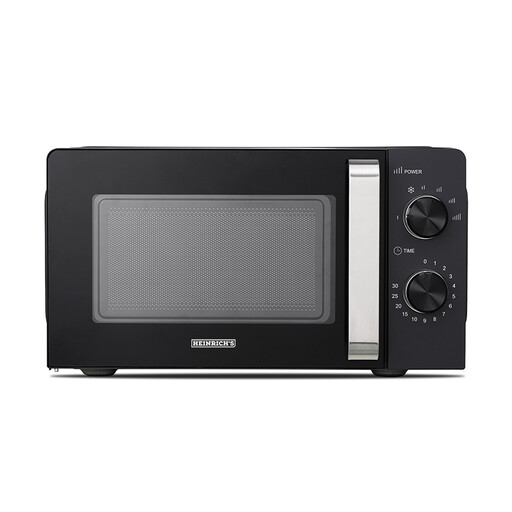 No image available
For individual portions when you want to choose between several power levels while reheating.
700 W; 20 l; six power levels; 24,5 cm turntable.
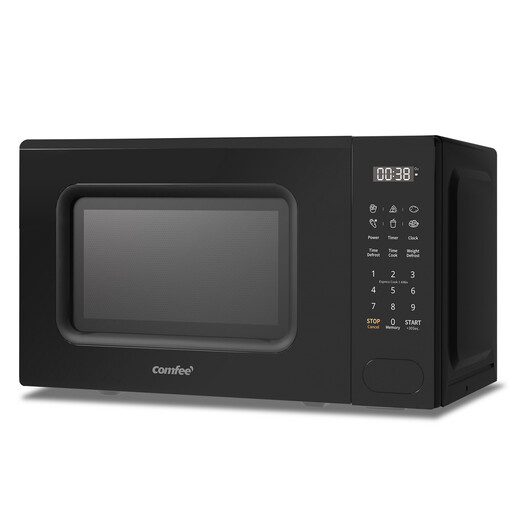 No image available
For reheating leftovers if you prefer digital controls and several power levels.
700 W; 20 l; eleven power levels; external dimensions of 440 × 319 × 259 mm.
Store prepared ingredients hygienically and heat the dish thoroughly. The BfR recommends heating food to at least 70 °C for two minutes throughout; stir food part-way through when using a microwave. A wattage setting or automatic programme is no substitute for checking the dish.
No. According to the BfR, spores can germinate if food is stored in unsuitable conditions. The toxin cereulide, produced by certain Bacillus cereus bacteria, is not inactivated by heating. So it’s important to store food properly before reheating it.
Only if the instructions for that specific container say it’s suitable for microwave use at your chosen temperature and power level. The consumer advice centre recommends not reusing damaged containers and avoiding the highest power setting if no wattage guidance is provided.
Germany’s Federal Network Agency lists several things to check, including correct CE marking, an identifiable product, manufacturer details and German instructions with the required warnings. CE marking alone isn’t an independent test of reheating performance.