For reheating leftovers
If you want to reheat portions of cooked peas after your weekly shop, storing them correctly, choosing a suitable bowl and stirring while they heat matter more than an automatic programme.


For individual portions of peas that have been stored at the right temperature, a solo microwave with a cavity and turntable that fit your bowl is a sensible place to start. The German Federal Institute for Risk Assessment (BfR) recommends stirring food from time to time when heating it in a microwave. Extra grill or oven functions are mainly worth considering if you’ll use them for other dishes too.
If you want to reheat portions of cooked peas after your weekly shop, storing them correctly, choosing a suitable bowl and stirring while they heat matter more than an automatic programme.
If worktop space is limited, measure the space available and check that the door, cavity and turntable will accommodate the bowl you usually use. The stated capacity alone won’t tell you that.
If you prepare several meals at once, check the appliances against the containers you actually use, and make separate plans for suitable fridge or freezer storage.
A good fit if: you mainly reheat individual portions and want straightforward controls.
The trade-off: there are no extra browning functions, and your bowl needs to fit the turntable.
A good fit if: you regularly use larger or unusually shaped containers, or need defrost programmes for other foods.
The trade-off: check the dimensions, turntable and controls of the specific model. An automatic programme is no substitute for checking the temperature or storing food safely.
A good fit if: you genuinely want to bake, brown or grill food as well as reheat it.
The trade-off: there’s no proven benefit from these extra functions for cooked peas alone. Space requirements and suitable cookware depend on the model and operating mode.
| Buying priority | What to check | Who is it most relevant to? |
|---|---|---|
| Even reheating | Power settings and the option to pause and stir; use suitable cookware. | When I reheat leftovers, I want to be able to stir them part-way through and check how they’re heating. Around 36% of consumers have this as their main priority. |
| Space and bowl fit | Check the appliance’s external dimensions, door opening, cavity and turntable against your available space and bowl. | When the kitchen is small, it matters to me that the appliance and my usual bowl both fit. Roughly 29% of consumers place particular importance on space and ease of use. |
| Several pre-prepared portions | Compare your largest containers with the cavity height and turntable; plan separate space for chilled or frozen storage. | When I prepare meals for several days, I need room for my largest containers and somewhere suitable to store them. Around 21% of consumers give this priority. |
| Extra cooking functions | Decide which other dishes you’ll make; don’t confuse microwave output power with input power. | When I want to prepare other dishes too, I check whether the extra functions are worth it for me. Around 14% of consumers prioritise additional cooking functions. |
IMTEST measured 8.2 l of genuinely usable space in the CASO Design M20 electronic, rather than its stated capacity of 20 l. This finding applies to that specific model and shouldn’t be generalised to other microwaves.
Measure your bowl’s diameter and height, then compare them with the turntable and cavity of the specific appliance.
The BfR points out that the risk of microbial contamination increases the longer prepared food is stored. Microwaving can also create differences in temperature throughout the food.
Store cooked portions chilled or frozen as appropriate, and stir them while reheating. The BfR recommends heating food to at least 70 °C for two minutes throughout; if in doubt, check the temperature with a suitable thermometer.
Microwave output power, power consumption and grill power are different specifications. When heating small portions of peas, the fit of your container, the controls and suitable cookware matter too.
First check that your bowl fits inside the appliance and see how you can adjust the power. Only compare extra functions once you’ve considered what else you plan to cook.
The MW 7770 is a solo microwave with rotary dials for defrosting and reheating.
The M20 electronic is a solo microwave with a digital display and programmes.
The FFL020MW0 is a freestanding solo microwave with rotary dials.
The MS23K3513AW/EN is a solo microwave with a stated capacity of 23 l, quick defrost and automatic programmes.
The NN-SD38 is a solo inverter microwave with a larger cavity.
Joybuy models for reheating individual portions of peas and, depending on the appliance, for larger containers or additional cooking functions.
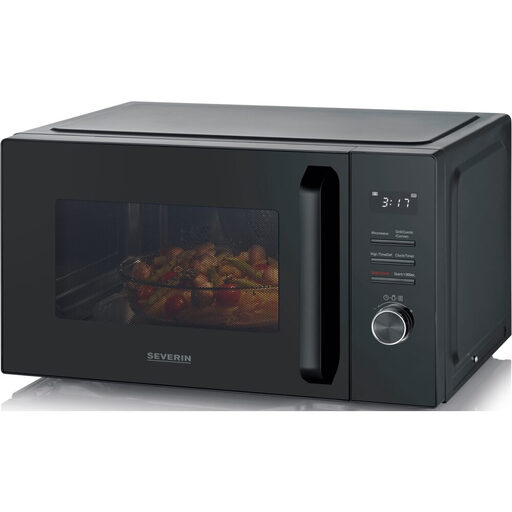 No image available
The listed power levels and defrost mode suit a range of reheating and defrosting needs.
29 l cavity, 31.5 cm turntable, seven power levels and 1000 W, according to the product specifications.
 No image available
A solo microwave with several power levels and two rotary dials for manual control.
19 l, 700 W, six power levels and a turntable measuring 24.5 cm in diameter, according to the product specifications; timed defrost is also listed.
 No image available
Six power levels and two rotary dials are listed for straightforward, manual control.
700 W, a turntable measuring 24.5 cm in diameter and a 30-minute timer, according to the product specifications; a defrost function is also listed.
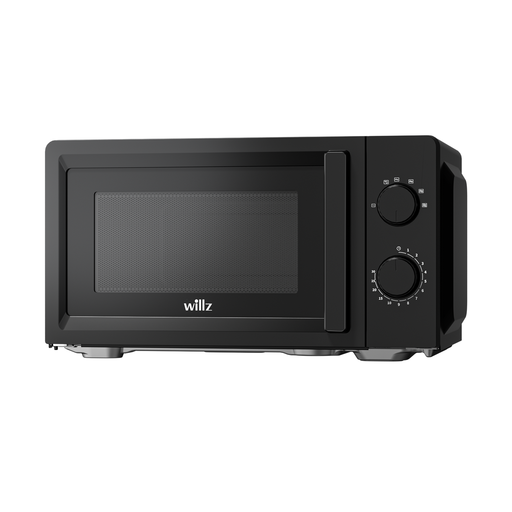 No image available
The product title describes a 20 l microwave for smaller spaces. Check its actual external and internal dimensions against your available space and bowl.
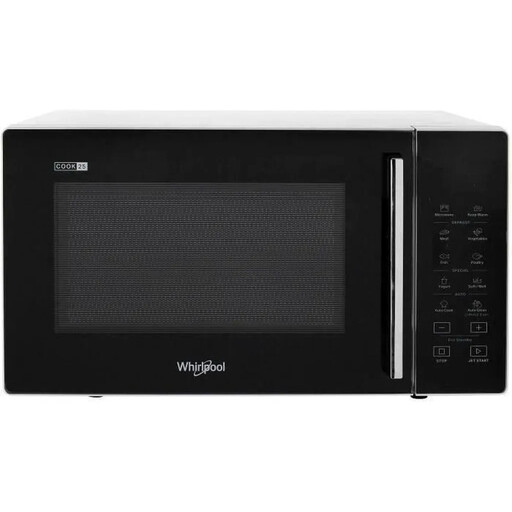 No image available
Seven power levels and a turntable measuring 27 cm in diameter are useful points to consider when choosing based on controls and bowl size.
25 l and 900 W according to the product title; Auto-Cook and other programmes are listed in the description.
You can’t assume that cooked peas will be safe to keep in the fridge for a whole week. The BfR points out that the risk of microbial contamination increases the longer prepared food is stored. Plan to refrigerate or freeze it according to how long you intend to keep it.
Use suitable cookware and stir the portion while it heats. The BfR recommends heating food to 70 °C throughout for at least two minutes; if in doubt, you can check the temperature with a suitable thermometer. This is a food-safety recommendation, not a guarantee of appliance performance.
Heat-resistant glass or suitable ceramic are options. If you use plastic, follow the stated temperature and wattage limits, and don’t continue using damaged cookware. Also check that the bowl fits inside the cavity and can turn on the turntable.
Measure the available space and room to open the door, and follow the installation and ventilation guidance in the manual for your chosen model. If the casing or door is damaged, the German Environment Agency advises against trying to repair the microwave yourself.
The German Environment Agency points out that microwaves don’t have an energy label. Compare the available figures for power consumption and standby consumption, rather than trying to work out electricity costs from microwave output power alone.