Hosts serving from a large dish
If you want to heat several portions in one large dish, first check that both the dish and its cover fit inside the usable cavity.


A solo microwave is usually all you need for cooked pasta, provided your dish and cover fit inside and, with a turntable model, can rotate freely. For wide or square serving dishes, a flatbed microwave may be more practical. A grill and convection function are mainly worth considering if you’ll use them for other dishes too. The BfR recommends stirring food partway through reheating and ensuring it reaches at least 70 °C for two minutes throughout. Keep the pasta chilled until you’re ready to reheat it.
If you want to heat several portions in one large dish, first check that both the dish and its cover fit inside the usable cavity.
If you cook the pasta ahead of time and take it along to a meal, keeping it chilled and reheating it thoroughly should be part of your plan. The BfR recommends stirring food partway through when heating it in a microwave.
If you regularly heat smaller meals as well as food for a bring-and-share, consider whether simple settings will do or whether you’ll really use the grill and convection functions.
First, compare the dimensions of your dish with the usable cavity. Then decide which controls and extra features you’ll genuinely need day to day.
| Buying priority | What to check | Who is it important to? |
|---|---|---|
| Space for the dish | Measure the dish and cover. For a turntable model, check the diameter and make sure the dish can rotate freely; otherwise, check the cavity and door opening. | If I’m bringing a large dish for several guests, it needs to fit along with its cover. Around 36% of consumers are likely to prioritise space for the dish above all else. |
| Keeping food chilled and reheating it thoroughly | Plan for chilled transport and storage. Stir the food while heating and, according to the BfR, make sure it reaches at least 70 °C for two minutes throughout. | If I prepare the pasta in advance and bring it along, keeping it chilled until reheating is especially important to me. Around 29% of consumers are likely to have this as their main priority. |
| Simple controls | Check that the time and power are easy to set and that the cavity is easy to clean. | If I also use the microwave for small meals, I want to reheat food as needed without fiddly settings. Around 21% of consumers are likely to put ease of everyday use first. |
| Extra cooking methods | Only consider a grill and convection function if you’ll use them for other dishes. Compare the appliance and dish dimensions. | If I want to grill or bake dishes as well as heat pasta, the extra functions need to suit how I use the appliance. Around 14% of consumers are likely to prioritise these cooking methods above all else. |
A capacity in litres doesn’t tell you whether your dish and its cover will fit. With a turntable, there also needs to be enough room for the dish to rotate.
Measure the dish and cover, then compare their dimensions with the usable cavity, turntable and door opening of the specific model.
These functions give you more cooking options, but they aren’t necessary for reheating pasta that’s already been cooked.
Choose a combination microwave only if you also want to use the grill or convection function for other dishes.
Improper storage can allow bacteria to multiply. Some bacterial toxins that have already formed are heat-stable, so reheating later won’t reliably make them harmless.
Plan to keep the food chilled until you reheat it. The BfR recommends stirring food partway through when microwaving and heating it thoroughly throughout.
The MW 7790 is a solo microwave designed for straightforward reheating.
The R-242BKW data sheet describes a compact solo microwave with electronic controls.
The MG 25 Ceramic Menu is an option if you want to place dishes on a flat surface without a conventional turntable.
The MC32DB7746KDE1 is a combination microwave for households wanting to use a grill and convection function as well as reheat food.
The selection includes solo microwaves, flatbed models without a turntable and combination models with extra cooking methods. The right design for you depends mainly on your dish’s dimensions and how you’ll use the microwave day to day.
 No image available
The glass base without a turntable is an option for wide or square dishes. Check the dish’s dimensions against the cavity.
Listed in the product name: 25 l capacity, grill and convection function.
 No image available
This solo microwave is suitable for reheating individual portions and defrosting, provided your dish fits inside the cavity.
Listed in the product name: six power levels and a turntable.
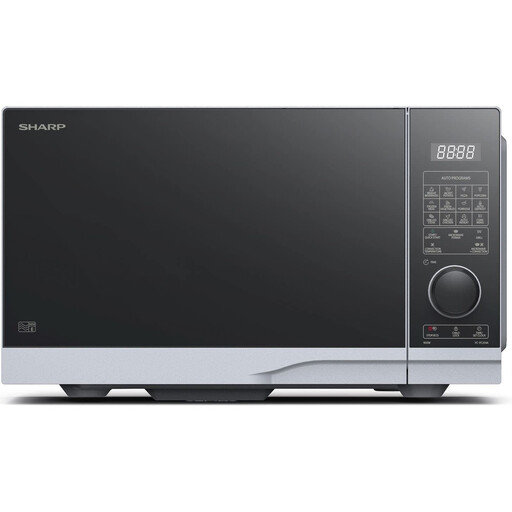 No image available
A combination option if you want to use a grill and convection function as well as reheat food. Check that your dish fits in the cavity of this particular model.
Listed in the product name: grill and convection function, with a silver finish.
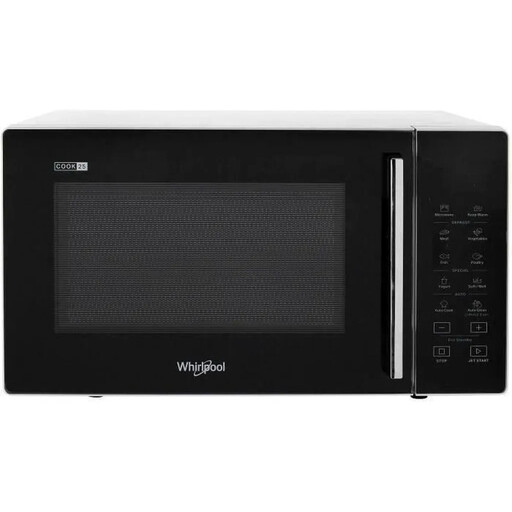 No image available
This solo microwave with a reheating function is an option for smaller portions. Check your dish dimensions against the cavity.
Listed in the product name: Jet Start, keep-warm and automatic cleaning functions.
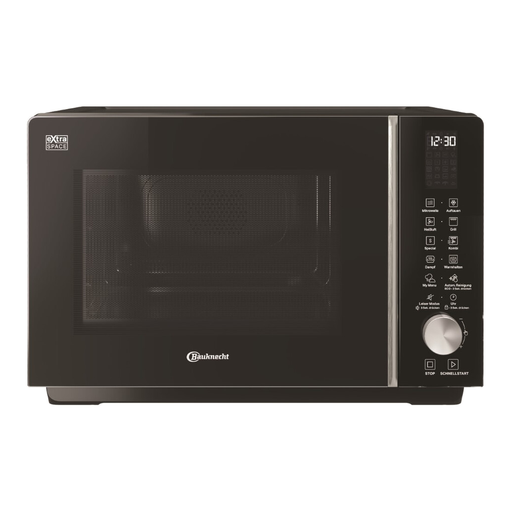 No image available
The flatbed cavity without a turntable is an option for wide or square dishes. Check the internal dimensions and door opening before you buy.
Listed in the product name: grill, convection function and a steam-cooking container.
Measure the dish, including a suitable cover, and compare its width and height with the usable cavity. If the microwave has a turntable, the dish also needs to rotate freely. You can’t tell whether it will fit from the capacity in litres alone.
Keep the cooked pasta chilled until you reheat it, and make sure it stays cold during transport too. The BfR recommends heating it to at least 70 °C for two minutes throughout. Stir the food partway through in the microwave and, if in doubt, check its temperature. Bacterial toxins that have already formed and are heat-stable won’t reliably be made harmless by reheating later.
Only if the instructions confirm that the container, and its lid if applicable, is microwave-safe. Follow the stated temperature and wattage limits, and don’t continue using damaged containers. Otherwise, transfer the pasta to suitable microwave-safe cookware.
Check the warranty terms for the specific model and whether you can replace any accessories you need, such as a turntable.
No. Electrical and electronic waste must be collected separately. Under the ElektroG, local collection points are one way to return it; whether a retailer will take it back depends on the legal requirements. The amendment that came into force on 1 January 2026 improves the labelling of return points in particular. It doesn’t mean that every retailer has to take back every appliance.