Reheating curry after a late shift
You want to heat a pre-cooked portion without fiddly settings and avoid cold spots.


If you mainly want to reheat a portion of vegetable curry after a late shift, a straightforward solo microwave that fits your covered bowl will usually be a good place to start. Inverter technology or extra power levels may be useful features, but they won’t prevent cold spots. A grill or oven function is most worthwhile if you’ll use it for other dishes too. Stir the curry as it heats, then check that it’s hot throughout.
You want to heat a pre-cooked portion without fiddly settings and avoid cold spots.
You need to compare the space available and usable cooking capacity with the dimensions of your usual bowl and its cover.
You also need a grill or oven function from time to time, and can allow for the extra space it may take up.
With curry, it’s not just about the microwave settings: Germany’s consumer advice centre recommends heating food evenly in the microwave and stirring it regularly.
A good fit if: You mainly reheat individual portions and want to set the time and power directly.
Consider: It doesn’t have a grill or oven function; check that your bowl and cover will fit.
A good fit if: You often reheat pre-cooked food and want extra power levels or a quick-start option.
Consider: Manufacturers’ claims about even heating don’t replace stirring your food or checking your portion.
A good fit if: As well as reheating, you regularly want to brown, grill or bake food.
Consider: You don’t need the extra function for a typical portion of curry; the appliance may take up more space and require more cleaning.
| Priority | What to check before buying | Who may find this especially important |
|---|---|---|
| Even heating | Power levels and controls for heating in stages; stir the curry and check it afterwards. | If you’re reheating a pre-cooked portion after work, you won’t want any cooler spots left. Around 36 % of consumers put even heating first. |
| Easy to use | Check whether you can set the time and power directly, or whether quick-start suits your routine. | When you get home tired, you’ll want to choose your settings without navigating a complicated menu. Around 29 % of consumers prioritise ease of use. |
| Bowl fit and counter space | Measure your bowl and cover, as well as the space available; compare these measurements with the interior, turntable and external dimensions. | If you want to keep using your usual curry bowl and have a small kitchen, getting the right fit is essential. Around 21 % of consumers first consider whether their bowl will fit and how much space the appliance takes up. |
| Easy to clean | Compare removable turntables and accessible interior surfaces; follow the manufacturer’s care instructions. | If splashes are likely when you reheat food often, you’ll want to clean them up without a fuss. Around 14 % of consumers put easy cleaning first. |
Features don’t replace stirring your food and checking how it has heated.
Choose features to suit your routine, stir the curry as it heats and check afterwards that it’s hot throughout.
The litre figure alone won’t tell you whether your bowl and cover will fit; appliances also vary in their external dimensions.
Measure your bowl, cover and available space, then compare them with the specifications for the model you’re considering.
A larger appliance can take up unnecessary space in a small kitchen.
You don’t need extra functions simply to reheat food, and they may mean more space and cleaning.
First consider whether you regularly want to brown, grill or bake food. If not, start by comparing solo microwaves.
The MW 7790 and MW 7761 models offer two different solo designs: dial controls with a turntable, or a flat ceramic base.
The NN-SD38 is a solo microwave with inverter technology, several power levels and quick-start.
The MG23T5018CW is a grill microwave with extra functions beyond reheating.
The R-642INW specification sheet describes a compact grill microwave for households that occasionally want to brown food too.
The following microwaves are listed as suitable for heating food. When choosing one for your curry bowl, pay particular attention to the controls, power settings and size.
 No image available
The solo design and adjustable power are well suited to heating food in stages.
19 l, 700 W, six power levels, inverter technology and a 24.5 cm-diameter turntable.
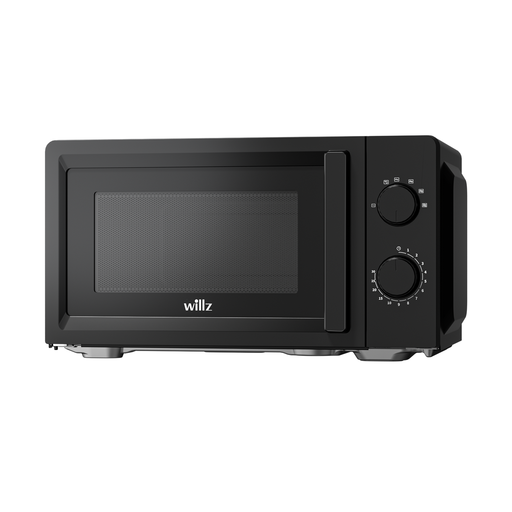 No image available
Its compact design and the simple controls mentioned in the title may suit a fuss-free reheating routine.
The title lists a 20 l capacity.
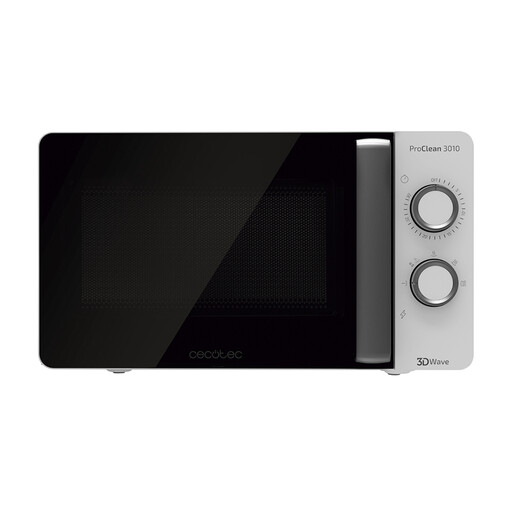 No image available
Six power levels give you options for heating food in stages; still, be sure to stir the curry and check it.
20 l, 700 W and six power levels; the title also mentions an easy-clean coating. The description for this model specifies clearances of 10 cm at the back, 5 cm at the sides and 20 cm above.
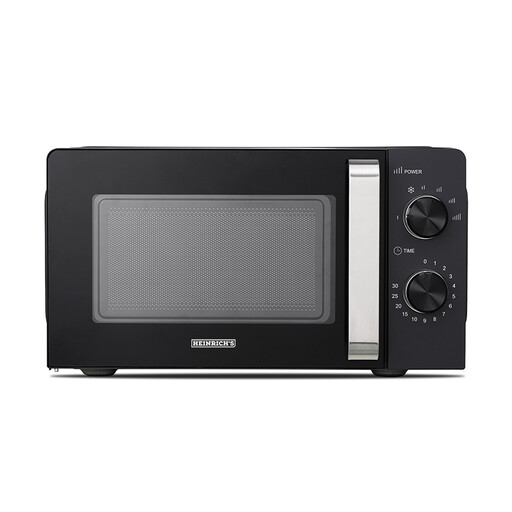 No image available
Two dials are a good option if you want to set the time and power level directly.
20 l, 700 W, six power levels and a 24.5 cm-diameter turntable; the interior is described as easy to wipe clean.
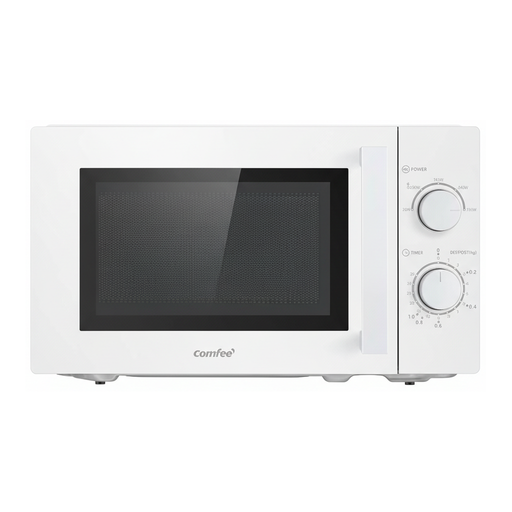 No image available
The mechanical controls and five power levels are a good fit if you want to choose the settings manually.
20 l, 700 W and a removable glass turntable with a 255 mm diameter. According to the description, children shouldn’t use the appliance unsupervised.
Use a suitable covered container and stir the curry thoroughly during or after heating. Then check that it’s hot throughout; a high wattage rating or a turntable alone won’t guarantee this.
Only if the container and, where applicable, its lid are suitable according to the instructions, and you stay within the specified temperature and wattage limits. Germany’s consumer advice centre recommends not using damaged microwave-safe dishes.
Compare the external dimensions and installation instructions for the specific appliance with the space available. You can’t work out the required clearances from the cooking capacity or turntable diameter alone.
No. Under the EU consumer rules explained by Your Europe, if you buy from a trader in the EU, you have a statutory guarantee of at least two years from the date you receive the goods. Any manufacturer’s guarantee offered is separate.