If you mainly reheat red lentil dhal at your weekend cookery class, a solo microwave should be enough, provided your dish fits inside and is easy to handle. For larger bowls, usable interior dimensions and the turntable matter more than the stated capacity in litres alone. A grill or convection function is only worth considering if you also want to prepare other dishes for the class. For food safety, the Federal Institute for Risk Assessment recommends heating food to at least 70 °C for 2 minutes throughout, and cooling hot food quickly to below 7 °C if you plan to store it for longer.
Which microwave is right for you?
Class leader preparing dhal in advance
If you prepare dhal for participants, you’ll need to plan for rapid cooling and thorough reheating. For longer storage, the Federal Institute for Risk Assessment recommends cooling hot food quickly to below 7 °C.
Cookery class serving several portions
If you’re reheating food for a group, compare the dimensions of your bowl and lid with the turntable and interior of the specific microwave. The manufacturers’ specifications for the Severin MW 7790 and Panasonic NN-SD36 show that their cavity and turntable sizes differ.
Class covering other cooking techniques
If you also want to bake or brown food as well as prepare dhal, a combination microwave may offer useful extra functions. Samsung lists a grill and convection function for the MC32DB7746KDE1, while the F.A.Z. Kaufkompass recommends it as an option for baking.
What should you look for when buying?
Compact solo microwave
Right for you if: you mainly reheat individual portions that fit, and don’t need a grill or convection function.
The trade-off: A large serving bowl may take up too much space, so check both the dish and the turntable.
Larger solo microwave
Right for you if: you want to use larger dishes and their dimensions fit the usable cooking space.
The trade-off: More cooking space doesn’t remove the need to stir food or check its temperature as it heats.
Microwave with grill or convection function
Right for you if: you also want to bake or brown dishes during your class.
The trade-off: These functions offer no proven benefit for dhal alone, and you’ll need to allow for the space they take up and the extra cleaning.
| Buying priority |
What to check before buying |
Who is this important to? |
| Reheating dhal safely |
Plan for cooling and reheating suitable portions; check that you can easily remove the dish to stir the food and check its temperature. |
If I’m serving participants dhal that I’ve prepared in advance, I need to think through the whole process, from cooling to reheating. Around 36% of consumers prioritise this. |
| Dish and portion size |
Measure your bowl and lid, then compare them with the microwave’s turntable, interior and door opening. |
When preparing several portions, I want to know whether my chosen bowl will actually fit. Around 29% of consumers prioritise finding a microwave that can accommodate group portions. |
| Controls and cleaning |
Compare how you set the time and power, and how easy it is to clean the interior and turntable. |
If different people will use the microwave, clear controls and straightforward cleaning matter to me. Around 21% of consumers make this their main priority. |
| Additional cooking functions |
Consider whether other dishes for your class need a grill or convection function, and check how much space you have available. |
If I also want to bake or brown food in the same microwave, these functions matter to me. Around 14% of consumers have this as their main requirement. |
Common buying and usage mistakes
-
Buying based on litre capacity alone
The cavity capacity alone won’t tell you whether your bowl and lid will fit on the turntable. If the bowl is too large, you may need to reheat the food in several batches.
Measure your bowl and lid, then compare them with the turntable, interior and door opening of the specific model.
-
Assuming wattage or an automatic programme guarantees safe heating
A microwave setting doesn’t prove that the dhal is hot enough throughout. The Federal Institute for Risk Assessment recommends at least 70 °C for 2 minutes throughout; hot food should be cooled quickly to below 7 °C for longer storage.
Plan for cooling and reheating suitable portions, stir the dhal and check the result rather than relying on the display alone.
-
Choosing a grill or convection function just for dhal
These extra functions are for other types of cooking. When reheating dhal, the microwave function is the one that matters.
Choose a combination microwave only if you’ll genuinely use its grill or convection function for other dishes planned for your class.
Bear in mind that a combination microwave may take up more space and require more cleaning.
Brands to consider
Severin
The MW 7790 is an example of a compact solo microwave with rotary controls.
- Severin lists a 20 l capacity, 700 W, five power levels and a removable turntable with a diameter of 25.5 cm.
- Check that your bowl for the class fits on the turntable; the litre capacity alone won’t tell you.
Panasonic
The NN-SD36 is a larger solo option with inverter technology, but no grill or convection function.
- Panasonic lists a 29 l capacity, 1000 W microwave power and a turntable with a diameter of 288 mm.
- The even heating promoted by the manufacturer doesn’t prove that a particular portion of dhal will reach a sufficiently high temperature throughout.
Samsung
The MG23T5018CW and MC32DB7746KDE1 suit different needs: straightforward reheating or additional cooking functions.
- The F.A.Z. Kaufkompass rated the MG23T5018CW’s controls positively in a general microwave test; it wasn’t a test for dhal.
- Samsung lists a 32 l capacity, a grill and a convection function for the MC32DB7746KDE1. These don’t offer any clear additional benefit if you’re only reheating dhal.
LG
According to LG, the MH6565CPB combines a 25-litre cavity with microwave, inverter and grill functions.
- LG lists 1000 W microwave power and promotes an easy-to-clean interior.
- LG excludes commercial use from the additional magnetron parts warranty advertised on the model page. Check the specific warranty terms for how you plan to use it for your class.
Microwaves at Joybuy
The Joybuy options below include solo and combination microwaves for reheating dhal. Grill and convection functions are mainly worth considering if you also want to use them for other dishes in your class.
 No image available
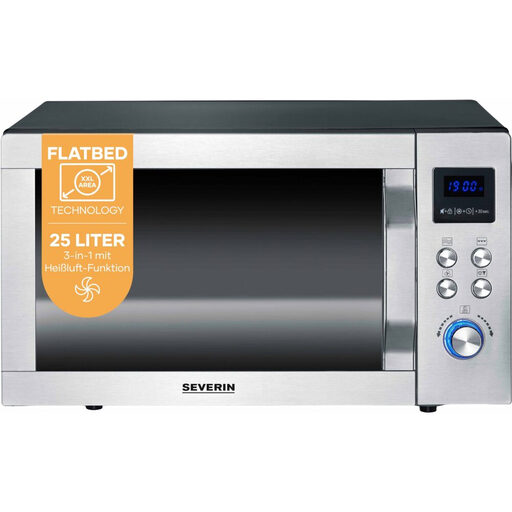
Severin MW 7777 3-in-1 microwave with glass base
A good choice if you want to reheat dhal and use the grill or convection function for other dishes in your class.
Grill and convection functions; glass base.
View at Joybuy
 No image available
Severin MW 7580 solo microwave
A good fit if you want to reheat dhal without an additional grill or convection function.
19 l capacity, 700 W, six power levels, inverter technology, plus defrost and reheat functions.
View at Joybuy
 No image available
Heinrich's solo microwave, 20 l
A solo option if you want to reheat dhal in a suitable microwave-safe dish.
20 l capacity, 700 W, six power levels, 30-minute timer and defrost function.
View at Joybuy
 No image available
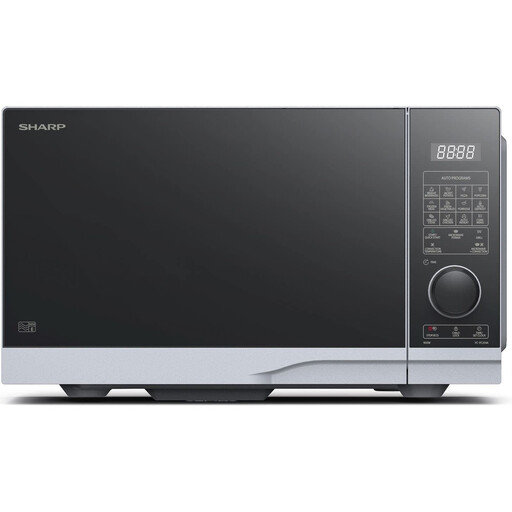
Sharp YC-PC254AE-S combination microwave
A good fit if you want to use the grill or convection functions for other dishes as well as reheating dhal.
25 l capacity; grill and convection functions.
View at Joybuy
 No image available
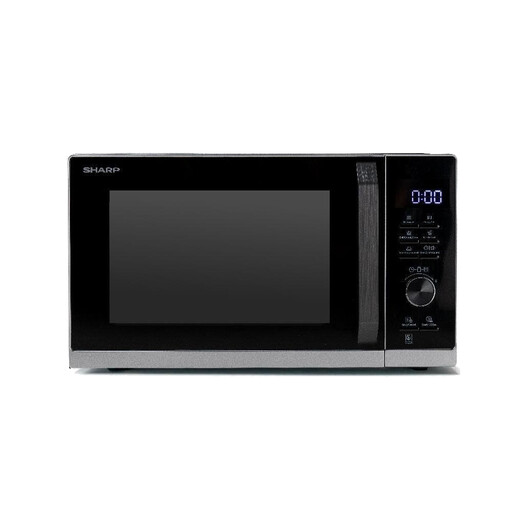
Sharp RCC271TS 3-in-1 combination microwave
A combination option if you want to reheat dhal and bake or brown other dishes for your class.
27 l capacity, 900 W microwave power, 1000 W grill and 2100 W convection heater.
View at Joybuy
Frequently asked questions
Can I leave prepared dhal out until the class and heat it later?
For longer storage, the Federal Institute for Risk Assessment recommends cooling hot food quickly to below 7 °C. For reheating, it recommends at least 70 °C for 2 minutes throughout; no particular microwave can guarantee this automatically.
What kind of dish should I use for reheating and covering food?
Follow the suitability, temperature and power guidance for the specific dish and lid. The consumer advice centre points out that some plastic containers and lids may have different limits; do not continue using damaged crockery.
What should I clean after the class?
Wipe up splashes promptly and follow the appliance instructions. According to the manufacturer, the glass turntable in the Severin MW 7790 can be removed and washed in warm soapy water; instructions may vary for other models.
Does an additional manufacturer’s warranty cover a cookery class run as a business?
Not necessarily. LG expressly excludes commercial use from the additional magnetron parts warranty advertised on the model page. Check the specific warranty terms for your chosen appliance and how you intend to use it.
Do I need to register a food business in Germany for a weekend cookery class?
You can’t tell from the term ‘weekend cookery class’ alone. The Federal Office of Consumer Protection and Food Safety explains that even giving food away free of charge can count as placing it on the market; the federal portal describes how food businesses register with the local food authority. Check with the relevant authority to find out whether your particular class arrangements fall under these rules.


