
Lieferung heute & morgen

Qualitätsgarantie

Willkommens-Angebote freischalten: KOSTENLOSE Lieferung | Bis zu 80 % RABATT | Kostenlose 30-Tage-JoyPlus-Testphase
App herunterladen
A microwave-safe dinnerware set can combine storage, reheating and serving in one solution. For singles, families and working people, this is practical when leftovers need to be heated straight from the fridge or freezer. However, not all bowls, containers and lids are suitable for the same applications. If you only consider colour, the number of pieces or a low price, you may end up buying a set that is too small, leaks or is unsuitable for microwave use after just a short time.
For many microwave containers, suitability only applies to the container itself. Lids often need to be removed or opened via a steam vent. A closed lid can become deformed due to the pressure created, or it may be difficult to open. Always check whether the information is given separately for the container and lid.
A set with several large boxes may initially seem versatile. However, these containers are often impractical for small portions, sauces or side dishes. A combination of different sizes is more useful, such as 350 ml, 750 ml and 1,250 ml. For family meals, containers with a capacity of 1,000 ml or more may be more suitable.
Dishwasher-safe dinnerware should be loaded and cleaned according to the manufacturer’s instructions. High temperatures, harsh detergents and frequent mechanical stress can put strain on plastic, seals or glazes. With ceramic bowls, you should also avoid sudden changes in temperature, such as moving them directly from the freezer into a highly heated appliance.
Polypropylene (PP) is often used for food storage containers designed for microwave use. It is lightweight and, according to certain manufacturers’ product information, suitable for use in the fridge, freezer and microwave. However, the maximum temperature depends on the model. According to the product information, the Mepal Cirqula Set can withstand 110 °C, while the LocknLock Microwave Cookware Set is rated for up to 140 °C.
Ceramic and stoneware are heavier, but can be used directly for serving. With microwave-safe ceramic bowls, look for information about temperature resistance, check for possible cracks and ensure that the product has no metal decoration. A stated suitability for microwave use does not automatically mean that the product is also suitable for an oven.
A microwave container with a lid should not only close securely, but also be designed for the intended use. Airtight lids are useful for transport and storage. When reheating, you need either to remove the lid or use a dedicated steam vent.
Transparent lid windows make it easier to check the contents without opening the box. Stackable or nestable designs save space in cupboards, the fridge and the freezer. Rectangular microwave boxes can make particularly good use of the available space in your fridge.
Consider whether you are mainly looking for storage boxes for the fridge and freezer, serving dinnerware or cooking containers. A traditional dinnerware set with plates, bowls and cups has different requirements from a microwave container set with tightly closing lids.
If you want to gratinate or brown food, you will also need an appliance with a suitable function. A microwave with grill does not operate exclusively with microwaves; it also has a grill element. Separate safety and usage instructions apply. Plastic containers must not be placed under the grill or on a hot hob.
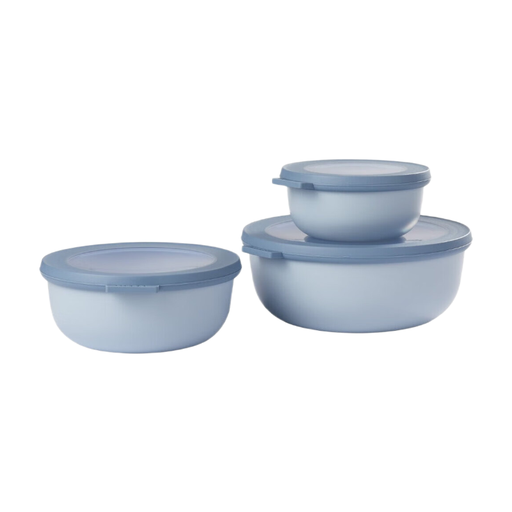
Why this product suits this profile: The three sizes — 350 ml, 750 ml and 1,250 ml — cover small portions, soups and leftover meals. According to the product information, the set is suitable for use in the fridge, freezer and microwave without the lids.
The graduated capacities prevent small portions from being stored in oversized containers. The lid must be removed before reheating.
BPA-free PP/TPE according to the product information, dishwasher-safe, stackable and nestable.
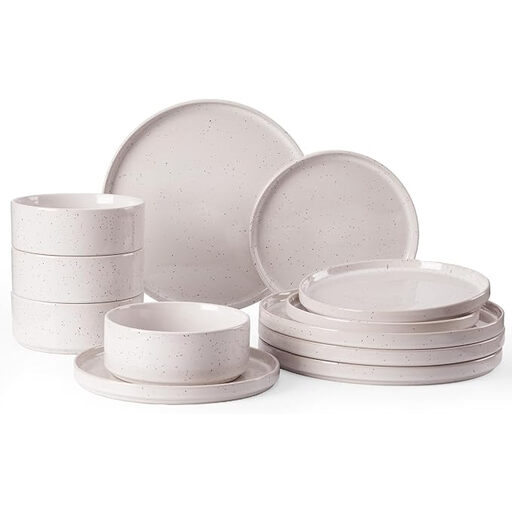
Why this product suits this profile: The 12-piece stoneware set contains plates and cereal bowls for four people and, according to the product information, can be used in the microwave and dishwasher.
The product information expressly states that the set is suitable for use in the microwave and dishwasher, and that it is not designed for use in an oven.
12 pieces, stackable designs, stoneware construction and, according to the product information, free from lead and cadmium.
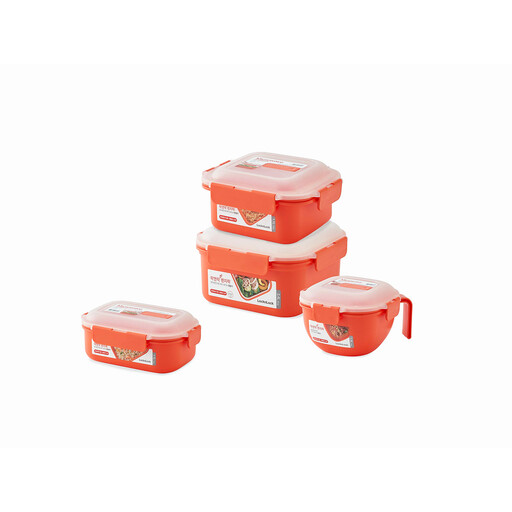
Why this product suits this profile: With a total capacity of 5,600 ml, the four containers are suitable for larger portions, meal prep and transporting food. According to the product information, the lids feature a steam vent.
The integrated steam vent is designed for reheating with the lid closed. According to the product information, the set is not suitable for use in an oven, on a hob or with direct heat.
Four sizes, BPA-free PP according to the product information, designed for temperatures of up to 140 °C and dishwasher-safe.
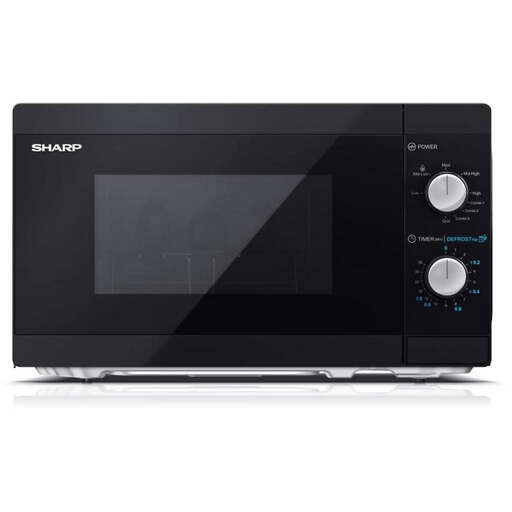
Why this product suits this profile: According to the product information, the 20-litre microwave combines 800 W of microwave power with a 1,000 W grill function and five power levels.
The technical specifications state the capacity, power, turntable diameter and dimensions. Plastic containers must not be used inside the cooking compartment when the grill is operating.
20 l interior, 25.5-cm turntable, manual rotary controls and an additional grill function according to the product description.
We have put together a complete, regularly updated list of products that fully meet these strict selection criteria and the safety regulations applicable in the EU.
No. This must be stated explicitly. For a product described as microwave- and dishwasher-safe, you should also follow the instructions regarding its position in the dishwasher and the maximum temperature. Lids and seals may have different care requirements from the container.
There is no universal fixed lifespan. It depends on the material, temperature, cleaning frequency and how the set is handled. Replace containers if cracks, severe discolouration, deformation or damaged seals appear. With ceramic items, the same applies to visible chips.
Only if the manufacturer expressly states that they are suitable for both applications. The key is to avoid sudden changes in temperature. A bowl taken from the freezer should not be placed straight into a highly heated environment. Also check whether it contains any metal decoration or components.