
Lieferung heute & morgen

Qualitätsgarantie

Willkommens-Angebote freischalten: KOSTENLOSE Lieferung | Bis zu 80 % RABATT | Kostenlose 30-Tage-JoyPlus-Testphase
App herunterladen
Microwave-safe dinnerware should heat food safely, store leftovers without taking up too much space and be easy to clean every day. In practice, however, unclear material information, unsuitable lids or missing temperature guidance often lead to poor purchasing decisions. Families, meal-prep users and private households in particular can benefit from checking a few technical details before buying.
For a microwave bowl with a lid, the approval often applies only to the container. Plastic lids can warp or cause pressure to build up when closed. Before heating, check the following:
For example, the bowl of the 5five Keepeat glass container is made from borosilicate glass and is suitable for use in the microwave, dishwasher and oven. According to the product information, however, the polypropylene lid must not be used in the microwave, oven or dishwasher.
Not all microwave-safe dinnerware is suitable for use in the oven. Plastic containers are often intended only for reheating. Conversely, glass may be oven-safe but can still be damaged by sudden changes in temperature. The specific manufacturer’s instructions regarding the following are crucial:
A 500-millilitre container is suitable for side dishes, sauces or smaller portions. For soups, bakes and family-sized portions, 1.5 litres or more is more practical. Containers that are too small can cause splashes when heating, while oversized dishes take up unnecessary space in the fridge and cupboard.
Borosilicate glass is often used for borosilicate glass baking dishes. The material is transparent, generally does not absorb odours and allows you to see the contents. A glass container with a lid can therefore be used for storing, baking and serving. Even so, the lid must always be assessed separately.
Plastic is lightweight and practical for everyday transport. For microwave food-storage containers, you should check the specified temperature limit and cleaning instructions. Emsa states a temperature range of –40 to +80 °C for the Micro-Family container. According to the product information, the Mepal Cirqula set is suitable for temperatures up to 110 °C and may only be used in the microwave without the lid when reheating.
Ceramic and porcelain are suitable for plates, bowls and serving dinnerware. A ceramic dinnerware set or a dinnerware set for 4 people can provide a coordinated addition to your kitchen equipment. With glazed products, follow the guidance on cracks, chips and sudden changes in temperature.
The following guide can help you make a practical choice:
The shape is also important. Round bowls often heat food more evenly around the edges than very tall or narrow containers. Rectangular glass dishes make efficient use of fridge space and are suitable for bakes.
Microwave- and dishwasher-safe dinnerware saves time every day, provided this feature applies to all components. For sets with lids, sealing rings or fasteners, read the care instructions for each part separately. An airtight lid is useful for transport, but usually needs to be removed when heating.
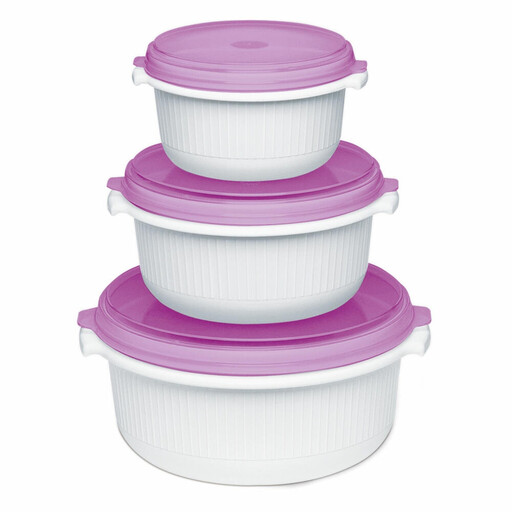
Why this product is a good match: Three round containers with capacities of 0.5, 1.0 and 1.5 litres cover a range of portion sizes and are suitable for leftovers, sauces and straightforward meal-prep tasks.
The different capacities reduce the need to buy several individual sizes. The product information specifies that the plastic is suitable for the microwave and dishwasher; the push-button closure is designed for airtight storage.
Three-piece set, stackable design and transparent containers for checking the contents at a glance.
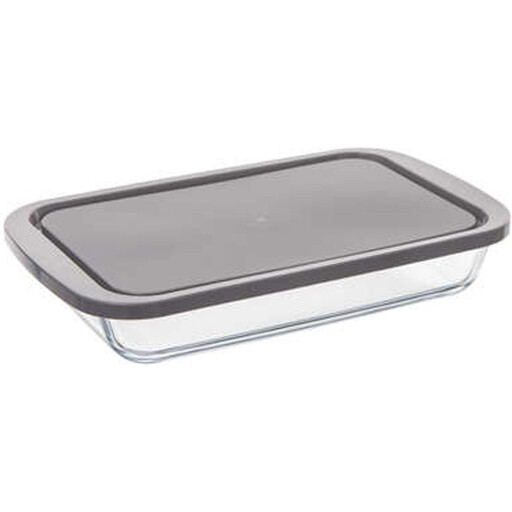
Why this product is a good match: Measuring 29 × 18 cm, this borosilicate glass dish combines storage and baking in one container and is suitable for larger portions.
The approvals for the dish and lid are specified separately. The lid must remain outside the appliance when baking and reheating; according to the product information, the dish is oven-safe up to 400 °C.
1.6-litre capacity, transparent borosilicate glass and suitability for baking, storing and reheating.
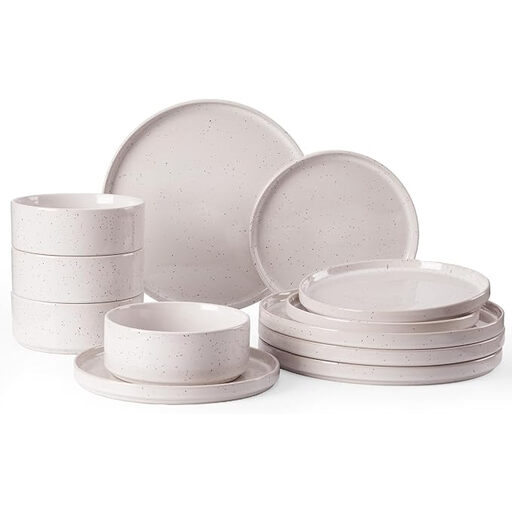
Why this product is a good match: This 12-piece stoneware set includes plates and cereal bowls for four people and is designed for regular household meals.
The product information expressly states that the set is suitable for the microwave and dishwasher. At the same time, it is not intended for use in the oven, helping to avoid a common mix-up.
12 pieces for four people, stackable shapes and, according to the product information, suitability for the microwave and dishwasher.
We have put together a complete, regularly updated list of products that fully meet these strict selection criteria and the safety regulations applicable in the EU.
Only if the lid is explicitly approved for this purpose. With many food-storage containers, the lid must be removed completely or opened. This prevents pressure from building up and reduces the risk of warping.
Glass, ceramic and porcelain may be suitable for both appliances if the manufacturer expressly states this. Plastic is often intended for microwave use but not for the oven. With a glass baking dish with a lid, the dish and lid usually have different requirements.
There is no single lifespan that applies in every case. It depends on the material, how the product is used, temperature changes and cleaning. Visible cracks, chips, warping or leaking closures are clear reasons to stop using a product.