Class leaders with pre-prepared portions
If you’re keeping the curry chilled until it’s ready to serve, you’ll need a practical routine for reheating and checking each portion.


For chilled vegetable curry reheated in individual portions during a weekend cookery class, an easy-to-use solo microwave is often enough, provided your usual bowls fit inside. A cavity without a turntable can be handy for wider dishes; a grill and convection heating are mainly worthwhile if you’ll use them for other dishes in the class too. No appliance feature replaces stirring the curry and checking that it has heated through properly.
If you’re keeping the curry chilled until it’s ready to serve, you’ll need a practical routine for reheating and checking each portion.
If you use wide or square serving dishes, the usable cavity space matters. A flat base can be an alternative to a turntable.
If you’d like to bake or grill as well as reheat curry, you can weigh up extra features and plan for the space they’ll need.
First, check that you can reheat food thoroughly. Then make sure your class dishes will fit, and only after that consider whether you need extra features for other recipes.
The German Federal Institute for Risk Assessment (BfR) recommends stirring food from time to time when reheating it in a microwave. For food hygiene, it advises reaching at least 70 °C for two minutes throughout.
| What matters | What to check when buying | Who is this important to? |
|---|---|---|
| Thorough reheating | Adjustable power and timer; enough room to stir the food in its dish. | If I’m heating curry portions of different sizes, I want to adjust the settings and check each portion. Around 36% of consumers prioritise being able to control the reheating process. |
| Dish fit and portion sizes | Compare your bowl with the turntable diameter or usable internal dimensions; allow for multiple batches. | If I use wide or square serving bowls, the dish needs to fit inside and leave room to stir the food as it heats. Around 29% of consumers prioritise dish fit and portioning. |
| Ease of use and cleaning | Check the controls and whether the turntable can be removed or the cavity floor wiped clean. | If different people will use the appliance during the class, clear settings and an easy-to-clean surface matter to me. Around 21% of consumers prioritise ease of use and cleaning. |
| Extra features | Only plan for a grill and convection heating if you’ll use them for other dishes; check the space required and installation guidance. | If I’d also like to bake or grill during the class, a combination appliance can offer several cooking methods, but it takes up space. Around 14% of consumers prioritise additional cooking functions. |
Food can heat unevenly in a microwave. An automatic programme alone doesn’t confirm that the curry is hot enough throughout.
Stir the curry partway through and check it in several places. The BfR recommends at least 70 °C for two minutes throughout; a suitable food thermometer can help you check this if needed.
The stated capacity alone won’t tell you whether a wide bowl or square dish for your class will fit inside.
Measure the dish you usually use and compare it with the usable internal space or turntable. For the Severin MW 7790, the manufacturer gives a diameter of 25.5 cm in the description but 24.5 cm in the technical specifications. Confirm the correct measurement before planning to use a dish that’s close to the limit.
If you need to use smaller dishes, you may have to reheat the food in more batches.
These features are designed for other cooking methods and don’t remove the need to stir food as it reheats.
Choose a combination appliance if you’ll actually use its extra features for other dishes in your class.
Allow for the extra space it will take up and, potentially, more cleaning.
Warranty terms may be specific to a particular country and listing. A voluntary warranty is not the same as statutory rights for faulty goods.
Check the terms of the specific German listing and remember that statutory rights for faulty goods generally apply against the seller.
The MW 7790 is a straightforward solo microwave for reheating individual portions of curry.
The MG 20 Ecostyle Ceramic combines a flat cavity floor with an additional grill function.
The NN-SD36 range offers larger solo microwaves with inverter technology.
The MC32DB7746KDE1 is a combination appliance for class kitchens that want to use a grill and convection heating as well as reheat food.
The Proclean 2010 Inverter is a compact solo alternative included in a microwave comparison.
This selection includes solo and combination microwaves for reheating curry in suitable dishes, as well as appliances with extra features for other dishes in your class.
 No image available
An option if you want to reheat curry in a suitable dish and use the appliance for other cooking methods too.
Glass base with no turntable; microwave, grill and convection heating; ten power levels.
Stir the curry as it heats and check it in several places. The BfR recommends at least 70 °C for two minutes throughout.
 No image available
A solo option for reheating individual portions, provided your dish fits on the turntable.
19 l; 700 W; six power levels; 24.5 cm turntable; 30-minute timer.
Stir the curry as it heats and check it in several places. The BfR recommends at least 70 °C for two minutes throughout.
 No image available
A straightforward solo model for reheating curry in individual bowls, provided your dish fits on the turntable.
20 l; 700 W; six power levels; 30-minute timer; turntable with 360° rotation.
Stir the curry as it heats and check it in several places. The BfR recommends at least 70 °C for two minutes throughout.
 No image available
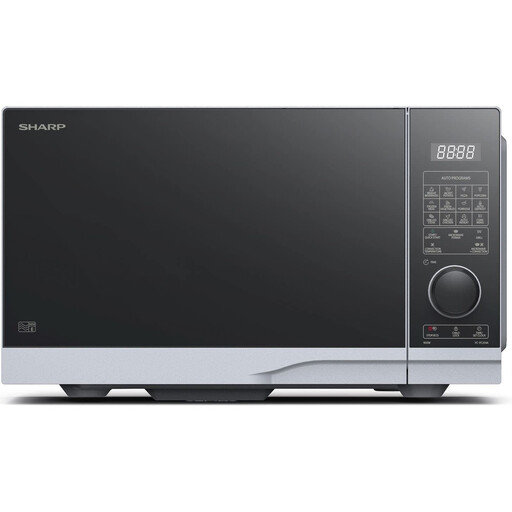
A combination microwave for class kitchens where you plan to grill or bake as well as reheat food.
25 l; 288 mm turntable; 900 W microwave power; six power levels; grill and convection heating.
You’ll still need to stir the curry and check it as it heats. The BfR recommends at least 70 °C for two minutes throughout.
 No image available
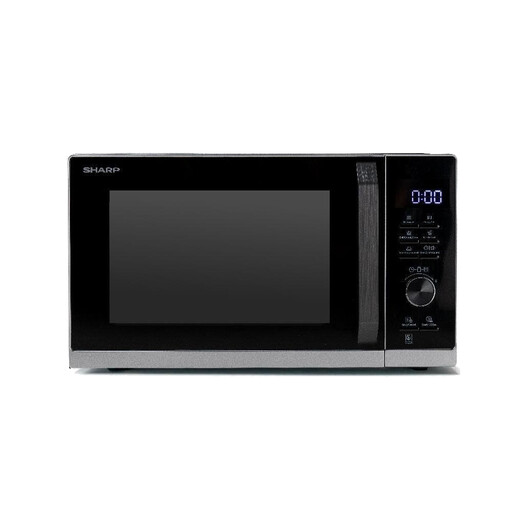
A combination option if you’d like to grill or bake other dishes as well as reheat curry.
27 l; 900 W microwave; six power levels; turntable; grill, convection heating and automatic programmes.
Stir the curry as it heats and check it in several places. The BfR recommends at least 70 °C for two minutes throughout.
Keep perishable food chilled appropriately until you’re ready to reheat it. Stir the curry from time to time as it heats in the microwave, and check that it’s hot enough throughout. The BfR recommends at least 70 °C for two minutes throughout; if needed, you can check this with a suitable food thermometer.
Glass and ceramic dishes are suitable, as are plastics specifically labelled as microwave-safe. For plastic, follow the stated temperature and wattage limits, and stop using any damaged dishes. The dish also needs to fit inside the microwave cavity.
You can’t determine this from the description ‘weekend cookery class’ alone. Factors that matter include whether food is supplied to other people and whether the activity takes place regularly or as part of a food business. The German Federal Centre for Nutrition explains how to distinguish different cases, using educational cooking activities with children as examples. Any possible exemptions can’t be assumed to apply to every private or paid adult cookery class. If you plan to supply food to other people, check the details of your event with the relevant local authority.
The German Federal Network Agency lists several checks as part of its market surveillance of electrical and electronic equipment. These include the CE mark, product traceability, manufacturer details and instructions in German with the required warnings. A CE mark doesn’t prove that curry will heat evenly.
No. When a product is faulty, statutory rights generally apply against the seller; a guarantee is an additional voluntary benefit subject to its own terms. The remedies available may include a repair or replacement.