Curry reheaters
You often heat up chilled leftovers and want a bowl that fits, along with adjustable power settings. Storing food properly and heating it thoroughly are also part of your routine.


For regularly reheating individual portions of veggie curry, a freestanding solo microwave is the obvious place to start. A grill or convection function is mainly worth considering if other people in your household will use it too. Check that your bowl fits on the turntable, that the microwave can be positioned with the required ventilation clearances, and that splashes are easy to wipe away. Safe reheating also depends on proper storage, stirring and the temperature throughout the dish: Germany’s Federal Institute for Risk Assessment recommends heating food to at least 70 °C for two minutes in every part.
You often heat up chilled leftovers and want a bowl that fits, along with adjustable power settings. Storing food properly and heating it thoroughly are also part of your routine.
You share the microwave with others and want to clean splashes from inside, the door and the turntable without having to take the appliance apart.
You need room for your dish but have limited worktop space. That makes the external dimensions and the specific model’s ventilation requirements just as important as its internal capacity.
A good fit if: The shared kitchen is mainly used for heating portions of curry and other leftovers.
The trade-off: This type of appliance does not grill or bake. A small stated capacity also tells you nothing on its own about whether your bowl will fit.
A good fit if: Several people also want to brown or bake food.
The trade-off: These extra functions are not needed just to reheat curry. Check that the appliance will fit and that the extra cleaning is manageable in your shared kitchen.
| What matters | What to check when buying | Who it matters most to |
|---|---|---|
| Thorough, controlled heating | Check the power settings and whether there is room to stir. Germany’s Federal Institute for Risk Assessment recommends heating food to at least 70 °C for two minutes in every part. | When I reheat leftover curry, I want the whole dish to be hot enough, not just the edges. Around 33% of consumers would say thorough heating is their top priority. |
| Easy removal of splashes | Look for an accessible interior, a removable turntable and control surfaces that are easy to wipe clean. | When several people use the same appliance, I want to be able to clear away any mess after eating without fuss. Around 27% of consumers would put easy cleaning first. |
| Bowl and available space | Compare your bowl with the internal dimensions and turntable; check the external dimensions and ventilation clearances in the model’s instructions. | With limited shared worktop space, I want room for my dish without overlooking the clearance the appliance needs. Around 20% of consumers would make available space their main consideration. |
| Ease of use | Check how to set the power and time, and whether you can pause the microwave to stir the food. | When different people use it, I want to be able to set the power and cooking time without a long learning curve. Around 20% of consumers would name straightforward controls as their top priority. |
Two appliances with a similar capacity in litres can have different internal dimensions and turntables. So a bowl will not necessarily fit just because the stated capacity seems large enough.
Measure the bowl you actually use for curry and compare it with the interior and turntable. Remember to allow for the model’s ventilation clearances too.
A listed cleaning aid does not mean curry splashes will disappear without being wiped away.
Check how easy it is to reach the interior and turntable, and how straightforward the control panel is to clean.
A grill and convection function will not tell you whether the curry has been heated sufficiently throughout.
Give extra functions more weight only if people in your shared kitchen will actually use them.
The freestanding FFL020MW0 solo microwave offers several adjustable power settings and is designed for smaller worktops.
The MS2082H solo microwave is an option if you want simple dial controls and a smooth front.
The NN-SD36 solo range offers more interior space for people who regularly heat larger dishes.
The YC-MS01E-S is a mechanically operated solo microwave with a 20 l capacity.
The MG23T5018CW and MC32DB7746KDE1 are grill and combination options respectively, if you want those extra functions.
This selection includes microwaves for reheating food in shared kitchens, including solo and combination models.
 No image available
It may suit you if you want several power settings and a timer for reheating portions of curry.
Listed features include a 20 l capacity, 700 W, six power settings, a 30-minute timer, defrost function, interior light and a 360° turntable. The product title also describes it as an Easy-Clean model.
 No image available
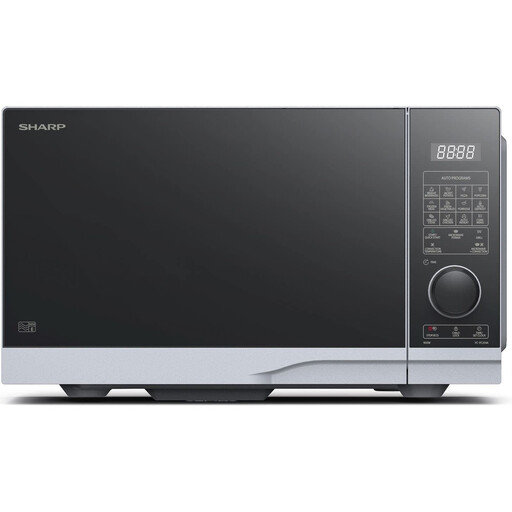
It may be a better fit if you want to grill and use the convection function as well as reheat food in your shared kitchen.
The product title lists a 25 l capacity, grill, convection function and silver finish.
 No image available
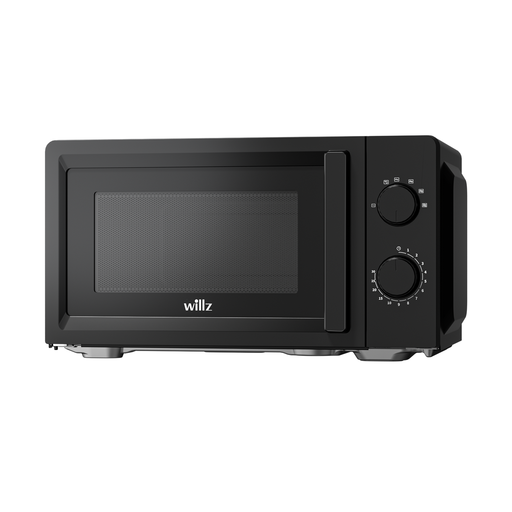
It may suit you if you are looking for a compact design and simple controls.
The product title lists a 20 l capacity and a square design, and describes it as suitable for rented flats and halls of residence. It also describes the controls as easy to use.
 No image available
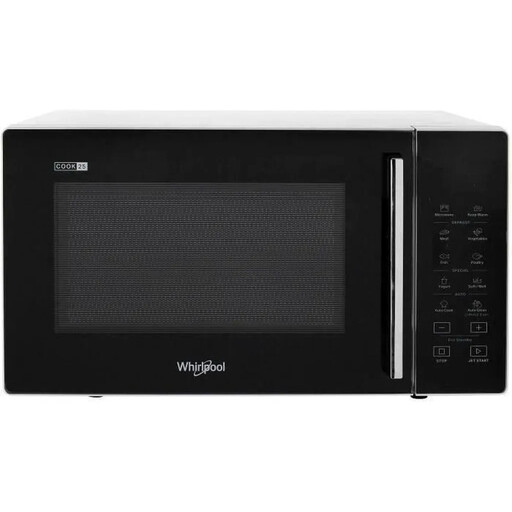
It may suit you if you want a solo microwave with several extra programmes.
The product title lists a 25 l capacity, 900 W, Jet Start, keep-warm and Auto-Clean functions, as well as programmes for yoghurt fermentation and proving dough. Remember that you will still need to wipe it down after using Auto-Clean.
 No image available
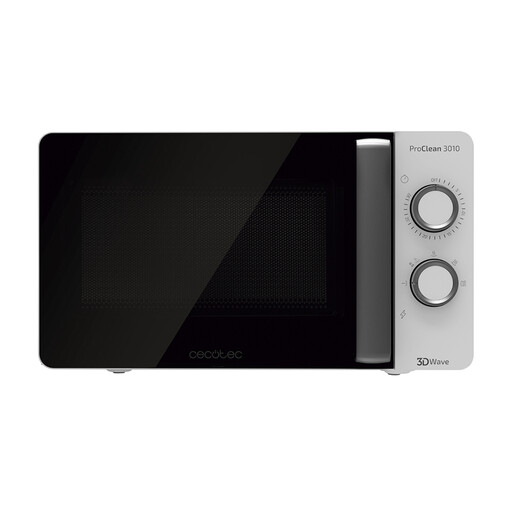
It may suit you if you want a microwave with several power settings and a coating described as Easy-Clean.
The product title lists a 20 l capacity, 700 W, six power settings, 3D-Wave technology and an Easy-Clean coating. These terms describe features, not measured heating or cleaning performance.
No. The wattage alone does not prove that the whole dish has reached a safe temperature. Germany’s Federal Institute for Risk Assessment recommends heating food to at least 70 °C for two minutes in every part. Stir the portion part-way through and check that it is hot enough throughout. Reheating cannot simply make up for improper storage beforehand.
Only if the container is suitable for microwave use and its stated temperature and wattage limits are appropriate. Germany’s consumer advice centre recommends not continuing to use damaged dishes and advises against selecting the highest power setting if the wattage is not stated.
Measure the available space and your dish, and follow the ventilation and connection instructions for the specific model. The stated capacity in litres and the external dimensions alone do not tell you how much space the appliance needs when installed.
No. By applying the CE mark, the manufacturer declares that the product meets the relevant EU requirements; it is not an independent quality mark. Your statutory rights apply against the seller, while a guarantee is an optional extra offered on its own terms. Your Europe and Germany’s consumer advice centre explain these distinctions.
As electrical waste, a microwave must not go in general household rubbish; it must be collected separately. Germany’s Federal Environment Agency states that local collection points generally accept electrical waste free of charge. Retailers’ take-back obligations depend on the relevant legal requirements.