
Lieferung heute & morgen

Qualitätsgarantie

Willkommens-Angebote freischalten: KOSTENLOSE Lieferung | Bis zu 80 % RABATT | Kostenlose 30-Tage-JoyPlus-Testphase
App herunterladen
Midea home appliances cover many areas of the British household: from kettles and rice cookers to air fryers, washing machines, tumble dryers, vacuum cleaners and air-conditioning units. However, anyone specifically looking for Midea electrical appliances should not be guided solely by lists of features or eye-catching advertising claims. What really matters is the space required, energy consumption, ease of use and long-term maintenance.
Many appliances promote a wide range of programmes, app connectivity or preset modes. These features are only useful if they fit your daily routine. With a Midea air fryer, two separate cooking compartments can be practical, while a single-person household may need less worktop space with a compact 2-litre model.
Before buying, you should therefore be clear about the following:
A high wattage initially describes only the electrical power, not the total cost. A 2,200-watt kettle can heat water quickly, but actual consumption depends on the amount of water, temperature and length of use. For washing machines and tumble dryers, the energy efficiency class, consumption per cycle and load capacity are particularly important.
When choosing energy-efficient home appliances, it is worth checking:
An appliance can be technically suitable and still cause problems in everyday use if there is not enough room for doors, baskets or lids to open fully. With a Midea washing machine, you must also consider the water connection, drain hose, door opening and floor stability. With a Midea tumble dryer, the lint filter and condensate container need to be cleaned or emptied regularly.
Smaller Midea kitchen appliances also require care: the limescale filter in a kettle, removable baskets in an air fryer and the coated inner pot of a Midea rice cooker should all be handled in accordance with the instructions.
Capacity should not be selected solely according to the maximum possible volume. According to the product specifications, for example, a Midea washing machine with a 7 kg capacity is suitable for smaller to medium-sized households. A 10 kg model is better suited to larger laundry loads. With a Midea tumble dryer, the capacity should match that of the washing machine so that a single load does not require several drying cycles.
Similar considerations apply in the kitchen:
With a Midea kettle featuring variable temperature control, you can select a temperature between 45 and 100 °C, or between 40 and 100 °C on other models. This is practical for different types of drinks, but it should be combined with a clear display and automatic switch-off.
For a Midea air fryer, the temperature range, timer, automatic programmes and basket cleaning are important points of comparison. Claims such as “up to” or percentage time savings should be treated as manufacturer information, not as guaranteed results for every recipe.
For household electrical appliances, overheating protection, boil-dry protection, child lock and automatic switch-off are important features. Washing machines with an Aqua Stop system offer an additional technical safeguard against water leaks. Appliances that reach high temperatures must also be placed on heat-resistant surfaces, adequately ventilated and kept away from flammable materials.
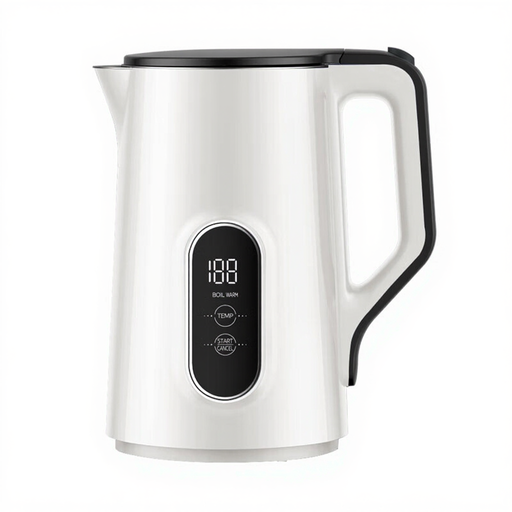
Why this product suits this profile: The 1.5-litre capacity is designed for everyday use in single-person households and couples. Seven temperature settings between 45 and 100 °C allow you to tailor the temperature for tea, coffee or hot water.
The temperature display makes the selected setting easy to check. Automatic switch-off and boil-dry protection help reduce common operating risks.
1.5-litre capacity, 2,200 watts, keep-warm function for up to 60 minutes and BPA-free plastic parts with no contact with water.
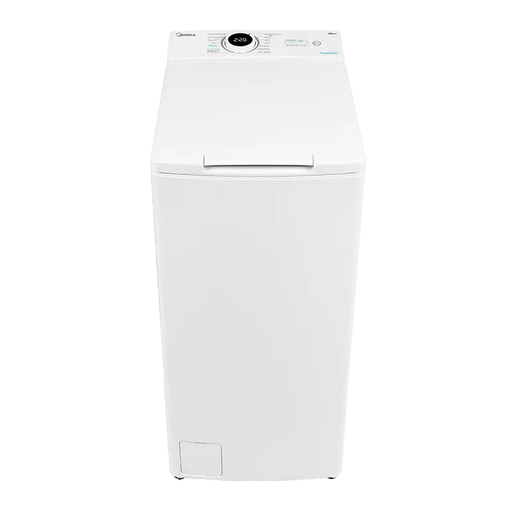
Why this product suits this profile: This top-loading washing machine combines a 7 kg capacity with programmes for cottons, Eco 40–60, delicates and drum cleaning. Its compact format can be useful where space is limited.
Consumption figures of 40 kWh per 100 cycles and 45 litres per cycle make it easier to assess running costs objectively.
Energy efficiency class A, BLDC inverter motor, Aqua Stop, add-laundry function and delay start of up to 24 hours.
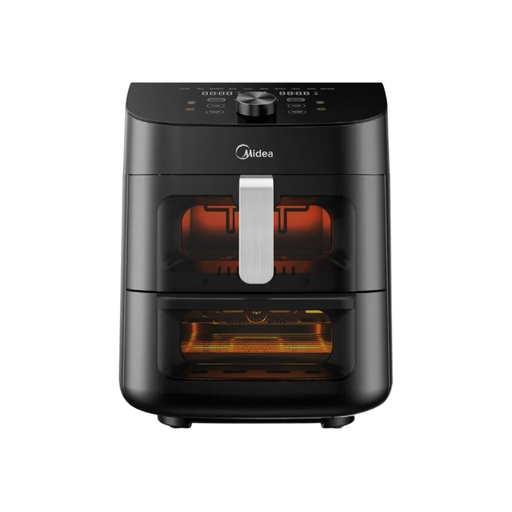
Why this product suits this profile: Two independent cooking compartments allow different dishes to be prepared at the same time. This is useful for families or people who cook regularly.
The viewing windows allow you to monitor cooking without opening the compartments frequently. The temperature range, timer and programmes are clearly specified.
11-litre total capacity, two cooking compartments, ten automatic programmes, LED touch display and temperature selection from 40 to 200 °C.
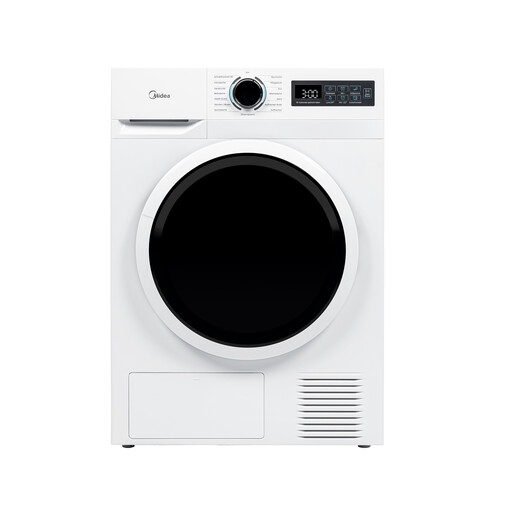
Why this product suits this profile: Designed for regular laundry care, this model features a 7 kg drum, sensor control and 15 drying programmes. Its heat pump technology is designed to use less energy than conventional drying systems.
The sensor control ends the programme according to the measured residual moisture level. The dual lint filter makes regular maintenance straightforward.
Heat pump technology, 15 programmes, LED display, crease protection, drum lighting and child lock.
Depending on your living situation, a Midea vacuum cleaner, dishwasher or air-conditioning unit may also be worth considering. The X10 wet and dry vacuum cleaner is designed for hard floors and features a self-cleaning station with hot-air drying. The P8 Plus is cordless and comes with a station for automatic emptying. The Midea MDWEF1034DW-WE dishwasher is specified as being 45 cm wide, with space for ten place settings, Aqua Stop and energy efficiency class C.
For controlling room temperature, options include a mobile Midea air-conditioning unit with A++ and a Midea fan heater or oil-filled radiator with 2,000 watts. With heating appliances, it is particularly important to keep a sufficient distance from textiles, use a stable surface and follow the safety instructions.
We have put together a complete, regularly updated list of products that fully meet these strict selection criteria and the safety regulations applicable in the EU.
The models listed are intended for European or German household use and operate at 220 to 240 volts, depending on the appliance. Before buying, you should check the mains plug, installation dimensions, connections and whether German operating instructions are supplied.
For washing machines and tumble dryers, the energy efficiency class and consumption figures per cycle are useful indicators. With Midea kitchen appliances, you should take actual usage time into account. A kettle, for example, uses different amounts of electricity depending on the volume of water and the selected temperature. For a realistic estimate, multiply consumption by your own electricity tariff and the number of uses per year.
It is not possible to give a general fixed service life. This depends on usage intensity, cleaning, correct installation and maintenance. Filters, lint screens, limescale protection and removable containers should be cared for in accordance with the operating instructions. If you notice unusual noises, damaged cables or visible defects, stop using the appliance and contact customer service.