Ready to eat, no preparation
You don’t want to switch on the oven or slice bread in the middle of the night. Ready-to-eat bread slices or pre-sliced baked goods suit this routine; check the details of the specific product.


If you want a midnight snack on the table without any preparation, ready-to-eat sliced bread is an obvious choice. Fresh rolls need to be bought in advance; part-baked rolls are handy to keep in stock, but take time and an oven to prepare. If you’re looking for a particular slice thickness, check the specific loaf rather than relying on the description ‘medium-fine sliced’.
You don’t want to switch on the oven or slice bread in the middle of the night. Ready-to-eat bread slices or pre-sliced baked goods suit this routine; check the details of the specific product.
You’d like to have several portions ready and can allow time to prepare part-baked rolls. Pack size, storage instructions and preparation details all play a part.
You want to check whether a bread is specifically labelled wholemeal, and compare its fibre, salt or allergens. The information for the specific product matters more than its colour or variety name alone.
A good choice if: You want your snack ready without an oven or any more slicing.
Things to consider: You can take out individual slices, but check the product if you need a particular slice thickness.
A good choice if: You can buy rolls before your late-night snack and prefer freshly baked goods.
Things to consider: Opening hours and local availability determine whether your preferred variety will be available in time.
A good choice if: You want to keep rolls in stock and bake them before eating.
Things to consider: The pack needs to be stored appropriately, and you’ll need to allow time to bake the rolls in the oven before your snack.
| Criteria | What to check when buying | Who it matters most to |
|---|---|---|
| Ready to eat | Is the bread ready to eat and already sliced? How many slices or pieces are in the pack? | If I don’t want to prepare anything during the night, I need a product I can eat straight from the pack. This convenience is the main priority for around 33% of consumers. |
| Keeping in stock and preparation | How does the product need to be stored and prepared? Is there enough in the pack for the snacks you have planned? | I want to have rolls ready at home and don’t mind baking them, rather than relying on a last-minute shop. Keeping food in stock is the main concern for around 25% of consumers. |
| Ingredients | Is the product labelled ‘wholemeal’? Compare nutritional information, such as fibre and salt, per 100 g and, where applicable, per portion. | I want to be able to compare the ingredients in different breads for my late-night snack. Around 25% of consumers prioritise this. |
| Allergens | For packaged products, read the ingredients and allergen information; for loose products, ask for allergen details. | I need to check before buying whether the ingredients and allergen information meet my needs. This check takes priority for around 17% of consumers. |
On its own, this description doesn’t tell you how thick the slices of a particular loaf are. The number of slices and pack size can also vary.
Check the product image and pack details. If slice thickness matters, look at the bread in person or ask the retailer.
The German Nutrition Society points out that bread colour is not a reliable indicator of wholemeal content.
Look for the explicit ‘wholemeal’ label and compare the nutritional information on packaged products.
Allergens can also be relevant in unpackaged bread and baked goods. The Federal Ministry of Agriculture, Food and Home Affairs explains that allergen information must be provided for loose products.
Ask about any allergens relevant to you before buying. For packaged products, check the information on the current pack.
A bread or roll listed online won’t necessarily be available in store when you need it for a late-night snack.
If you’re planning to buy fresh goods, check opening hours and local availability in advance.
REWE stocks packaged sliced bread. One listed ja!-Bauernbrot is described as a 500-g pack of sliced bread.
EDEKA24 lists various types of bread and rolls, including sliced bread and rolls.
Under ‘Our bread’, Lidl describes baked goods from its in-store bakery, including spelt and multigrain varieties.
ALDI SÜD lists various types of rolls under GOLDÄHREN, in multi-piece packs.
This regional bakery describes its range of bread and rolls for the Bergwinkel area of Hesse.
The products below are mainly packaged breads for a late-night snack. There’s also a ready-to-eat toast snack and frozen Kaiser rolls to bake at home. Check each product to see whether its shape and slice thickness meet your needs.
 No image available
A possible choice for a snack that needs no preparation, if the slice shape shown on the pack suits your needs.
Pack size: 250 g. Before buying, check the current ingredients and allergen information, as well as the actual slice thickness.
 No image available
A bread option to keep in stock for planned snacks, provided the slices are what you’re looking for.
Pack size: 500 g. Check the storage instructions and current allergen information.
 No image available
A possible choice if you’re planning to keep a 500-g pack of bread for several late-night snacks.
Before buying, check the ingredients and allergens on the current pack. If you need a particular slice thickness, check the slices too.
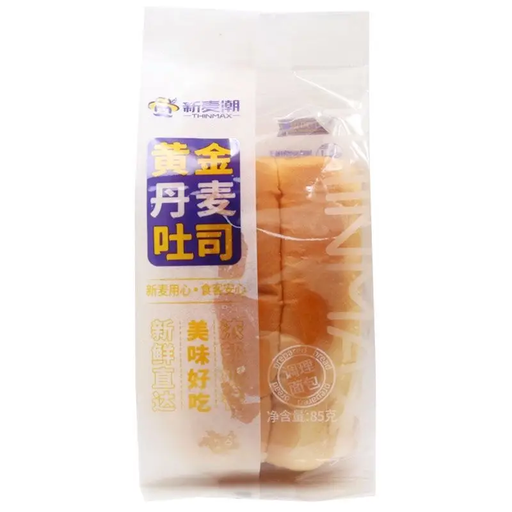 No image available
An option for a ready-to-eat toast snack; toasting is another way to prepare it.
Pack size: 85 g. Check the shape of the pieces or slices in the pack and read the current allergen information.
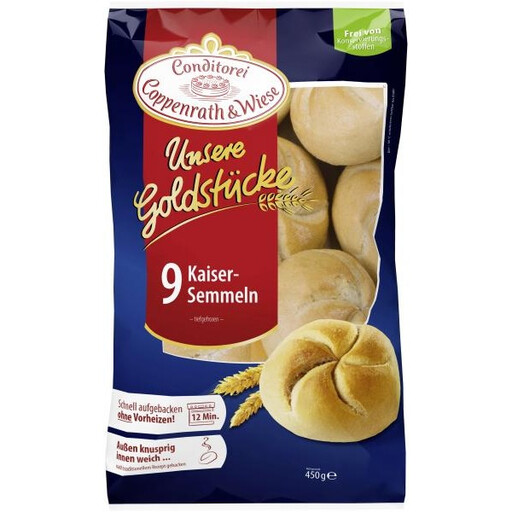 No image available
For keeping rolls in stock if you have a freezer and an oven.
The pack contains nine Kaiser rolls, with a total weight of 450 g. The frozen rolls aren’t ready to eat and must be fully baked before serving; they aren’t sliced bread.
For a snack that needs no preparation, ready-to-eat sliced bread is usually the simpler option. You’ll need to buy fresh rolls in advance; part-baked rolls also need to be stored and baked.
Yes. Allergen information must also be provided for unpackaged goods. The Federal Ministry of Agriculture, Food and Home Affairs points this out. Before buying, ask about any ingredients that are relevant to you.
No, colour alone isn’t enough. The German Nutrition Society recommends looking for the explicit ‘wholemeal’ label rather than judging the ingredients by appearance.
No. A gluten-free label doesn’t tell you whether the bread contains any other allergens. Check the ingredients and allergen information on the current pack against your specific needs.