
Lieferung heute & morgen

Qualitätsgarantie

Willkommens-Angebote freischalten: KOSTENLOSE Lieferung | Bis zu 80 % RABATT | Kostenlose 30-Tage-JoyPlus-Testphase
App herunterladen
A play kitchen is more than just a toy—it's a space that nurtures creativity, social skills, and fine motor development. Models from well-known brands, especially the Miele play kitchen, are at the top of many wish lists. However, the market can be overwhelming, and not every high-priced model lives up to its promise. Before you buy a kids' kitchen, it's crucial to know the common pitfalls to avoid disappointment in the playroom.
As your Joybuy Product Recommendation Officer, I'll help you navigate the maze of options and make an informed decision.
Many well-intentioned purchases end up as dust collectors in the corner. This is often due to three common problems that can be avoided with a closer look:
To avoid a bad purchase, you should check three core aspects before making a decision. These define the durability and play value of any Miele toy kitchen or comparable model.
A crucial criterion is the sturdiness of the construction. Pay attention to the materials used. High-quality, thicker plastic, often found in brand-name products from manufacturers like Theo Klein, is more resistant to bumps and intensive play. Another important feature is the CE marking, which confirms that the product meets EU safety standards. A stable base and smoothly finished edges are essential to ensure the child's safety.
A good kids' kitchen with accessories offers a solid starter set right from the beginning. This should include pots, pans, cooking utensils, and dishes. Make sure the accessories are an appropriate size and fit well in small hands. Themed add-ons, like a Bosch toy breakfast set, can significantly enhance play value by enabling new role-playing scenarios. Check whether the accessories are included or if they come at an additional cost.
The magic of a play kitchen lies in imitating the adult world. A play kitchen with sound has a clear advantage here. Realistic cooking sounds, clicking knobs on the stove, or a coffee maker with a water-flow function make the experience lively and engaging. Features like an oven with an opening door, a refrigerator, or even a sink with a real water function (on select models) spark the imagination and ensure long-lasting fun.
Here are some recommendations tailored to different needs and budgets, all of which meet the quality criteria mentioned above.
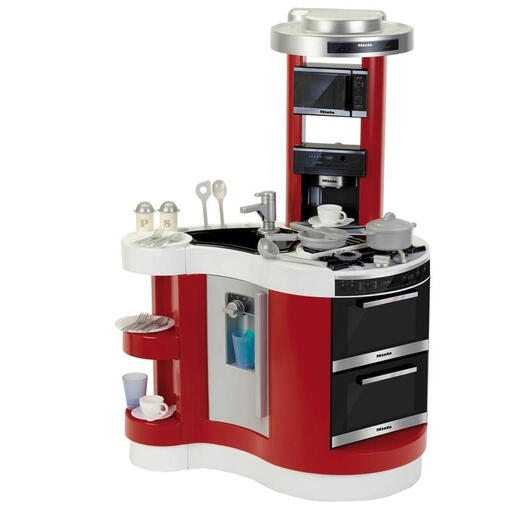
Why It's a Great Fit: Ideal for parents who value the durability and recognised design of brands like Miele and Bosch. This set offers a comprehensive play experience right out of the box.
This Theo Klein model is made from durable plastic. It comes with an extensive accessory package, including Bosch appliances, and features interactive sound effects, addressing the typical weaknesses of cheaper models.
A complete package with the Miele kitchen module and a Bosch breakfast set. It offers realistic cooking sounds and a wide range of accessories for immediate fun.
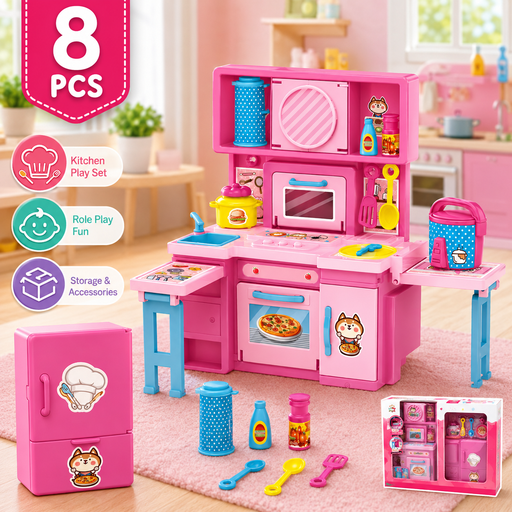
Why It's a Great Fit: A cost-effective option to turn an existing play area into a kitchen or to test a child's interest in role-playing cooking without investing in a full-sized kitchen.
This set focuses exclusively on accessories. This allows you to avoid the risk of spending money on an unstable kitchen structure and solves the problem of missing accessories for a simple, pre-existing kitchen.
Provides the essential cooking utensils for role-playing. A very inexpensive way to expand a play world or get one started.
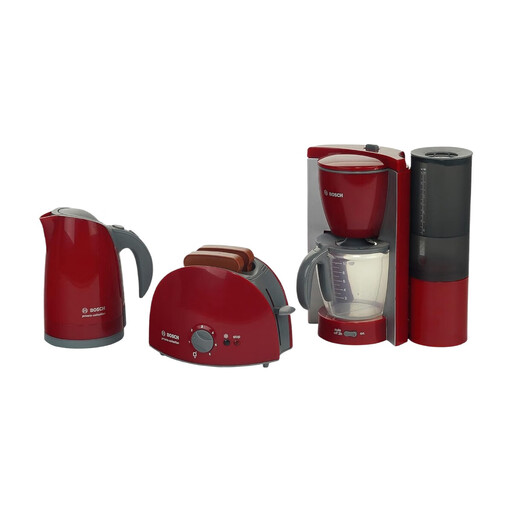
Why It's a Great Fit: Perfect for anyone who already owns a play kitchen and wants to upgrade it with high-quality, interactive appliances. The Bosch design offers strong brand recognition.
This set specifically adds interactive functions. Instead of passive accessories, children get appliances with real features (a mechanical toaster, a coffee maker with a water-flow function), which provides a lasting boost to its play value.
A themed expansion with three appliances in the Bosch design. It specifically encourages imagination and motor skills through realistic play functions.
We have compiled a complete, up-to-date list of products that fully meet these strict selection criteria and all applicable safety regulations.
Most play kitchens, including the Theo Klein models with a Miele design, are recommended for children ages 3 and up. At this age, motor skills are sufficiently developed to handle the accessories safely. For younger children, there is also a choking hazard associated with small parts.
Yes, batteries are typically required for interactive features like cooking sounds. According to the manufacturer, the "Theo Klein 7101 Miele Kitchen Wave Spicy" model requires 4x AA batteries, which are usually not included.
Assembly is generally straightforward for an adult and takes between 20 and 45 minutes, depending on the model. Most sets include illustrated, step-by-step instructions. It is advisable to assemble it calmly and without the child present to ensure all parts are mounted correctly and securely.