
Lieferung heute & morgen

Qualitätsgarantie

Willkommens-Angebote freischalten: KOSTENLOSE Lieferung | Bis zu 80 % RABATT | Kostenlose 30-Tage-JoyPlus-Testphase
App herunterladen
A play kitchen is more than just a toy. It's a space where children can imitate everyday routines, unleash their creativity, and develop social skills through role-playing. Models like the Miele play kitchen are a top choice for many parents and grandparents, prized for their quality and realistic play experience. However, the market can be overwhelming, and not every product delivers on its promise. Before you make a decision, you should be aware of the common pitfalls that often lead to disappointment and unnecessary expense.
This guide will show you what to look for to find a durable and educationally valuable play kitchen that will bring joy for years to come.
The selection is vast, but many products have flaws that only become apparent after purchase. Pay close attention to these three points to avoid making the wrong choice:
To make an informed decision, focus on objective and verifiable features. These three parameters are crucial for the durability and play value of a children's kitchen.
The material is the primary factor determining stability and longevity. A play kitchen made of wood, especially from medium-density fiberboard (MDF), generally offers greater stability and robustness than models made from simple plastic. For a wooden kitchen for children aged 3 and up, look for quality seals like FSC certification, which confirms sustainable forestry. Regardless of the material, compliance with the European safety standard EN 71 for toys is a must. This ensures that no harmful substances are present and that there is no risk of injury from sharp edges or small parts.
A good play kitchen grows with your child. A height-adjustable play kitchen is a smart investment, as the work surface can be adapted to your child's height. This ensures an ergonomic posture and extends its usability by several years. Interactive elements, like a play kitchen with light and sound on the hob or appliances, enhance realism and encourage play. The sounds should be subtle and the light effects safe.
A good play kitchen with accessories is defined not by the number of items, but by their quality. Accessories made of wood or high-quality stainless steel (e.g., pots, pans) are more durable and have a better tactile feel than thin plastic. Check whether the accessories are designed to be child-friendly and inspire creative play, rather than just serving as filler.
Based on the quality criteria mentioned, we have compiled a selection of products suitable for different needs and play scenarios.

Why This Fits Their Persona: Ideal for quality-conscious parents seeking a durable, brand-name toy. The Miele design, combined with the wooden construction and interactive features, meets high standards for both aesthetics and play value.
The height-adjustable design prevents your child from outgrowing it too quickly. The FSC-certified wood material is stable and durable, unlike wobbly plastic.
Hob with realistic light and sound effects. Includes high-quality stainless steel and wood accessories.
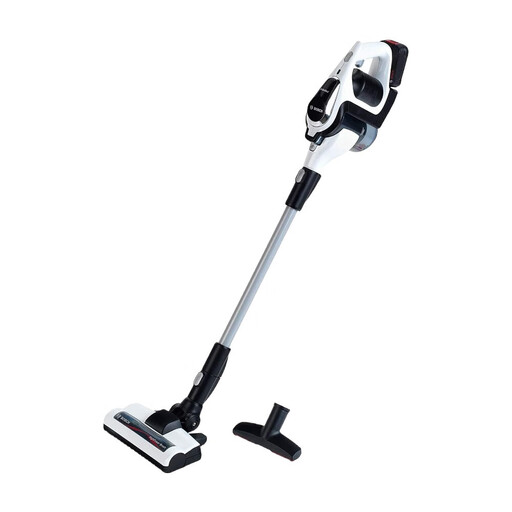
Why This Fits Their Persona: Perfect for children who want to imitate other household chores, not just cooking. It expands role-playing beyond the kitchen and aligns with the target audience's brand awareness (Bosch design).
This toy focuses on a single, well-executed function (vacuuming) instead of many useless small parts. The robust plastic construction is designed for durability.
Battery-operated with real suction and sound functions. Promotes motor skills and spatial awareness.
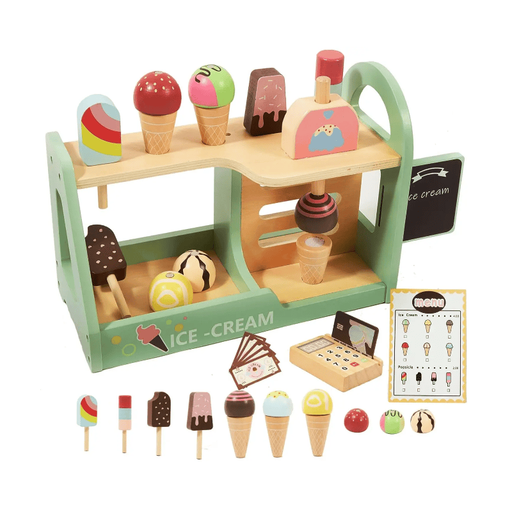
Why This Fits Their Persona: A compact and often more budget-friendly alternative to a full play kitchen. Ideal for starting out with culinary role-play without taking up a lot of space. The wooden material appeals to quality-conscious buyers.
Focuses on a clear play concept (selling ice cream) with high-quality wooden parts, rather than being an overloaded but unstable budget kitchen. Specifically encourages social play.
Promotes interaction and social learning (selling, buying, sharing). Compact design that is easy to store.
We have compiled a complete, up-to-date list of products that fully meet these strict selection criteria and European safety standards.
1. From what age is a Miele play kitchen suitable? Most models, especially those by Theo Klein, are recommended for children aged 3 and up. At this age, children begin to develop complex role-playing games and imitate everyday activities. A height-adjustable kitchen can then be used until the age of about 6 or 7.
2. How difficult is it to assemble a wooden play kitchen? Assembling a wooden kitchen typically requires an adult. Most kits, like the Theo Klein Miele kitchen, include detailed instructions and all the necessary screws. Plan for about 30 to 60 minutes for assembly, depending on the model. A cordless screwdriver can make the job easier.
3. What batteries are needed for play kitchens with light and sound? Standard batteries are typically required for features like light-up hobs or realistic cooking sounds. For example, the Theo Klein Miele kitchen (model 7199) requires 2x AA batteries, according to the manufacturer's specifications. These are usually not included with the purchase. Check the product description for exact details.