
Lieferung heute & morgen

Qualitätsgarantie

Willkommens-Angebote freischalten: KOSTENLOSE Lieferung | Bis zu 80 % RABATT | Kostenlose 30-Tage-JoyPlus-Testphase
App herunterladen
A Miele wooden play kitchen is high on many families' wish lists. It promises enduring fun, a premium appearance, and sparks creativity in the playroom. However, the market can be confusing, and not every model that looks high-end lives up to its promises in daily use. Before making a decision, it's crucial to recognise common defects and spot exaggerated marketing claims.
This guide will help you identify the key quality features and make an informed choice that will bring your child joy for years to come.
It's a huge disappointment when an expensive gift shows signs of wear after just a few weeks. Pay close attention to these three weak points to avoid buyer's remorse:
To ensure you get a durable and safe product, you should check the following parameters before buying.
A good wooden play kitchen is distinguished by its use of solid wood or high-quality, certified composite wood materials. Look for the FSC seal, which stands for wood from responsible forestry. The edges should be smoothly rounded to prevent injuries, and any paint or varnish must be certified as child-safe. Sturdy hinges on doors and a solid, screwed-together construction are indicators of durability.
Safety is the top priority. Products sold in Europe must meet the European toy safety standards (EN 71). Additional certifications like the GS mark (Geprüfte Sicherheit - "Tested Safety") provide further assurance. The "3 years and up" age rating is particularly relevant for models with small parts. For a wooden play kitchen with accessories, you must ensure that no parts that pose a choking hazard are accessible to younger siblings.
The appeal of a play kitchen increases with its interactive elements. Models from manufacturers like the Theo Klein play kitchen in the Miele design often integrate battery-powered hobs with realistic sounds and light effects. Check which accessories are included in the box. High-quality sets often include pots, pans, and cooking utensils made from metal or wood instead of simple plastic, which significantly enhances both play value and durability.
Based on these quality criteria, we have identified a few models that are well-suited for different needs.
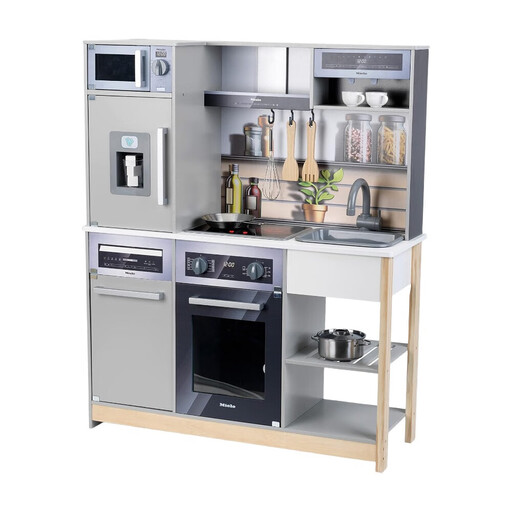
Why This Fits Their Persona: Ideal for those looking for a fully equipped play kitchen that's just as good as the real thing. It offers a comprehensive role-playing experience with numerous appliances and accessories.
Made from FSC-certified wood, it offers excellent stability. The battery-powered hob with light and sound is a genuine interactive feature, not just a sticker.
Comprehensive features including a microwave, espresso machine, and a fridge with an ice dispenser. High-quality cookware made of metal and wood is already included.

Why This Fits Their Persona: Perfect for families looking for a long-term investment. The kitchen grows with the child, adapting to their height over several years.
The height-adjustable design solves the problem of the kitchen becoming too small too quickly. Its wooden construction ensures the stability needed for years of use.
The adjustable worktop height ensures long-lasting, ergonomic fun. The set also includes a hob with sound and light effects, plus stainless steel and wooden accessories.
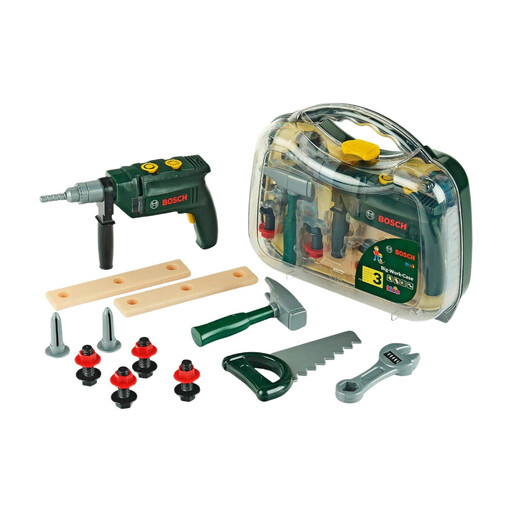
Why This Fits Their Persona: An alternative for children who prefer hammering and screwing to cooking. This set develops practical skills by mimicking adult activities with a well-known brand.
Instead of fragile accessories, this sturdy case offers child-friendly, functional tools. The battery-powered drill with sound provides a realistic play experience.
A comprehensive 16-piece set including a hammer, saw, and spanner that promotes motor skills and creativity. Everything is stored safely in a sturdy case.
Beyond role-playing in the kitchen or workshop, other toys also foster creativity. Early musical education is another important cornerstone of a child's development.
We have compiled a complete, real-time list of products that fully satisfy these strict selection criteria and UK safety regulations.
1. From what age is a Miele wooden play kitchen suitable? Most models, like the Miele 7194 play kitchen by Theo Klein, are recommended for children aged 3 and up. This is mainly due to small parts in the accessories, which could pose a choking hazard for younger children. Always check the manufacturer's specific age recommendation on the packaging.
2. How difficult is it to assemble the wooden play kitchen? A wooden play kitchen is typically delivered as a flat-pack kit and must be assembled by an adult. The process is comparable to assembling a small piece of furniture. A detailed instruction manual is included, but you should allow between 30 and 90 minutes for assembly, depending on the model.
3. Does the play kitchen with light and sound require batteries? Yes, the electronic features, such as light-up hobs or realistic cooking sounds, are battery-powered. They typically require AA batteries, which are usually not included. You can find the exact type and number of batteries needed in the product description.