
Lieferung heute & morgen

Qualitätsgarantie

Willkommens-Angebote freischalten: KOSTENLOSE Lieferung | Bis zu 80 % RABATT | Kostenlose 30-Tage-JoyPlus-Testphase
App herunterladen
Cappuccino, latte macchiato and iced coffee drinks can only be prepared reliably at home when the milk frother matches your preferred preparation method. Many disappointing purchases are not caused by the price, but by unclear product information: a handheld device is marketed as a fully featured frother for hot milk, a container is not suitable for induction hobs, or the stated capacity applies only to warm milk without froth.
This buying guide explains which technical specifications really matter and which models are suitable for different households.
Depending on the model, an electric milk frother may only froth warm milk, produce cold froth exclusively or offer both functions. A handheld milk frother usually has no built-in heating function, so the milk must be heated separately. If you regularly want to prepare cappuccino without using an additional pan, look for clearly stated functions for hot and cold milk froth.
Some manufacturers distinguish between the maximum quantity of milk for frothing and the larger quantity for warming milk. For example, a device with a 250 ml container may be designed to froth only 100 to 150 ml. If the marking is exceeded, the milk may overflow or the froth may not have enough room to rise. Claims such as “for two cups” or “for several coffees” should therefore be checked against the specific MIN and MAX markings.
Coated containers are often easier to wipe clean, but they should not automatically be cleaned with scouring pads. Glass is neutral in taste and can be used in the microwave with certain models, but it is more vulnerable to knocks. The base of an electric appliance must never be immersed in water. Statements such as “dishwasher-safe” often apply only to the lid, whisk or removable parts.
An automatic milk frother with a separate base takes care of heating and stirring. It is suitable for households that regularly prepare several speciality coffees and want to keep manual adjustments to a minimum. Programmes for hot and cold froth are particularly convenient for cappuccino, latte macchiato and cold drinks.
A manual milk frother is heated on the hob and then frothed by pumping or using a double whisk. It is important to check compatibility with your hob. A milk frother for induction requires a base that is explicitly suitable for induction. Aluminium models are not automatically induction-compatible.
Portable battery- or rechargeable-battery-powered devices require little storage space. They are an option for small kitchens, the office or travelling. However, they generally do not heat the milk themselves. The stainless-steel whisk should be rinsed immediately after every use.
For a single cappuccino, around 100 to 150 ml of milk is often sufficient for frothing. For several drinks, containers holding 250 to 330 ml are a sensible choice, provided the maximum frothing capacity is taken into account. A latte macchiato usually requires more warm milk than a small cappuccino. If you often entertain guests, compare not only the total capacity but also the usable frothing capacity.
Practical features include a removable whisk, an easily accessible interior and automatic switch-off. For mains-powered appliances, the voltage and plug must be suitable for use in a German household. The product description should also include information on preventing dry operation and overfilling, as well as warnings against immersing the base.
For a stainless-steel milk frother, material specifications such as stainless steel on the inside are relevant. With coated models, it is worth checking the care instructions. A non-stick coating can make cleaning easier, but it must be treated with care.
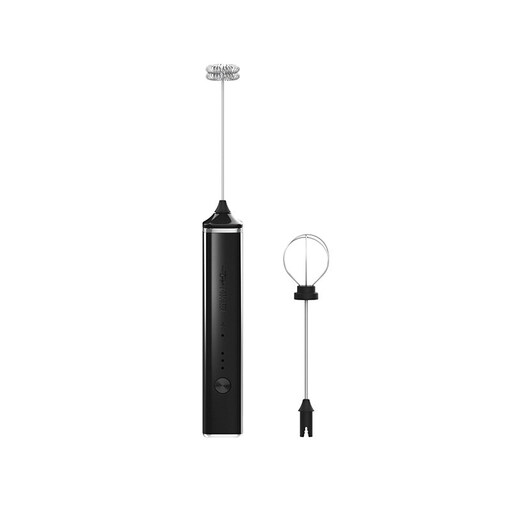
Why this product suits this profile: This handheld device does not require a permanent place on the worktop and is suitable for users who want the flexibility to prepare hot or cold froth.
The description explicitly states 3-in-1 use, as well as hot and cold froth. The milk still needs to be heated separately.
Portable design and stainless-steel whisk according to the product name; suitable for cappuccino and latte.
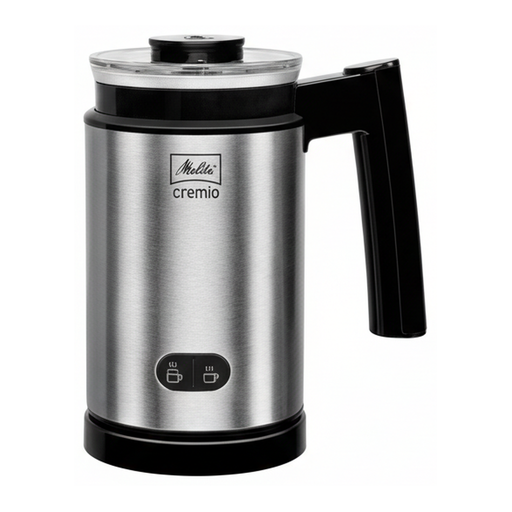
Why this product suits this profile: For regular use, the separate hot and cold functions, 250 ml capacity and 360-degree base are practical features.
The product specifications distinguish between 100–150 ml of froth and up to 250 ml of warm milk. The lid and whisk are stated to be dishwasher-safe.
450 watts, stainless-steel housing and automatic switch-off according to the product data.
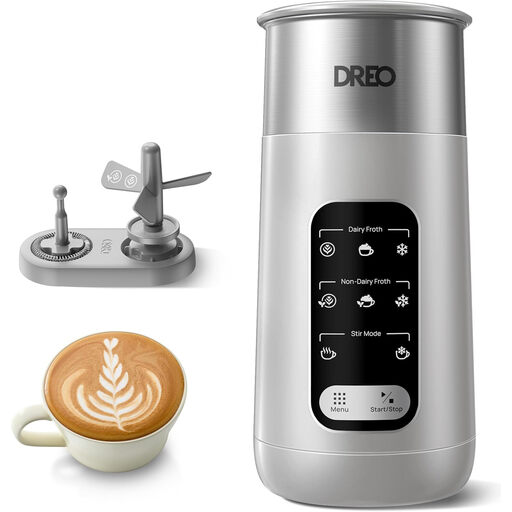
Why this product suits this profile: Several programmes, a capacity of 270 ml and options for hot, cold and different types of froth make this a good choice for households with varied drink preferences.
The instructions specify MIN and MAX markings, automatic switch-off and separate information for different types of milk and attachments.
270 ml capacity, adjustable temperature and frothing programmes; according to the specifications, the removable parts are dishwasher-safe.
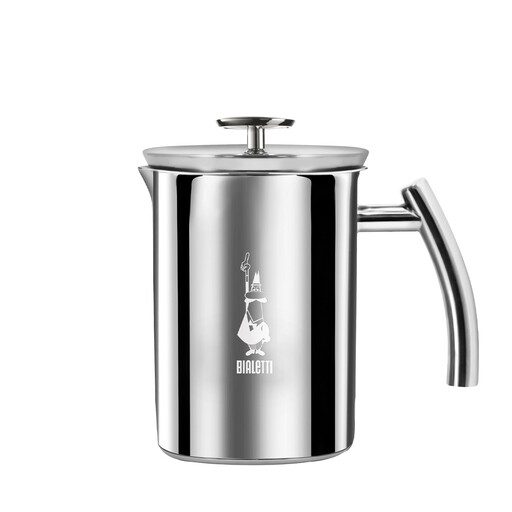
Why this product suits this profile: According to the product description, this manual model is suitable for induction hobs and other types of hob, and offers a 330 ml capacity.
Induction compatibility is explicitly stated. This removes the uncertainty of applying information intended for other types of hob.
Stainless-steel construction, manual operation and dishwasher-safe according to the product data.
We have put together a complete, regularly updated list of products that fully meet these strict selection criteria and the safety regulations applicable in the EU.
The markings inside the container are the key reference point. The permitted quantity is often lower for milk froth than for plain warm milk. Do not exceed the MAX line, as the volume increases when the milk is frothed.
An electric milk frother saves effort and, depending on the model, can heat the milk at the same time. A manual milk frother usually requires a hob or separate heat source, but offers straightforward operation without a motor. For occasional use or travelling, a handheld milk frother may be sufficient.
Its service life depends on how often it is used, how it is cleaned and the materials it is made from. Milk residue should be removed immediately after use. With electric appliances, keeping the base, cable and controls dry and following the manufacturer’s care instructions will help extend their usable life.