
Lieferung heute & morgen

Qualitätsgarantie

Willkommens-Angebote freischalten: KOSTENLOSE Lieferung | Bis zu 80 % RABATT | Kostenlose 30-Tage-JoyPlus-Testphase
App herunterladen
A milk frother should make it easy to enhance cappuccinos, latte macchiatos and cold coffee drinks. In practice, however, appliances differ considerably in terms of operation, capacity, cleaning and temperature control. If you focus solely on wattage, brand name or bold claims, you may end up buying a model that does not suit your coffee ritual.
A high power rating initially only describes electrical consumption. It does not automatically indicate how fine the foam will be, how evenly the milk will be heated or how easy the appliance is to clean. With an electric milk frother, it is therefore also important to consider the stirring system, programmes, temperature control and fill markings.
Milk expands when it is frothed. A container holding 250 or 270 ml therefore does not always take the same amount of milk for hot milk foam as it does for heating milk. Some manufacturers distinguish between the maximum quantity for frothing and the higher quantity for heating milk only. Check these details before buying to prevent the contents from overflowing.
Milk residue quickly builds up around the whisk, lid and inner surface. A stainless steel milk frother with a coated interior can make cleaning easier, but it must not be treated with unsuitable metal utensils. With appliances that have a heating function, the base must always be kept dry. Removable parts and information about dishwasher use are therefore practical purchasing criteria, not minor details.
An electric milk frother with its own container froths and heats the milk in a single operation. Models with a milk frother with heating function are suitable for hot drinks and, depending on the design, may also offer cold milk foam. However, they require countertop space, a power connection and careful cleaning after every use.
A manual milk frother works without electricity. With the BODUM LATTEO, for example, the milk is frothed using a plunger with a mesh filter. According to the product information, the borosilicate glass container is microwave-safe; the plunger must be removed before heating. This design is appealing if you already have a kettle or microwave and are happy to prepare your drink in separate steps.
A rechargeable milk frother or battery-operated milk frother is compact and flexible to use. Handheld appliances are placed directly into a container of milk. The milk must be heated separately unless the appliance has its own heating function. This format can be a practical choice for travelling, small kitchens or occasional use.
Cappuccinos generally require hot milk foam, while cold milk foam is ideal for iced coffee or desserts. Look for clearly labelled programmes such as Warm Foam, Cold Foam or separate settings for milk and plant-based alternatives. Temperature control is helpful if you want to prepare drinks with different quantities of milk.
Important: Hot milk and the container can become hot during operation. Never operate an appliance without liquid. Keep the fill level between the MIN and MAX markings to prevent overflowing, dry boiling or possible damage to the appliance.
For a single serving, a foam capacity of around 100 to 150 ml may be sufficient. Households preparing two drinks at a time should look for around 200 to 270 ml, although the actual amount of foam depends on the programme. Capacity should therefore always be considered alongside the stated quantity for “milk foam” or “hot milk”.
Practical features include:
Electrical components, the mains cable and the base must not be immersed in water. With a handheld appliance, only the whisk should come into contact with the milk; keep the handle and motor housing dry.
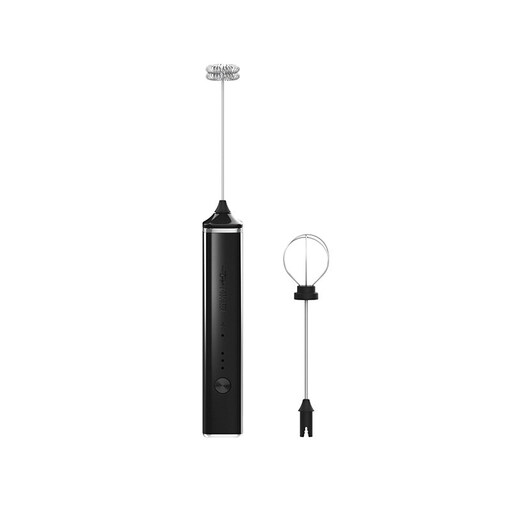
Why this product suits this profile: This handheld appliance is ideal for users who want the flexibility to prepare hot or cold foam in a cup they already have.
This design does not rely on a permanently installed heating container. You can therefore choose the quantity and container to suit your needs, although a separate heat source is required to warm the milk.
3-in-1 handheld appliance, stainless steel whisk, and design for hot and cold milk foam according to the product description.
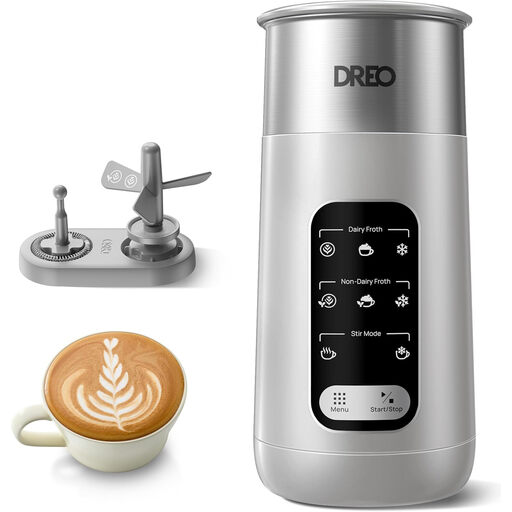
Why this product suits this profile: Multiple programmes and adjustable foam and temperature options appeal to households that want to prepare a range of milk-based drinks.
The product information specifies MIN and MAX markings, automatic switch-off and different attachments. This makes it easier to control the quantity and preparation method.
270 ml capacity, adjustable temperature and foam level, and programmes for hot and cold preparations.
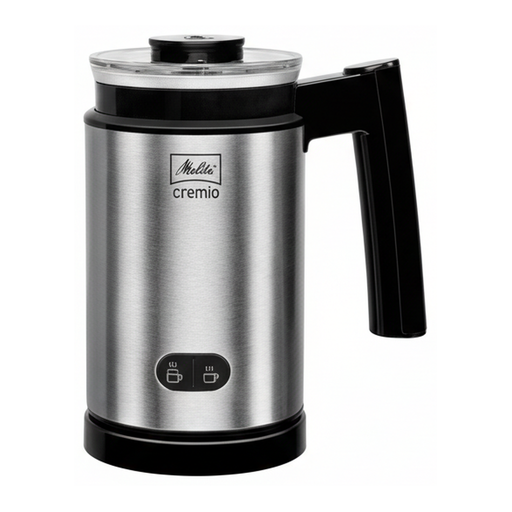
Why this product suits this profile: For regular cappuccino and latte macchiato preparation, this appliance offers separate functions for hot and cold foam.
The product data specifies different foam capacities, a non-stick inner surface and dishwasher-safe parts. This provides transparent information on key considerations such as volume and cleaning.
450 W, 250 ml total capacity, hot and cold functions, automatic switch-off, plus a dishwasher-safe whisk and lid according to the manufacturer’s information.
We have compiled a complete, regularly updated list of products that fully meet these strict selection criteria and the safety regulations applicable in the EU.
For cappuccino, choose an appliance that produces hot milk foam and has a foam capacity suitable for the portion you want to prepare. An electric milk frother with a heating function reduces the number of additional steps. With a handheld appliance, the milk is heated separately.
Its service life depends on the materials, frequency of use, cleaning and how carefully the coating and whisk are handled. Do not allow milk residue to dry on the appliance. With electric models, keep the base and cable dry, and clean the moving parts according to the manufacturer’s instructions.
Power consumption depends on the wattage and operating time. A 450 W appliance that runs for only a few minutes per use consumes considerably less energy per cycle than the wattage alone might suggest. For an accurate assessment, the power rating, programme duration and frequency of use are the key factors.