
Lieferung heute & morgen

Qualitätsgarantie

Willkommens-Angebote freischalten: KOSTENLOSE Lieferung | Bis zu 80 % RABATT | Kostenlose 30-Tage-JoyPlus-Testphase
App herunterladen
A milk frother can make it much easier to prepare cappuccino, latte macchiato or hot milk. However, design and marketing claims are not the only things to consider when buying one. Hob compatibility, capacity, cleaning requirements and the type of milk foam you want are all crucial.
Many disappointing purchases result from three common pitfalls:
A manual milk frother is operated either with a mesh plunger or a mechanical double whisk. This type does not require a power socket and is ideal for anyone who wants to control the temperature and frothing time themselves. For hob-compatible models, you should check whether they are suitable for your particular hob.
An electric milk frother heats and froths the milk in a single operation. Programmes for hot and cold milk foam are convenient if you regularly prepare several drinks. However, the appliance needs a dry surface near a power socket. With these models, the electrical base must generally not come into contact with water.
A cappuccino often requires around 100 to 150 millilitres of milk, depending on the cup, recipe and desired foam height. A 250 to 330-millilitre container may therefore be enough for several drinks, but it should not be filled to the brim.
Appliances with separate “Minimum” and “Maximum” markings must be used within these limits. Too little milk can affect performance, while too much may overflow during heating or frothing. For a small household, a compact milk frother for cappuccino is often sufficient. A larger capacity is more practical in an office or for several people.
Stainless steel is hard-wearing and is often suitable for use on different types of hob. With coated aluminium, check whether the container must only be cleaned by hand. Non-stick coatings can make cleaning easier, but require gentle handling without abrasive sponges.
A milk frother for induction must be explicitly stated to be induction-compatible. This applies, for example, to the Bialetti Stainless Steel Induction Milk Frother. Models such as the Bialetti MILK FROTHER “TUTTOCREMA” CM.10 are, according to the product information, suitable for gas, glass-ceramic and electric hobs, but not for induction.
For latte art milk foam, the maximum amount of foam is not the only important factor. A fine-pored, flowing consistency makes pouring easier. Appliances with adjustable temperature settings or different whisk attachments are therefore worth considering. By contrast, a classic, very firm foam is better suited to cappuccino.
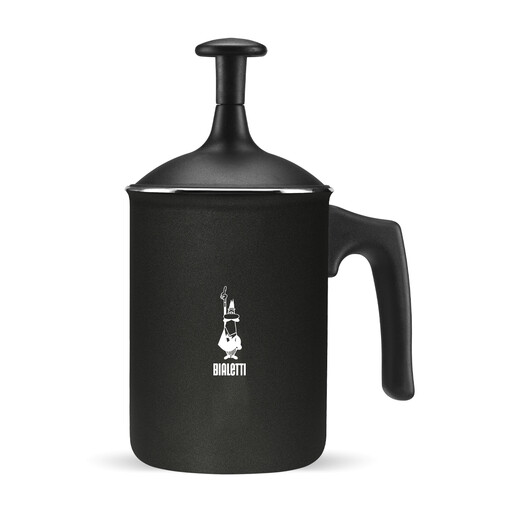
Why this product suits this profile: With a 330-millilitre capacity, this manual milk frother is designed for households that want to prepare hot milk foam for several cups without additional electronics.
The product information clearly states which hob types are suitable and excludes induction. This allows you to check hob compatibility before buying.
Manual operation, double-mesh construction and an internal coating according to the product description. Hand-wash only.
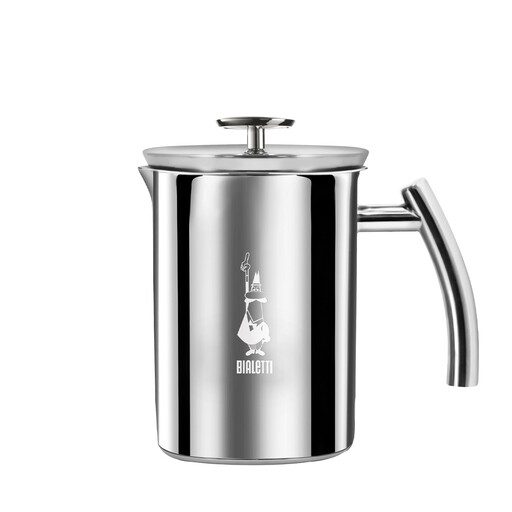
Why this product suits this profile: According to the product description, the stainless steel container is suitable for all hob types, including induction, and has a capacity of 330 millilitres.
Induction compatibility is explicitly stated. This avoids the common confusion between general hob compatibility and induction suitability.
Stainless steel construction, manual operation and dishwasher suitability according to the product information.
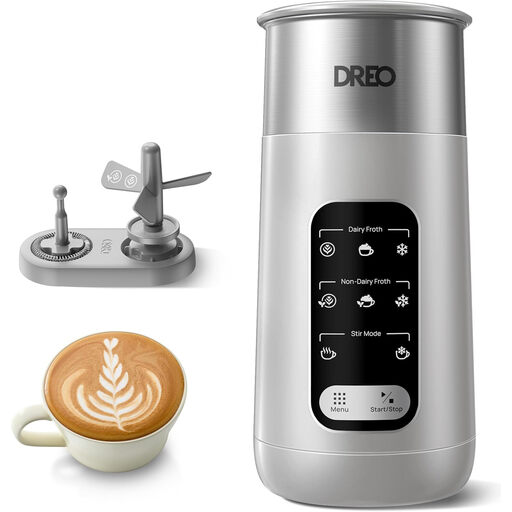
Why this product suits this profile: According to the product information, this 270-millilitre electric model offers several programmes, adjustable temperature and attachments for different foam consistencies.
The fill markings and automatic switch-off help prevent overfilling and unnecessarily long operating times. The base remains dry during cleaning.
Programmes for hot and cold milk foam, plus an attachment for microfoam or latte art according to the product description.
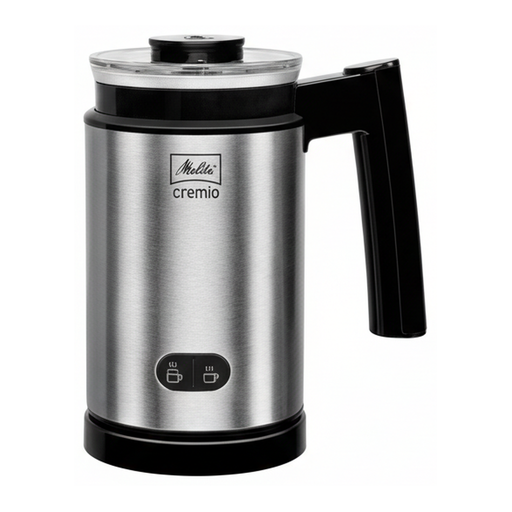
Why this product suits this profile: This electric milk frother is designed for hot and cold milk foam and, according to the product information, features one-button operation.
The product data states a maximum capacity of 250 millilitres and automatic switch-off. According to the product information, removable parts are dishwasher-safe.
Separate functions for hot and cold foam, a non-stick container and a 360-degree base station according to the product description.
We have put together a complete, regularly updated list of products that fully meet these strict selection criteria and the safety regulations applicable in the EU.
A coffee machine with a milk frother can be a sensible choice if you often want to prepare espresso and a milk drink one after the other. Models such as the IAGREEA Espresso Machine CM3050-2 and the HiBREW H13A combine coffee brewing with either a steam wand or a milk-frothing system.
However, they take up more space and require more extensive cleaning and operation than a separate milk frother. If you already own an espresso machine, you will usually not need a second combined system. For households with limited worktop space, though, the combination can be a practical solution.
A model must be explicitly labelled as induction-compatible. Stainless steel alone is not sufficient evidence, as the construction of the base is the decisive factor. Before buying, check the manufacturer’s information regarding hob compatibility.
Its service life depends on the material, how often it is used and how well it is maintained. After every use, remove any milk residue, clean moving parts and keep electrical bases dry. Coated containers should not be cleaned with metal utensils or abrasive cleaning products.
Running costs depend on the appliance’s power rating and how long it is used. For short frothing cycles, energy consumption is usually lower than during longer heating cycles. For an accurate estimate, you can calculate the cost using the power rating in watts, operating time and your individual electricity price.