
Lieferung heute & morgen

Qualitätsgarantie

Willkommens-Angebote freischalten: KOSTENLOSE Lieferung | Bis zu 80 % RABATT | Kostenlose 30-Tage-JoyPlus-Testphase
App herunterladen
A milk frother can complement cappuccino, latte macchiato and cold coffee drinks. However, the stated froth capacity is not the only thing that matters when buying one. Capacity, heating technology, material, cleaning requirements and compatibility with your hob or coffee machine are all crucial.
The maximum container size does not automatically correspond to the amount of milk that may be frothed. The volume increases during frothing. This is why many appliances have separate markings for hot milk froth and simply heating milk. Exceeding the maximum fill line can cause the contents to overflow and make cleaning more difficult.
A milk frother for induction needs a suitable base. Manual aluminium models, for example, often work on gas, electric or ceramic hobs, but not on induction. The statement ‘suitable for all hob types’ should therefore be checked carefully rather than inferred solely from the container material.
With electrical appliances, the mains-powered base must never be placed in water. Often, only the lid, whisk or removable parts are dishwasher-safe. A non-stick coating can make wiping easier, but requires suitable utensils and gentle cleaning. With a manual milk frother, you should also check whether the entire container or only individual components are dishwasher-safe.
An electric milk frother heats and froths milk in a single operation. This is ideal for households that regularly prepare cappuccino or latte macchiato and prefer consistent, repeatable operation. Models with programmes for hot and cold milk froth can also be used for iced coffee or desserts.
A manual milk frother is either heated on the hob and then frothed using a sieve or pump mechanism, or operated entirely by hand. It does not require a power connection and, depending on its design, can also be used when travelling. However, you have to monitor the temperature and frothing time more closely yourself.
A cappuccino generally requires less milk than two large latte macchiato glasses. As a guide:
A latte art milk jug is not necessarily a frother. It is primarily designed for precise pouring. A stainless steel milk frother with a narrow spout can partly perform this function, provided it has been designed for it.
Stainless steel milk frothers are resistant to high temperatures and, where the base is suitably marked, are suitable for induction. Glass allows you to see the contents, but is more susceptible to impact damage. Coated aluminium can be easy to clean, but is not suitable for every hob.
Before buying, you should check:
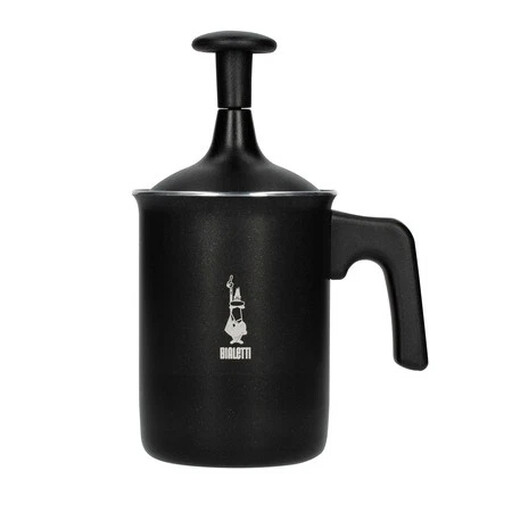
Why this product suits this profile: This manual milk frother works without electricity and has a stated froth capacity of 160 ml. It is designed for gas, electric and ceramic hobs, but not induction.
Its clearly stated hob compatibility helps prevent ordering the wrong product for an induction hob. The limitation to a smaller froth portion makes the capacity transparent.
Manual operation without a cable, plus a non-stick coating according to the product details.
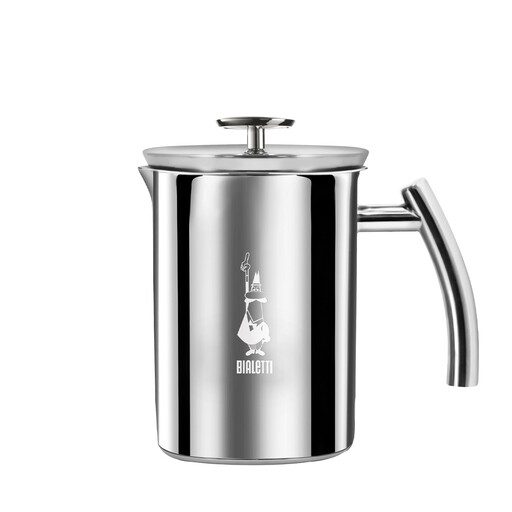
Why this product suits this profile: This manual model has a stainless steel body, a 330 ml capacity and, according to the product details, is suitable for induction hobs and other hob types.
Its explicitly stated induction compatibility reduces the risk of buying an unsuitable aluminium frother.
Stainless steel construction, manual operation and, according to the product description, a dishwasher-safe design.
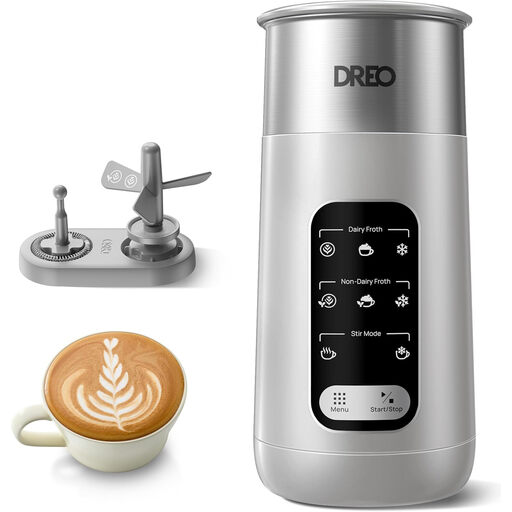
Why this product suits this profile: According to the product details, this electric appliance offers a 270 ml capacity, several programmes and settings for hot and cold froth. An impeller tip is designed for microfoam and latte art.
The separate programmes and fill markings help you adjust the amount of milk to suit the intended use. The base stays dry during cleaning.
Eight programmes according to the product name, temperature and froth settings, plus removable parts that are dishwasher-safe in the top rack.
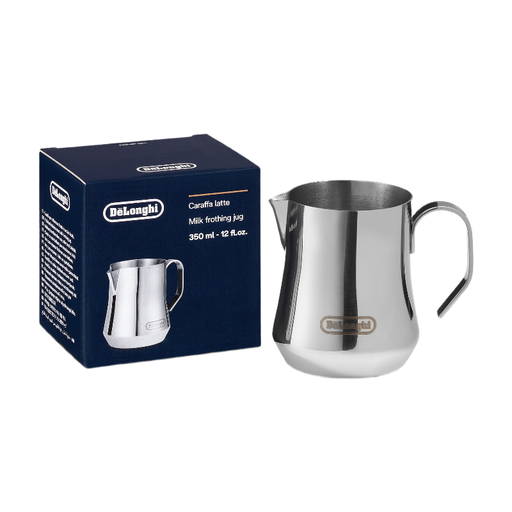
Why this product suits this profile: This 350 ml stainless steel jug is designed as an accessory for heating and pouring milk froth. Its special spout supports controlled pouring for latte art.
It is clearly presented as a milk jug rather than a standalone electric frother. This makes it a suitable choice for users who already have a steam wand.
Polished stainless steel, 350 ml capacity, special pouring spout and, according to the product details, dishwasher-safe.
We have compiled a complete, regularly updated list of products that fully meet these strict selection criteria and the safety regulations applicable in the EU.
With an electric milk frother, you should read the operating instructions and observe the fill markings before using it for the first time. The heating surface, base and mains cable must not come into contact with water. Allow the container to cool down first after preparation. Milk residue is generally easier to remove if it is not allowed to dry.
For manual appliances:
Depending on the model, a Bialetti milk frother may be designed for induction, conventional hob types or electric operation. The brand name alone therefore does not indicate which heat source is suitable.
Both manual and electric models are suitable for cappuccino. An electric milk frother is a sensible choice if you want milk to be heated and frothed automatically. A manual milk frother is ideal for users who want to control the temperature and consistency themselves. A suitable froth capacity and an easy-to-clean container are important.
In principle, latte macchiato can be made with hot milk froth from many appliances. For the characteristic layered effect, the froth should be sufficiently stable and poured slowly into the glass. For latte art, a jug with a precise spout is also helpful; a separate latte art milk jug may be more suitable for this than a wide container.
Energy consumption depends on the power rating, operating time and heating function. An appliance with a short automatic preparation time may use a manageable amount of energy per cycle. For an accurate assessment, consider the wattage, operating time and frequency of use. Manual models do not require electricity for the frothing process itself, but heating the milk on the hob may still consume energy.