
Lieferung heute & morgen

Qualitätsgarantie

Willkommens-Angebote freischalten: KOSTENLOSE Lieferung | Bis zu 80 % RABATT | Kostenlose 30-Tage-JoyPlus-Testphase
App herunterladen
A milk frother can make preparing cappuccino, latte macchiato or warm milk foam easier. However, models vary considerably in terms of operation, capacity, cleaning and intended use. Focusing only on terms such as “automatic”, “microfoam” or “stainless steel” can mean overlooking important details.
The stated capacity often refers to the maximum amount of milk, not the amount that should be frothed at one time. The volume increases during frothing. A 240 or 270 ml appliance should therefore only be filled up to the marked fill line. If there are no clear “MIN” and “MAX” markings, the risk of overflowing or uneven heating increases.
Latte art requires fine-pored, fluid foam. Particularly firm foam may be suitable for cappuccino, but it is more difficult to pour into a pattern. With a milk frother for latte art, a suitable whisk attachment, controllable temperature and a separate milk jug for pouring are therefore important.
Milk residue can collect on the base or around the whisk attachment. A stainless steel milk frother is robust, while a non-stick coating or dishwasher-safe individual parts can reduce the cleaning effort further. With electric models, the base with its cable and mains connection must never be immersed in water.
A manual milk frother is typically heated on the hob and then frothed using a sieve or pump mechanism. It does not require a mains connection and is suitable for users who want to control the temperature and foam formation themselves. An induction milk frother must be explicitly approved for induction hobs; not every stainless steel container is automatically suitable for induction cooking.
An electric milk frother handles heating and whisking in a single programme. This is convenient for everyday cappuccinos, but requires an available socket and the correct fill level. A battery-operated milk frother or portable milk frother is compact and flexible, but does not necessarily heat the milk. The milk is often heated separately and then frothed with the whisk.
If you want to prepare hot and cold milk foam, look for programmes that explicitly offer this function. Adjustable temperature or foam settings allow you to choose a more suitable option for cappuccino, latte or cold drinks. With models without temperature control, the milk must be heated separately. The amount of milk, its starting temperature and the attachment used are also crucial for consistent results.
A small model may be sufficient for a single cappuccino. In a household with several people, a larger container is more practical, provided the maximum frothing capacity is not exceeded. Look out for:
The following models cover a range of usage scenarios. The information is based on the available product details.
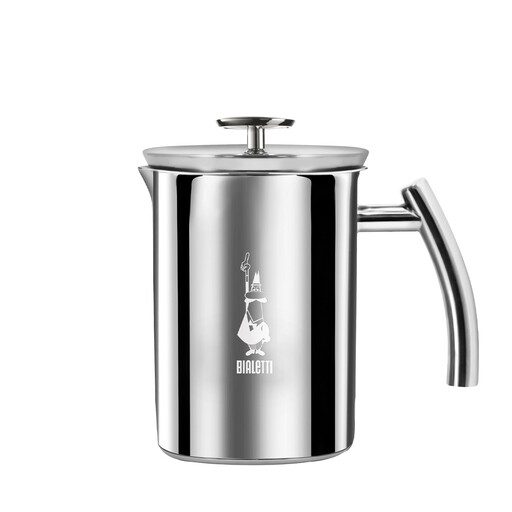
Why this product suits this profile: With a 330 ml capacity, this manual milk frother does not require its own mains connection and, according to the product details, is suitable for all hob types, including induction.
The manual operation makes the frothing process easy to understand. The capacity and hob compatibility are clearly stated, so important buying criteria can be checked in advance.
330 ml capacity, stainless steel construction, manual operation and dishwasher suitability according to the product description.
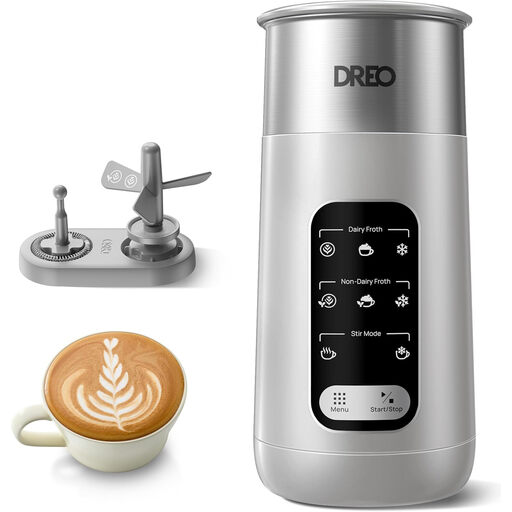
Why this product suits this profile: According to the product description, this automatic model offers several programmes for different types of milk, heating, frothing and mixing, as well as a capacity of 270 ml.
The programmes and fill markings address the common confusion between total volume and frothing capacity. The product instructions also provide guidance on cleaning the removable parts.
270 ml capacity, automatic shut-off, adjustable foam and temperature settings, plus attachments for different applications.
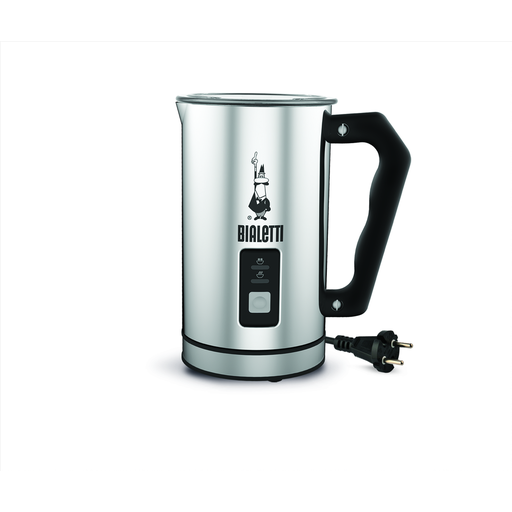
Why this product suits this profile: This electric milk frother is designed for regular use and, according to the product details, combines 500 W of power with two functions for frothing, heating and mixing.
The maximum milk quantity of 240 ml is clearly stated. This allows you to check the portion before starting and avoid overflow caused by overfilling.
500 W motor, two operating modes, 18/10 stainless steel and a non-stick interior coating according to the product description.
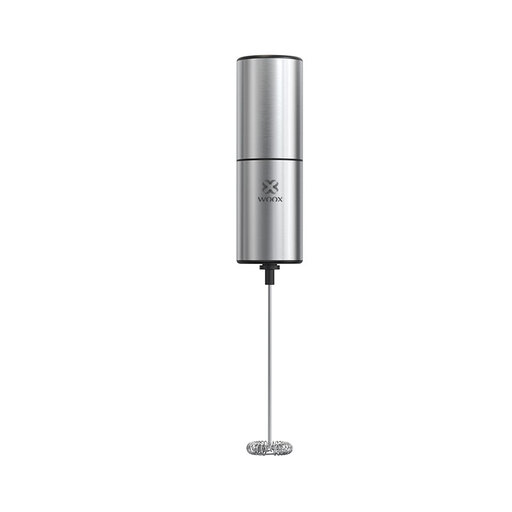
Why this product suits this profile: A battery-operated, portable milk frother is useful for travelling, small kitchens or situations where there is no available socket.
As portable whisk models do not necessarily heat the milk, it should be heated separately. This clear distinction prevents unrealistic expectations about the appliance’s functionality.
Compact design for use on the go and operation without a fixed power cable; suitable for frothing or mixing after the milk has been heated separately.
We have put together a complete, regularly updated list of products that fully meet these strict selection criteria and the safety regulations applicable in the EU.
Always follow the markings inside the container. The maximum level for frothing is often lower than the level for heating only, because the volume increases as air is introduced. The instructions in the relevant user manual take precedence.
The lifespan depends on the material, how often it is used and how well it is maintained. Remove milk residue immediately after use, clean the whisk attachment and interior container according to the manufacturer’s instructions, and keep electric bases away from water. With battery-operated models, remove the batteries if the appliance will not be used for an extended period.
Actual consumption depends on the power rating and operating time. For example, a 500 W appliance uses considerably less energy during a short programme than it would during one hour of continuous operation. Running costs are therefore mainly determined by the programme length and how often the appliance is used each day.