
Lieferung heute & morgen

Qualitätsgarantie

Willkommens-Angebote freischalten: KOSTENLOSE Lieferung | Bis zu 80 % RABATT | Kostenlose 30-Tage-JoyPlus-Testphase
App herunterladen
A milk frother can enhance your coffee-making routine at home, but not every model is right for every household. The deciding factors are often not just the price, but the combination of frothing method, capacity, cleaning requirements and hob compatibility. If you focus only on product images or marketing claims, it is easy to overlook important limitations.
For manual models, hob compatibility is crucial. An aluminium vessel may be suitable for gas, electric and ceramic hobs, but not for induction hobs. If you need an induction milk frother, this feature should be stated explicitly in the technical specifications. A general phrase such as “suitable for various hob types” is not enough.
Milk expands as it is frothed, so a vessel must not be filled to the brim. Some suppliers also distinguish between the maximum quantity for milk foam and the larger quantity for simply heating milk. A small container may be enough for a household that mainly makes cappuccinos, while several cups or latte macchiatos require a larger capacity.
Non-stick coatings can make cleaning easier, but they are not automatically dishwasher-safe. With electrical appliances, the base must never be immersed in water. Removable parts, glass containers and whisks may have different care instructions. Before buying, check which components can actually go in the dishwasher and which must be washed by hand.
An electric milk frother with its own heating system heats and froths the milk in a single operation. This is ideal for users who regularly prepare cappuccinos or latte macchiatos and want to keep manual steps to a minimum. Depending on the model, you may have programmes for hot and cold milk, different foam settings or a range of attachments.
A manual milk frother is operated on the hob or using a pumping mechanism. Hob-compatible models do not need a power socket and can also be practical when travelling. A handheld milk frother with a battery-powered motor is compact, but generally does not heat the milk itself. The milk is heated separately and then frothed.
For a single serving, a model with around 150 to 250 millilitres of usable capacity is often sufficient. For several drinks, around 300 to 330 millilitres is more suitable. Always take the manufacturer’s stated capacity for the intended application into account.
A milk frother for cappuccino generally produces a lighter, airier layer of foam, while a milk frother for latte macchiato may require a larger quantity of warm milk and a more stable foam base, depending on the recipe. For plant-based drinks, the description should explicitly state that the model is suitable for non-dairy milk or vegan milk alternatives. Results may vary depending on the type of drink, temperature and fat content.
Borosilicate glass is heat-resistant and, with suitable containers, may allow the milk to be heated in a microwave. Metal or aluminium containers are durable, but must be compatible with the hob being used. A non-stick interior can help reduce milk sticking; it should be treated with suitable kitchen utensils and according to the care instructions.
With electrical appliances, mains voltage, cable design, minimum and maximum fill levels and safety clearances are also relevant. The container should never be operated empty. Hot milk and the container itself can cause burns. The operating instructions and safety information for the relevant product should therefore always be followed.
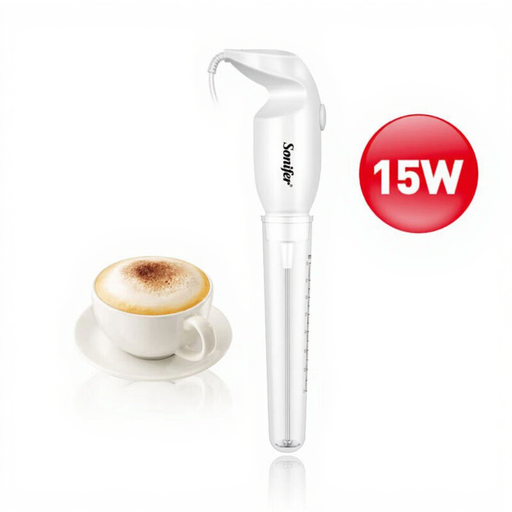
Why this product suits this profile: This compact handheld milk frother is suitable for users who want to heat milk separately and then froth it in individual portions.
The separate heating step makes it clear that no integrated heating system should be expected. This keeps the appliance’s function transparent.
15-W power rating; removable frothing wand according to the usage instructions. The handle and motor section must not be immersed.
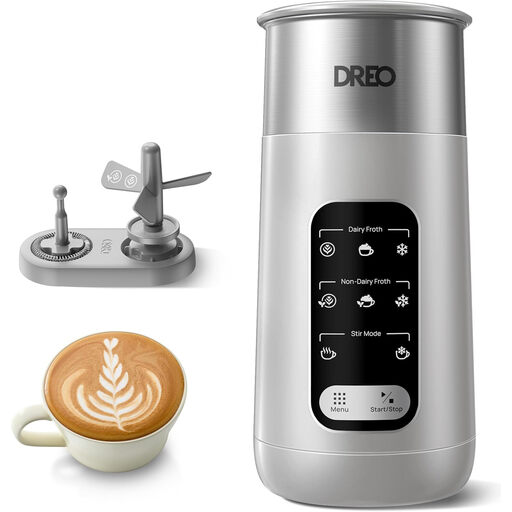
Why this product suits this profile: With a 270-millilitre capacity, this electric model is designed for households that want several programmes for hot and cold milk, as well as different types of foam.
The specifications state the minimum and maximum fill levels, separate attachments and cleaning restrictions for the base. This reduces the risk of incorrect use caused by unclear instructions.
Eight programmes according to the product description, adjustable foam settings and temperature control; 220–240-V power cable.
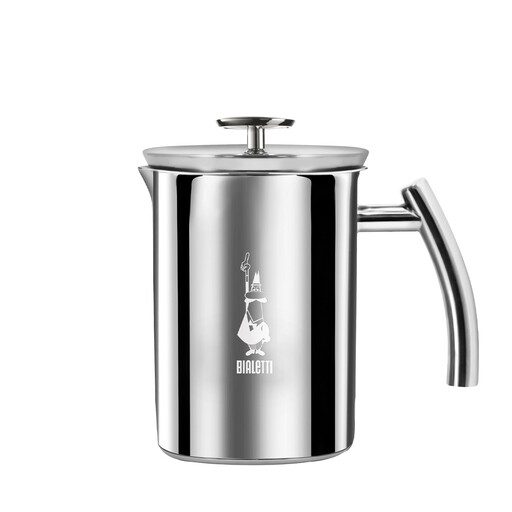
Why this product suits this profile: This manual model is a good choice for households with an induction hob, as the product description explicitly states that it is induction-compatible.
The common induction compatibility gap is addressed specifically in the technical specifications. This makes it easier to check compatibility with your hob before buying.
330-millilitre capacity, stainless steel construction and dishwasher-safe according to the product information; manual operation without its own power cable.
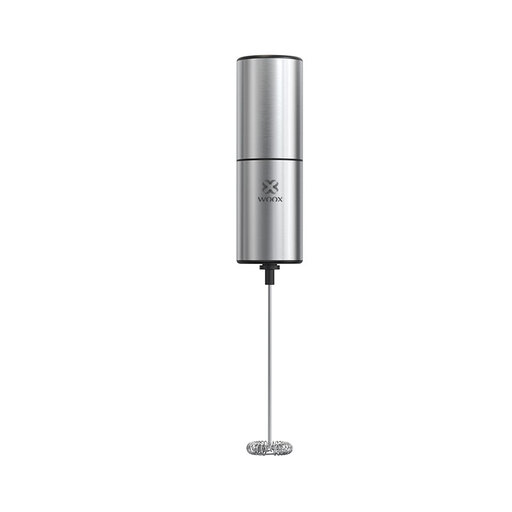
Why this product suits this profile: This battery-powered milk frother is ideal for users who want to prepare small portions away from a power socket.
The battery-powered design makes its intended use clear: this appliance is made for frothing on the go, not as a replacement for an electric milk heater with an integrated heating function.
Battery operation and travel-focused design according to the product name; milk is heated separately and then mixed or frothed.
We have put together a complete, regularly updated list of products that fully meet these strict selection criteria and the safety regulations applicable in the EU.
With a handheld milk frother, the milk is agitated by a rotating whisk. Manual vessels often use a sieve or double whisk. The right quantity of milk, a suitable temperature and the correct attachment are all essential for fine milk foam. With plant-based alternatives, the results can vary depending on the recipe.
Manual models do not incur any additional electricity costs during use, while battery-operated appliances require batteries or a rechargeable battery to be taken into account. Electric models use mains power. The actual running costs depend on the power rating, operating time and frequency of use. Rather than focusing on a single wattage figure, it is more important to consider whether the appliance performs the desired function effectively in a suitable single operation.
Its service life depends on the material, level of use, cleaning and proper handling. Do not allow milk residue to dry on the appliance, observe the fill markings and never immerse the base or cable of an electrical appliance in water. With coated vessels, follow the care instructions. For long-term use, spare parts, removable components and clear operating instructions are also useful criteria when choosing a model.