
Lieferung heute & morgen

Qualitätsgarantie

Willkommens-Angebote freischalten: KOSTENLOSE Lieferung | Bis zu 80 % RABATT | Kostenlose 30-Tage-JoyPlus-Testphase
App herunterladen
A cappuccino with a light, airy froth or a layered latte macchiato can only be made reliably at home when the milk frother suits your everyday needs. Electric appliances, handheld whisks, battery-powered models and manual milk frothers differ considerably in capacity, cleaning and ease of use.
As a Joybuy Product Recommendation Officer, I filter the most important product details and assess them according to specific usage scenarios. This helps you avoid common unsuitable purchases without being swayed by vague advertising claims.
The stated capacity does not always refer to the amount of milk froth. As the milk is frothed, its volume increases, so the marking inside the container must be observed. For example, a 250 ml milk frother may only be designed for around 100 to 150 ml of froth, while a larger quantity of milk may be heated without frothing.
Ignoring this information can lead to overflowing, dirty heating surfaces or inconsistent results. A smaller model is often sufficient for a single cappuccino. Households preparing several milk drinks should consider the maximum frothing and heating capacities separately.
An automatic milk frother takes care of heating and stirring, but it still needs to be cleaned after every use. Milk residue is particularly likely to stick to coated interior surfaces, the whisk and the lid. Removable parts, an easily accessible interior and – where applicable – clear labelling that certain components are dishwasher-safe are therefore useful features.
The base, mains cable and electrical connections must never be immersed in water. With an electric milk frother, the instruction manual is also the key reference for fill levels, temperature and the cleaning process.
A high wattage is not, on its own, an indicator of quality. Whisk design, programme selection, temperature control and the type of milk used are also important. Cappuccino usually requires a denser froth, whereas latte macchiato is often prepared with a finer, more fluid milk froth.
Results can vary depending on the type of plant-based milk alternative used. An appliance with several attachments or programmes offers more flexibility here than a simple one-button frother.
For one person, around 150 to 240 ml of milk is often sufficient. Models with a capacity of 250 to 300 ml are more suitable when two smaller drinks are to be prepared one after the other, or when making a larger portion of warm milk. Always check:
A milk frother for cappuccino should leave enough room for the milk to expand. For latte macchiato, a finer froth texture may also be more important than particularly large capacity.
If you only prepare hot coffee drinks, a cold-froth function is not necessarily essential. For iced coffee, desserts or cold milk drinks, however, warm and cold milk froth is a useful option. Look for clearly separated programmes and check whether automatic switch-off is provided once the process is complete.
Some electric appliances heat and mix milk without intensive frothing. This function is useful if you also want hot milk for cocoa or other drinks alongside cappuccino.
A stainless-steel milk frother is designed to be robust and durable, whether the material is used for the housing or the container. A non-stick interior coating can make cleaning easier, but it must not be treated with sharp-edged objects. Glass containers, such as those made from borosilicate glass, let you see the contents, but require careful handling.
Also look for:
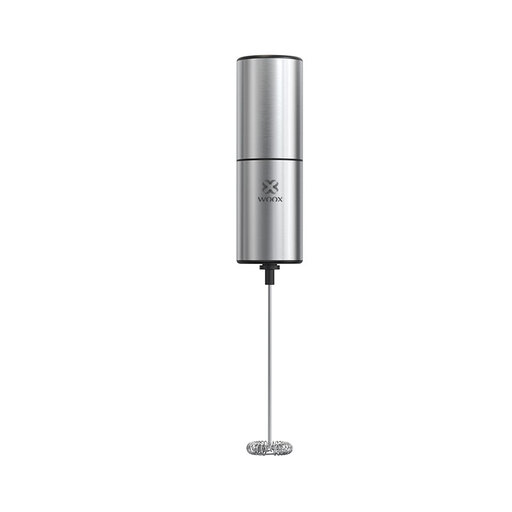
Why this product suits this profile: This battery-powered model is designed for occasional use, small kitchens and use on the go.
Its compact design avoids the need for an unnecessarily large appliance when you only want to froth individual portions. Check the battery type and included accessories before buying.
Cordless use and less space required than a freestanding appliance.
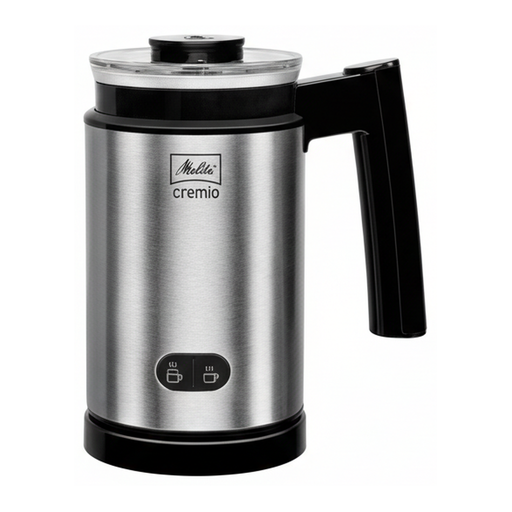
Why this product suits this profile: This freestanding appliance offers one-touch operation, warm and cold milk froth, and a container with a capacity of 0.25 litres.
The separate functions make its possible uses clear. According to the product information, the whisk and lid are dishwasher-safe; the inner container still needs to be cleaned by hand.
450-watt power, 360° base station, automatic switch-off and, according to the product information, GS safety certification.
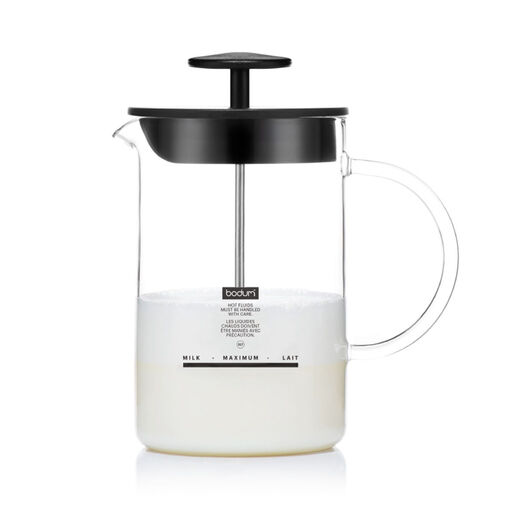
Why this product suits this profile: This manual milk frother does not require electricity and is ideal for users who want to control the quantity and consistency themselves.
The 0.25-litre capacity is clearly stated. When heating the milk in a microwave, the plunger attachment must be removed if it contains metal parts.
Heat-resistant borosilicate glass, manual operation and, according to the product description, a microwave-safe container.
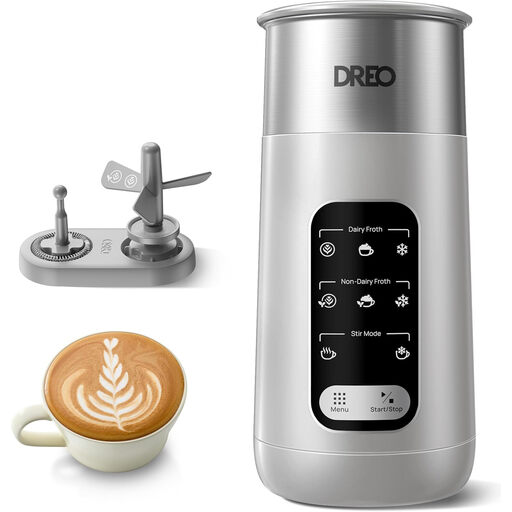
Why this product suits this profile: This 270 ml unit is aimed at users who want to experiment with different types of froth, temperatures and varieties of milk.
The minimum and maximum fill markings help prevent overfilling and dry operation. The different attachments should be used with the appropriate programme.
Eight programmes, adjustable temperature and two attachments according to the product information; the container, lid and attachments are dishwasher-safe according to the supplier.
We have put together a complete, regularly updated list of products that fully meet these strict selection criteria and the safety regulations applicable in the EU.
With a corded appliance, electricity costs per use are generally low in addition to the purchase price. For everyday use, cleaning requirements and possible replacement parts are more important. A rechargeable battery-powered milk frother has no ongoing battery costs; models powered by replaceable batteries require regular battery changes.
Rinse the whisk and container after every use in accordance with the manufacturer’s instructions. Dried-on milk can affect the mechanism and cause unpleasant odours. When cleaning non-stick surfaces, use soft sponges and avoid abrasive cleaners.
This depends on the appliance and the desired froth texture. For one cappuccino, 100 to 150 ml of milk is often sufficient. The key is to observe the marking for the maximum froth quantity, as the volume increases during frothing.
There is no universal answer. A manual milk frother does not require electricity and usually has a simple design. An electric model, on the other hand, handles stirring and heating for you. With daily use, the reduced effort may be the deciding factor, while occasional users may be perfectly happy with a manual version.
Its service life depends on how often it is used, how well it is cleaned, the materials and how the appliance is handled. Regularly removing milk residue, observing the fill levels and protecting electrical components from water all help reduce typical wear risks. When buying, you should therefore consider not only the programmes but also the care instructions and the product information available.