Small holiday cottage kitchen
If you’re cooking just a few portions, make sure the pot and lid opening fit the available space. Russell Hobbs lists a stated capacity of 2.0 l for the Compact Home 25570-56; check the maximum fill level separately.


For a small batch of minestrone with tinned beans that you’ll serve soon, a saucepan you already have will often do the job. A slow cooker is more useful if you want the vegetables to cook for several hours or you’ll use the appliance regularly. Choose based on the total recipe quantity, the maximum fill level and the space available, not just the stated capacity. A timer and keep-warm setting are no substitute for the instruction manual or checking the temperature if the soup will be kept hot for longer.
If you’re cooking just a few portions, make sure the pot and lid opening fit the available space. Russell Hobbs lists a stated capacity of 2.0 l for the Compact Home 25570-56; check the maximum fill level separately.
If people will be eating at different times, consider the cooking time and keeping the food hot as separate needs. Tristar describes the VS-3915 as having a keep-warm setting. For keeping food hot, the Federal Institute for Risk Assessment recommends at least 60 °C throughout.
If you want to keep effort and washing-up to a minimum, weigh the benefits of another appliance against using the saucepan already in the holiday cottage kitchen. Good Food’s recipe allows cooked tinned beans in place of dried beans.
First, check that all the soup will fit in the cooking pot and that the appliance has a safe place in the kitchen. Then consider whether slow cooking and any extra features are really useful for the way you’ll use it.
| What matters | What to check before buying | Who will find this especially important? |
|---|---|---|
| Portion size and space | Compare the recipe quantity with the maximum fill level, the appliance’s external dimensions and the space needed to open the lid. Rommelsbacher distinguishes between a 6 l pot capacity and a 4 l usable capacity for the MD 1000. | Whether I’m cooking for a few people or a larger group, I need enough room for the vegetables, stock and beans without the appliance taking over a small kitchen. Around 31% of consumers put portion size and available space first. |
| Cooking time and serving | Follow the instruction manual for the cooking programme. If keeping food hot for longer, check its temperature; the Federal Institute for Risk Assessment recommends at least 60 °C throughout. | If we won’t all be eating at the same time, I want to be able to plan the cooking time and know that the finished soup will stay hot enough. Around 31% of consumers say cooking time and serving time are their main concern. |
| Ingredient texture | Choose a recipe suited to the ingredients you’re using and check whether additional ingredients can be added towards the end. Good Food recommends adding the pasta later. | When using tinned beans and pasta, I want to avoid cooking the ingredients for longer than necessary. Around 23% of consumers are most concerned about the texture of beans, vegetables and pasta. |
| Cleaning and appliance upkeep | Check separately whether the cooking pot and lid are dishwasher-safe, as stated in the manual. Russell Hobbs specifically says that the glass lid on the Compact Home 25570-56 is dishwasher-safe. | If I’m only cooking in a holiday cottage kitchen temporarily, I want to minimise washing-up and avoid having to find space for more appliances than I need. Around 15% of consumers say cleaning and the need for an extra appliance are their main concerns. |
The usable capacity of an appliance may be well below its pot capacity. Rommelsbacher lists a 6 l pot and a usable capacity of 4 l for the MD 1000.
Compare the total quantity of vegetables, stock and beans with the maximum fill level for the specific model.
If the recipe won’t fit, you may need to cook it in batches or use additional cookware.
A delayed start can leave ingredients unrefrigerated before they begin to heat. A keep-warm setting also doesn’t prove that the soup is hot enough throughout.
FoodSafety.gov advises starting the slow cooker as soon as you’ve prepared the ingredients, rather than leaving them unrefrigerated until cooking begins. Also follow the manual and check the food if you’re keeping it hot for longer.
A Good Food recipe allows tinned beans in place of dried beans, so there’s no need to cook the beans beforehand. In that case, the benefits of slow cooking need to come from the rest of the dish or from using the appliance for other meals.
For a small batch of soup that will be served soon, first check whether the saucepan you already have will do.
According to the manufacturer, its listed slow cookers range from a compact 2.0 l model to the 6.0 l MaxiCook with a timer.
The manufacturer describes the VS-3915 as a straightforward slow cooker with a 3.5 l ceramic cooking pot, suitable for up to four portions.
According to the manufacturer, the MD 1000 MeinHans combines slow cooking, cooking and pressure cooking.
The German Duo instruction manual describes a slow-cook programme alongside pressure cooking.
A WELT.de editorial comparison includes Crock-Pot slow cookers, such as the SCCPBPP605, among the larger alternatives.
The selection includes compact slow cookers, electric cooking pots with a slow-cook function and appliances with additional cooking programmes. The key considerations are still the recipe quantity, usable capacity and space available.
 No image available
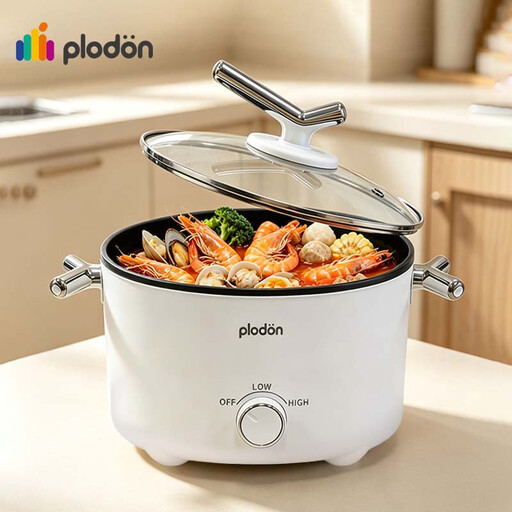
Suitable for a smaller batch of soup if the stated capacity matches your recipe.
The product name lists a 2.6 l capacity, two manual heat settings and a non-stick coating. The description says it needs a stable, level, heat-resistant surface.
 No image available
An option if you’re looking for a small electric cooking pot with a slow-cooker function and its fill limit suits your soup.
The product name lists a 2.0 l capacity and dual power control. The description says the pot must not be filled more than two-thirds full.
 No image available
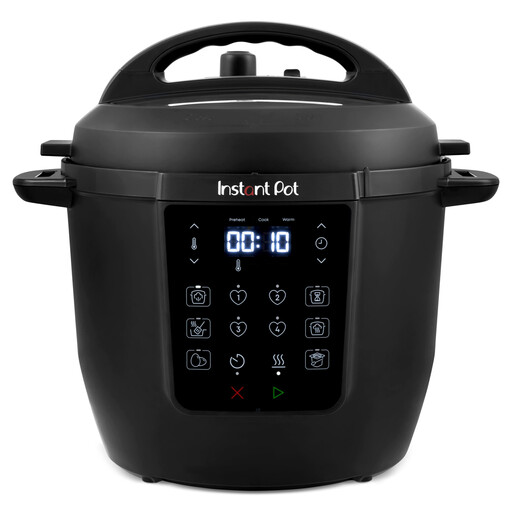
Only consider this appliance if the capacity of the specific listing suits your recipe quantity.
The product information gives two different capacities: 4.1 l in the title and 2.5 l in the description. Check the actual usable capacity before choosing. The description also warns that steam may escape and recommends waiting a few minutes after cooking before opening the lid.
 No image available
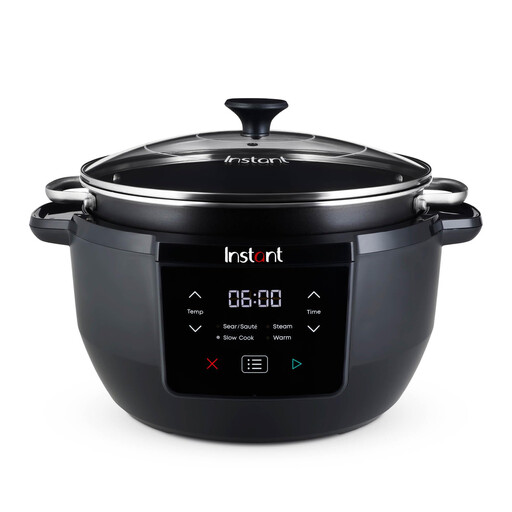
An option if you’d like to use other cooking programmes as well as slow cooking soup.
The description lists an adjustable cooking time and temperature, as well as dishwasher-safe parts. The capacity details differ: 5.7 l in the title and 7.1 l in the description. Check the actual usable capacity before choosing. According to the description, the inner pot isn’t suitable for use in an oven, on a hob or on an induction hob.
 No image available
An option if you’d like to combine slow cooking with other cooking methods.
The description lists slow cooking, keeping warm, pressure cooking, sautéing and steaming. The capacity details differ: 7 l in the title and 5.7 l in the description. Check the actual usable capacity before choosing.
No, if the recipe calls for cooked beans from a tin. Good Food’s recipe allows drained and rinsed tinned beans in place of dried beans, so you can skip the step of cooking the beans beforehand. This doesn’t mean that raw or undercooked beans are safe to eat.
A delay timer is no substitute for safe food storage. FoodSafety.gov advises starting the slow cooker as soon as you’ve prepared the ingredients, rather than leaving food unrefrigerated before cooking begins. Also follow the safety guidance for the specific appliance.
Don’t rely on the appliance setting alone. The Federal Institute for Risk Assessment recommends keeping heated food at a minimum of 60 °C throughout until it’s eaten. If the soup will be kept warm for longer, check the food itself rather than relying on the name of the setting.
If you’d like to save leftovers for another meal, first check that the holiday cottage has enough fridge space. The Federal Institute for Risk Assessment notes that the risk of microbial contamination increases the longer prepared food is stored.
For an appliance covered by the relevant EU regulations, check that it has the required CE marking and clear German instructions with the necessary warnings. The Federal Network Agency lists these checks as part of its market surveillance; this general guidance doesn’t confirm anything about a specific product listing.