Hosting a big soup supper
If you want to cook all the planned portions in one go, compare the usable capacity and fill markings of the specific model—not just the number of litres in its product name.


For minestrone with already-cooked tinned beans, you don’t necessarily need an electric pressure cooker. In Good Food’s minestrone recipe, the beans go in after the pasta has cooked and are simply heated through. If you’d also like to use the appliance for other pressure-cooked dishes, look at its usable capacity, as well as whether it can sauté and cook without pressure. If you’ll be serving later, reliable keep-warm performance matters more than having lots of programmes.
If you want to cook all the planned portions in one go, compare the usable capacity and fill markings of the specific model—not just the number of litres in its product name.
If you’re using already-cooked tinned beans, you may want to heat the beans and finish cooking the pasta towards the end. A controllable, non-pressure cooking mode can be useful for this.
If the soup needs to be ready before your guests arrive, plan to keep it safely hot or cool it quickly. A keep-warm button alone doesn’t tell you what temperature the whole soup will reach.
First decide whether your existing pan can hold the amount in the recipe, or whether you’d also like an electric pressure multi-cooker for other dishes. The percentages refer to consumers choosing a cooker for this minestrone and a meal with guests.
A good fit if: You’d also like to use the appliance for other pressure-cooked dishes and sauté the minestrone in it before finishing it without pressure.
The trade-off: Pressure cooking isn’t essential for this recipe when you’re using already-cooked tinned beans. The appliance’s size also doesn’t guarantee a particular number of portions.
A good fit if: The amount of soup you’re planning exceeds the usable capacity of smaller models, and you’d like to cook larger pressure-cooked dishes in future too.
The trade-off: The litre figure in a product name doesn’t confirm the usable capacity for pressure cooking, so check the fill markings and instructions for the exact model.
A good fit if: You mainly want to make this minestrone and your existing pan can hold the amount you’re planning to cook.
The trade-off: You’ll need to keep an eye on the cooking and serving times yourself, and you won’t gain a pressure-cooking function for other dishes.
| Buying priority | What to check before buying | Who is it important to? |
|---|---|---|
| Usable capacity | Compare the full recipe quantity—including stock, vegetables, pasta and beans—with the usable capacity and fill markings of the specific model. | If I want to feed all my guests in one go, the amount I can actually cook matters. Consumers whose main priority is portion capacity are estimated to account for around 36%. |
| Texture of the beans and pasta | Check for a sauté function and a non-pressure cooking mode. In Good Food’s recipe, the beans are added after the pasta has cooked and then heated through. | If I want my pasta and beans to keep their bite, I’d like to control how well they’re cooked at the end. Consumers whose main priority is texture are estimated to account for around 29%. |
| Keeping the soup safely hot | Plan to check the temperature of the whole soup. The German Federal Institute for Risk Assessment (BfR) recommends keeping heated food at a minimum of 60 °C throughout until it is eaten. | If my guests are arriving at different times, I want to keep the soup safely hot until mealtime. Consumers who prioritise having food ready to serve are estimated to account for around 21%. |
| Cleaning and replacement parts | Check the inner pot material, cleaning instructions and availability of model-specific replacement parts, such as a sealing ring. | If I plan to use the cooker regularly, cleaning and compatible replacement parts matter to me. Consumers whose main priorities are maintenance and ongoing costs are estimated to account for around 14%. |
The stated capacity may be greater than the usable capacity. For your planning, what matters is the total quantity in the recipe and the fill limit for the specific model.
Work out the quantity of ingredients and compare it with the usable capacity and fill markings in the instructions.
If the usable capacity is too small, you may need to cook a second batch or use an additional pan.
In Good Food’s minestrone recipe, the tinned beans are added after the pasta has cooked and then heated through. Cooking everything for the same amount of time won’t necessarily give you the texture you want.
Check whether the specific model can cook without pressure, and add the beans towards the end to heat them through.
A keep-warm function doesn’t prove that the whole soup has reached the recommended temperature. The BfR recommends a minimum of 60 °C throughout the food.
Check the temperature of the soup, or cool leftovers quickly and store them in the fridge.
Joybuy describes the Instant Pot Classic EU as inspired by the Duo. This doesn’t mean the two models are identical.
Before buying, compare the full model number and the appliance specifications that matter to you.
The MD 1000 MeinHans combines sautéing, cooking without pressure and pressure cooking; Rommelsbacher states that it has 4 l of usable capacity.
The Turbo Cuisine CY7548 is a pressure multi-cooker with a sauté function and rotary controls.
Pressure multi-cookers from this brand are worth considering if you’d also like to use the sauté and pressure-cooking functions for other recipes.
Midea lists the MPC802SAMK as an electric multi-pressure cooker with a capacity of 7.6 l.
Electric pressure multi-cookers with sauté functions and different capacities stated in their product names. The litre figure alone doesn’t tell you how much soup you can actually put in for pressure cooking; check the fill markings and instructions for each model.
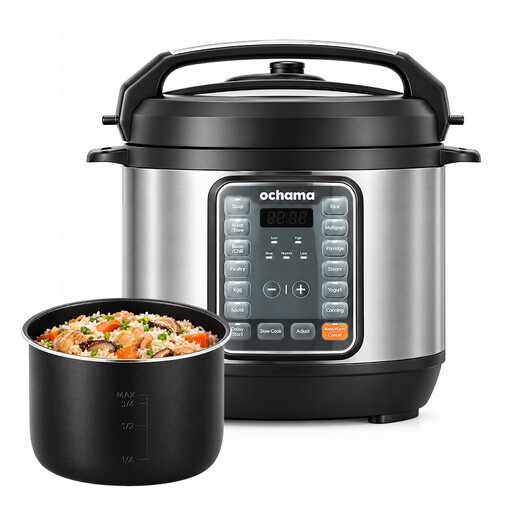 No image available
The 6 l capacity stated in the title may be worth considering if you’re making a larger quantity; check the appliance’s usable capacity before planning your portions.
Product details list 1000 W, 12-in-1 functionality, a ceramic non-stick coating, sautéing, a keep-warm function and a timer.
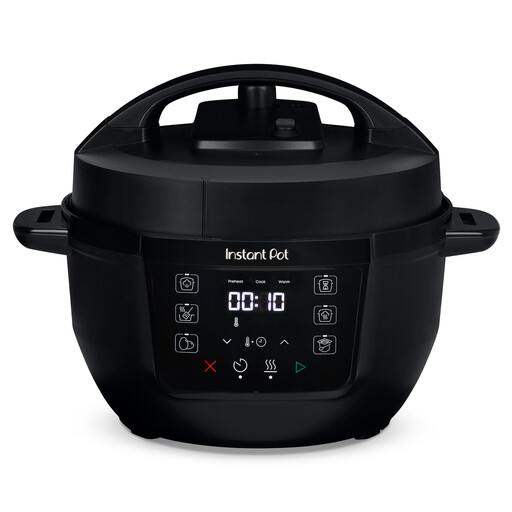 No image available
The stated capacity of up to four portions may suit a smaller gathering; compare it with the amount in your recipe.
Product details list a 3.8 l capacity, sautéing, a keep-warm function and a dishwasher-safe inner pot.
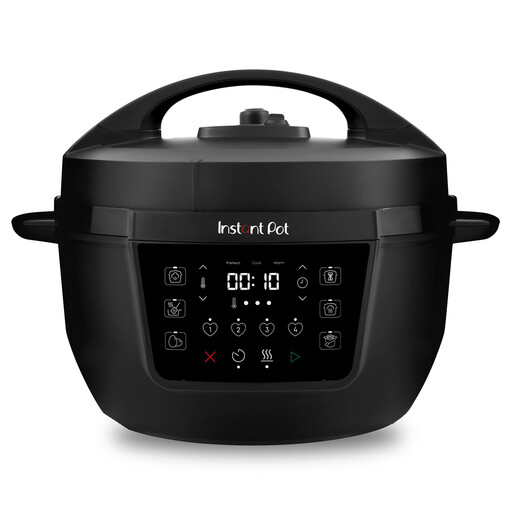 No image available
Product details state that it makes up to eight portions; compare this with your recipe plans and the fill markings.
Listed features include a 7.1 l capacity, sautéing and a keep-warm function, plus dishwasher-safe parts such as the lid and inner pot.
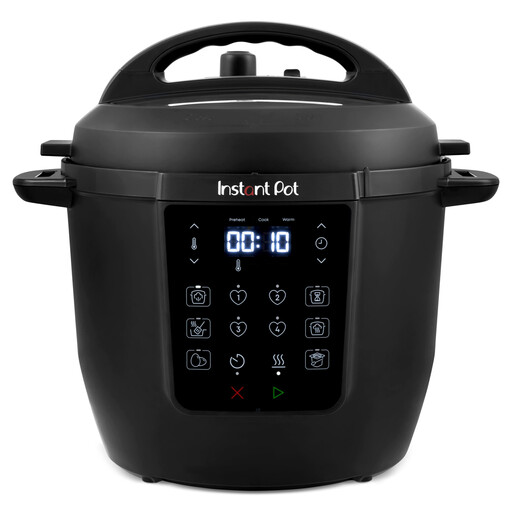 No image available
The capacity stated in the product name may help you choose, but you’ll still need to check the fill limit for your minestrone.
Product details list sautéing, a keep-warm function and a dishwasher-safe stainless steel pot and lid.
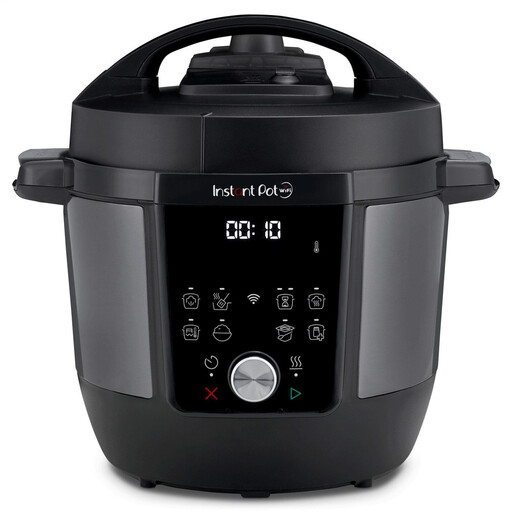 No image available
Product details list a keep-warm function and sautéing; check whether the stated capacity suits the quantity you plan to make.
A 5.7 l capacity and a dishwasher-safe inner pot are listed.
No—not just because they’re beans. In Good Food’s minestrone recipe, they’re added after the pasta has cooked and simply heated through. Adjust the other ingredients and cooking times to suit your recipe.
The keep-warm button alone doesn’t prove that the whole soup is at a safe temperature. The German Federal Institute for Risk Assessment recommends keeping heated food at a minimum of 60 °C throughout until it is eaten; otherwise, leftovers should be cooled quickly and refrigerated. This is food hygiene guidance, not a verified temperature performance claim for any particular multi-cooker.
Read the instructions for the specific model and don’t open the lid until the pressure has been fully released. The Instant Pot Duo instructions explicitly warn against forcing open a pressurised cooker; always follow the guidance for your appliance.
Check the availability of a sealing ring and inner pot using the exact model number. Rommelsbacher lists a replacement sealing ring for the MD 1000; Tefal describes a repairability commitment for the CY7548. This isn’t a general guarantee for every model from these brands.
The CE marking indicates conformity with the applicable EU regulations; it isn’t a general independent quality mark. The Pressure Equipment Directive 2014/68/EU applies to pressure equipment and assemblies with a maximum allowable pressure of more than 0.5 bar. Which regulations apply to a particular complete appliance depends on its design.