
Lieferung heute & morgen

Qualitätsgarantie

Willkommens-Angebote freischalten: KOSTENLOSE Lieferung | Bis zu 80 % RABATT | Kostenlose 30-Tage-JoyPlus-Testphase
App herunterladen
A mini oven can be useful in a small flat, student accommodation, office or as an addition to your existing kitchen. However, countertop ovens, compact ovens, fan-assisted mini ovens and air fryer ovens vary considerably in their capacity, heating power and controls.
Choosing the wrong model isn’t always simply a matter of buying too cheaply. Compact appliances are often bought only to find they’re too small for the cookware you want to use, can’t reach a high enough temperature or come with accessories that aren’t practical for everyday use. Before you buy, check these three points carefully.
An appliance may look compact from the outside, but insulation, heating elements and its casing can leave little room inside. A 10-litre mini oven is usually suitable for smaller portions, toast, part-baked rolls or a small pizza. A 28-litre mini oven or 32-litre mini oven is a better choice for an oven dish or several portions.
The capacity in litres isn’t the only thing to consider. Check:
An oven with a grill function may have an upper heating element, while a fan-assisted mini oven also uses a fan to circulate warm air. This can be useful when cooking on multiple levels or when you want more even cooking. A traditional electric mini oven with top and bottom heat is often simpler, but can be perfectly adequate for pizza, toast or a single oven dish.
Air fryers focus on rapid air circulation. An air fryer oven is often suitable for chips, vegetables, snacks or smaller portions of meat. However, it won’t automatically replace a countertop oven if you want to cook large oven dishes, bread or several pizzas.
Higher power can speed up preheating, but it doesn’t tell you everything about temperature stability, insulation or ease of use. Check how power, temperature range, timer, heating functions and door insulation work together. For a home in the UK, also check for a suitable 230-volt connection, adequate ventilation clearance and a stable, heat-resistant surface.
Top and bottom heat, along with precise temperature control, are important for cakes, oven dishes and baked goods. If you want to cook pizza, consider the difference between a standard compact oven and a dedicated pizza oven. Some pizza ovens reach up to 400 °C and use a pizza stone. They’re designed for pizza and flatbreads, but are less versatile than a traditional oven.
A baking tray, rack, crumb tray or rotisserie can make an appliance much more useful. Removable parts are easier to clean. Check for a heat-resistant door, non-slip feet and a timer with automatic shut-off, if these matter for the way you’ll use it.
A CE mark indicates conformity with relevant EU requirements, but it isn’t an independent quality mark. Don’t cover the ventilation openings. Metal containers and aluminium foil must not be used in the microwave function of a combination appliance unless the instruction manual expressly says otherwise.
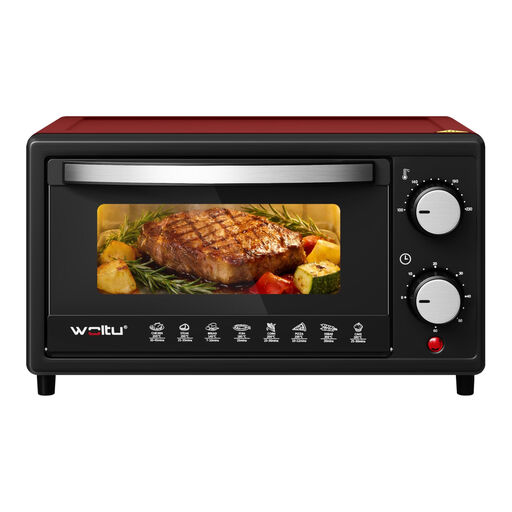
Why this product suits this profile: This 10-litre appliance is designed for small kitchens, offices and households of one or two people. It offers 800 watts of power, a temperature range of 100 to 230 °C and a 60-minute timer.
Its modest capacity makes its limitations clear, so you won’t pay for a large oven cavity when you only need to cook small portions.
Compact dimensions of 37 × 26,5 × 21 cm, top and bottom heat, plus a baking tray and rack included.
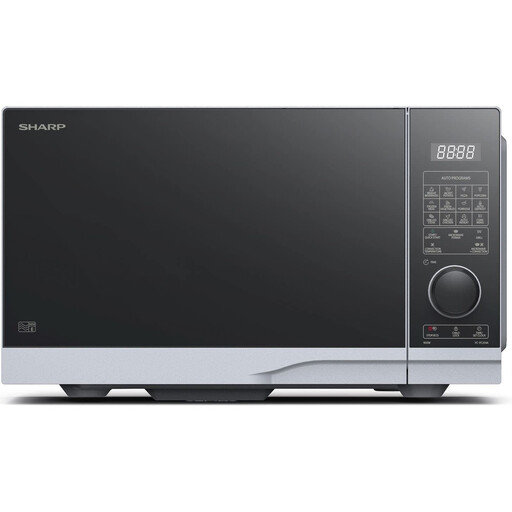
Why this product suits this profile: This combination appliance brings together microwave, grill and convection functions in a 25-litre oven cavity. It’s designed for households that need different cooking options.
Its 14 automatic programmes and three combination functions make the available settings clear, rather than relying on a single wattage figure to sell the appliance.
900 watts of microwave power, 1200 watts of grill power, 2050 watts of convection power, ECO mode and a child lock.
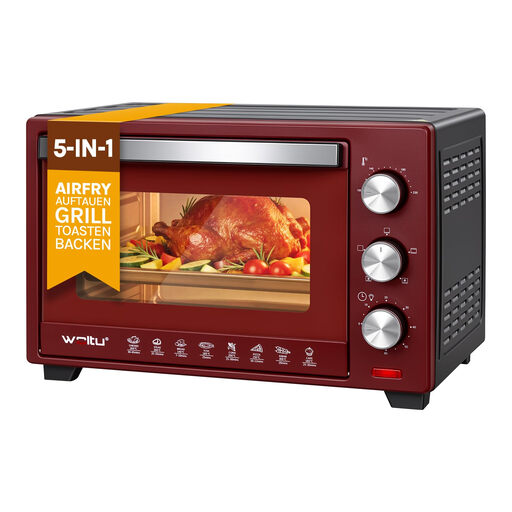
Why this product suits this profile: With a capacity of 28 litres, 1600 watts of power and three heating functions, this countertop oven is designed for regular baking, grilling and cooking pizza.
Its temperature range of 100 to 230 °C, 60-minute timer and shelf levels are all clearly specified.
Suitable for pizzas up to around 26 cm; accessories include a double-glazed door, baking tray, rack and crumb tray.
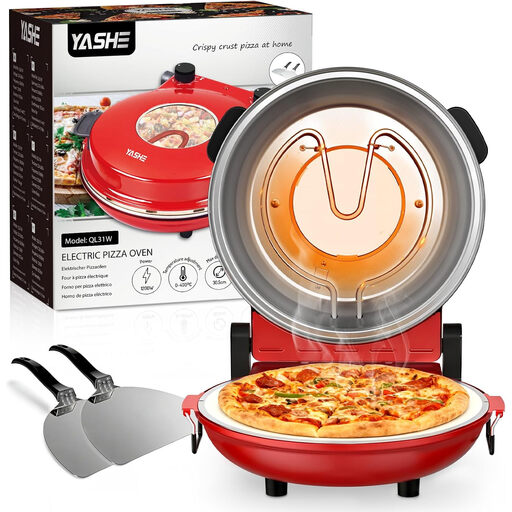
Why this product suits this profile: This compact pizza oven has a 30 cm ceramic stone, top and bottom heat, and a temperature range of up to 400 °C.
It’s clearly designed for pizza and similar flat foods, rather than being presented as an all-purpose oven.
A 30 cm ceramic stone, viewing window and built-in timer in a compact design.
We’ve put together a comprehensive, regularly updated list of products that meet these strict selection criteria and fully comply with the safety regulations in force in the EU.
As well as checking the external dimensions, leave enough space around the appliance for heat to escape. Always follow the manufacturer’s specific guidance. Place the oven on a flat, heat-resistant surface and don’t block any ventilation openings.
Its lifespan depends on how often you use it, how well you clean it, ventilation and the quality of its materials. Remove crumbs and grease once the appliance has cooled. A timer won’t prevent every mistake, so don’t leave the oven unattended while it’s in use unless the instruction manual says otherwise.
Electricity use depends on the appliance’s power, how long it runs, how long it takes to preheat and the amount of food you cook. A compact oven cavity can be handy for small portions. A full-size oven may be more efficient for several trays or large dishes, as it can cook more food in one go. The key is to choose an appliance that’s the right size for your needs.