Which option is right for you?

If you usually bake a mini loaf

If you want to make around 400 g of bread per batch and have limited space, the stated loaf size and the appliance's dimensions are particularly important. Panasonic Germany gives the SD-PN100's capacity as around 400 g and its dimensions as 255 × 307 × 290 mm.

If you switch between small and larger batches

If you sometimes want to freeze just a few slices and sometimes more, check whether the bread pan can knead your smallest recipe quantity. Panasonic Germany, Tefal Germany and Rommelsbacher list different loaf sizes or conditions for making smaller quantities.

If you freeze bread in portions

If you want to take out individual slices, you could also bake a larger loaf. The Federal Centre for Nutrition recommends freezing bread as fresh as possible and already sliced.

What should you look for when buying?

Mini bread maker for around 400 g

A good fit if: You usually want to bake a very small loaf and save on worktop space. Panasonic Germany gives the SD-PN100's capacity as around 400 g.

Trade-off: You can only make a small amount of bread per batch.

Selectable loaf sizes from 500 g

A good fit if: A loaf of 500 g or more is enough for your freezer stash and you occasionally want to bake more. Tefal Germany lists loaf sizes from 500 g to 1 kg for the PF240E.

Trade-off: The smallest stated size is larger than a loaf of around 400 g.

Larger bread pan for variable quantities

A good fit if: You want to alternate between smaller and larger batches. Rommelsbacher lists 700 g and 900 g settings for the BA 550, and says you can make smaller loaves as long as there is enough dough in the pan to knead.

Trade-off: There is no dedicated 400 g setting. The smaller quantity must still be enough to knead in the pan.

Larger loaf to slice and portion

A good fit if: You prefer to bake a larger loaf and freeze it in slices. Unold lists 750 g or 1,000 g loaf sizes for the Backmeister Edel.

Trade-off: A smaller selectable loaf size is not listed for this model.

Criteria What to check before buying Who is it most important for?
Small loaf size Check the smallest explicitly stated loaf size. For larger bread pans, also read the manufacturer's guidance on kneading smaller quantities. If I usually only bake a small loaf, I want to know whether the dough will be picked up by the kneading paddle. Around 36% of consumers would make the smallest suitable loaf size their top buying priority.
Variable batch sizes Check whether you can select from several loaf sizes or whether smaller quantities can only be kneaded under certain conditions. If I need different amounts of bread for different freezer batches, the right quantity per cycle matters. Around 29% of consumers would prioritise the flexibility to make both smaller and larger batches.
Freezer portions Think in advance about how many slices you want to freeze, and take the space available in your freezer into account. If I want to take individual slices out of the freezer, portion size matters more than having the smallest possible loaf. Around 21% of consumers would prioritise being able to take out individual frozen portions later.
Space and care Check the appliance's dimensions, whether the bread pan is removable and which spare parts are available for the model. If the bread maker is going to stay on the worktop, I consider its dimensions as well as how easy it is to clean. Around 14% of consumers would make worktop space and appliance care their top buying priority.

Common buying misconceptions

  • A large loaf setting doesn't prove that mini loaves will turn out well

    The Rommelsbacher BA 550 has selectable 700 g and 900 g settings. According to Rommelsbacher Support, smaller loaves are possible if there is enough dough in the pan to knead.

    Check the smallest stated setting separately from the manufacturer's guidance on using smaller amounts of dough.

  • The weight of a bread mix isn't the weight of the finished loaf

    Rommelsbacher Support gives this example for the BA 550: 500 g of bread mix and 350 ml of water make a total filled weight of 850 g.

    Choose the loaf size based on the ingredient quantities in your specific recipe and the appliance instructions.

  • A large loaf for your freezer isn't automatically easy to portion

    The Federal Centre for Nutrition recommends freezing bread for longer-term storage as fresh as possible and already sliced.

    Choose a loaf size that suits the number of slices you want and the space available in your freezer.

Key brands at a glance

Panasonic

The models listed cover small loaves and sizes up to 500 g. The information comes from Panasonic Germany.

  • Panasonic lists the SD-PN100 as having a capacity of around 400 g, dimensions of 255 × 307 × 290 mm and 18 programmes.
  • The SD-PMC100 is listed with loaf sizes up to 500 g and additional features such as dispensers and ice-making functions, which may not be relevant if you just want a supply of bread.

Tefal

The Pain Delice PF240E is designed for batches from 500 g upwards. The information comes from Tefal Germany.

  • The PF240E is listed with three loaf sizes from 500 g to 1 kg, 20 programmes and a removable bread pan.
  • The stated sizes don't include a loaf of around 400 g.

Rommelsbacher

The BA 550 has selectable sizes for larger loaves. According to the manufacturer, you can use smaller recipe quantities if a particular kneading condition is met.

  • Rommelsbacher lists a freely programmable programme, an ingredient dispenser and settings for 700 g and 900 g.
  • According to Rommelsbacher Support, smaller loaves need enough dough in the pan to knead; there is no dedicated 400 g setting.

Unold

The Backmeister Edel is suitable for larger loaves, which you can then portion into slices. The information comes from Unold.

  • Unold lists loaf sizes of 750 g and 1,000 g, as well as spare part numbers for the bread pan and kneading paddle.
  • There is no stated selectable size for a loaf of around 400 g.

Bread makers at Joybuy

This selection includes bread makers with several loaf sizes or programmes. If you're planning small freezer batches, check the smallest selectable loaf size and the required amount of dough particularly carefully before buying.
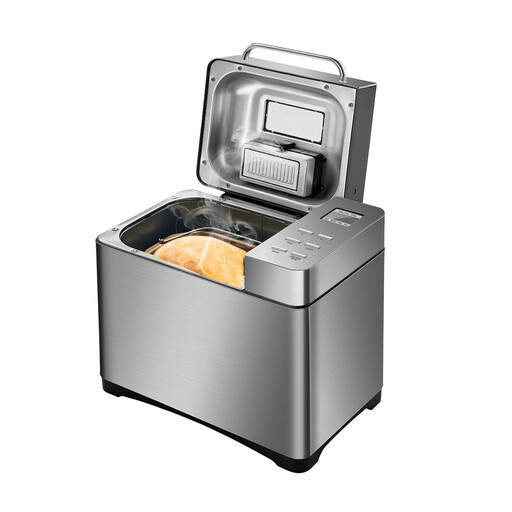
Bread maker with 19 programmes, three loaf sizes and 2.2 lbs capacity

650W bread maker, 2.2 lbs capacity

May suit different batch sizes; check the smallest loaf size you can actually select.

19 programmes; three crust settings; three loaf sizes; 15-hour timer; 1-hour keep-warm function; non-stick bread pan.

View at Joybuy
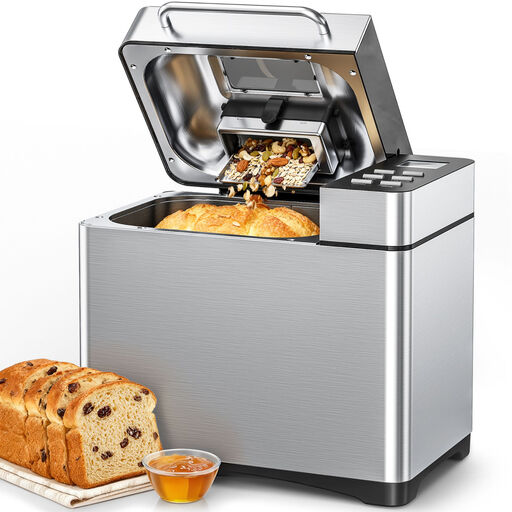
HavenWell bread maker with three loaf sizes and 1 kg capacity

HavenWell bread maker, 1 kg

Three selectable loaf sizes may suit different batch sizes; check the smallest size and minimum dough quantity in advance.

19 programmes; three loaf sizes; three crust settings; ingredient dispenser; 15-hour timer; keep-warm function for up to 60 minutes.

View at Joybuy
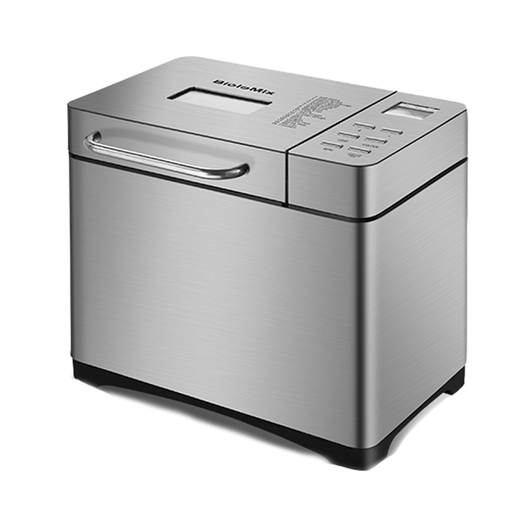
BioloMix BBM013 bread maker

BioloMix BBM013 bread maker

If you're considering this model for small freezer batches, check that it can handle the minimum quantity required by your recipe before buying.

17 programmes; fruit and nut dispenser; 1-hour keep-warm function; 15-hour delayed start.

View at Joybuy

Frequently asked questions

Is a 500 g bread mix the same as a 500 g loaf?

No. The water adds to the weight of the bread mix. Rommelsbacher Support gives this example for the BA 550: 500 g of mix plus 350 ml of water makes a total filled weight of 850 g, so you should select the 900 g setting. Don't apply this setting to another model or recipe without checking first.

How should I prepare bread for the freezer?

The Federal Centre for Nutrition recommends freezing bread as fresh as possible and already sliced. It says bread can be kept frozen for one to three months. According to its guidance, frozen slices can go straight into the toaster after any ice crystals have been knocked off.

Is every freezer compartment suitable for storing bread for longer?

No. According to the Federal Centre for Nutrition, one- and two-star compartments are only suitable for short-term storage. For longer storage, three- and four-star compartments reach at least −18 °C; according to the Federal Centre for Nutrition, a four-star compartment is also suitable for freezing food in the first place.

What should I do if the bread pan or appliance is faulty?

If a product is faulty, you have statutory rights against the seller under the consumer guarantee. This is separate from any voluntary manufacturer's guarantee. The consumer advice centre explains that if the seller provides a repair or replacement, they must cover the related transport, labour and material costs. Ordinary wear and tear that isn't a fault doesn't entitle you to a free replacement part.

What should I know about safety and disposal?

Depending on how electrical products are used, they must meet the relevant safety requirements and CE marking rules, as described by the Federal Institute for Occupational Safety and Health. A CE mark is not an independent assessment of baking performance. A bread maker that has reached the end of its life must not go in household rubbish; local collection points accept electrical appliances free of charge. A retailer's take-back obligations depend, among other things, on the legal requirements relating to its sales, storage or dispatch areas.