
Lieferung heute & morgen

Qualitätsgarantie

Willkommens-Angebote freischalten: KOSTENLOSE Lieferung | Bis zu 80 % RABATT | Kostenlose 30-Tage-JoyPlus-Testphase
App herunterladen
A mini cast-iron pan is ideal for individual portions, side dishes, sauces, tapas and serving food directly at the table. However, compact dimensions alone do not automatically make cookware suitable for your hob or oven. The key factors are the cooking surface, capacity, coating, handle design and care requirements.
As a Joybuy Product Recommendation Officer, I filter product specifications according to practical selection criteria and match them to different usage scenarios. This helps prevent buying a small cast-iron pan that may look attractive but is too small, too heavy or too difficult to clean for its intended purpose.
A 10 cm cast-iron pan or 12 cm cast-iron pan is generally measured at the upper rim. The actual base can be significantly smaller. For example, the Staub model with a 12 cm diameter has a stated base diameter of 9.5 cm. That is sufficient for an egg, melted butter or a small portion of sauce, but distributing several ingredients evenly is only possible to a limited extent.
An enameled cast-iron pan does not require the traditional seasoning layer used with uncoated cookware. However, its glass-like surface is not immune to hard impacts or unsuitable metal utensils. With an uncoated mini frying pan, such as the Maxcook model, seasoning before first use and applying a regular layer of oil are essential.
Many small cast-iron pans are suitable for induction, but not every handle can be used in the oven without restrictions. Wooden handles in particular require checking the maximum temperature specified for the exact model. Enameled versions also have temperature limits. A sudden transition from hot to cold can additionally cause thermal shock.
The right size depends on the dish, not just the number of people:
The term “individual portion” should therefore always be considered alongside the volume. A shallow pan with a capacity of 0.25 l offers a different range of uses from a deeper pot holding 1.3 l.
An enameled cast-iron pan can be cleaned relatively easily with warm water and a soft sponge. It normally does not require seasoning and is less sensitive to acidic ingredients than uncoated cast iron. Nevertheless, the surface should not be treated with metal utensils.
Uncoated cast iron retains heat and can last for many years when properly maintained. After washing, it must be dried completely and lightly oiled to prevent rust. Highly acidic or very salty dishes should not be simmered in it for extended periods.
For use as a cast-iron pan for induction, the base must be sufficiently magnetic and provide a stable, preferably flat contact surface. The hob diameter should match the base of the pan. On induction hobs, a low to medium setting is particularly advisable with small pans, as cast iron heats up slowly but retains heat for a long time.
With an oven-safe cast-iron pan, the temperature limit and handle material must be compatible. According to the product specifications, the Staub model with two handles is oven-safe up to 230°C. For the model with a wooden handle, the handle’s oven suitability should be checked before use.
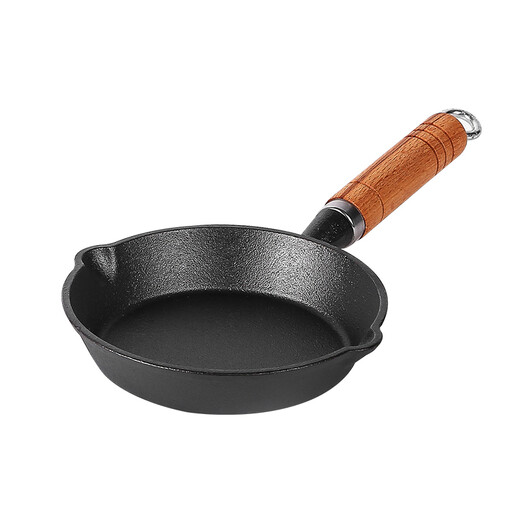
Why this model is a good fit: This compact mini frying pan is designed for eggs, bacon, butter, sauces and small side dishes. It is compatible with gas, electric, ceramic and induction hobs.
The product specifications clearly state that the surface is uncoated and that hand-washing is required. This makes the care requirements clear before purchase.
10 cm diameter, wooden handle and compatibility with several hob types. Seasoning and applying a thin layer of oil are part of the intended care routine.
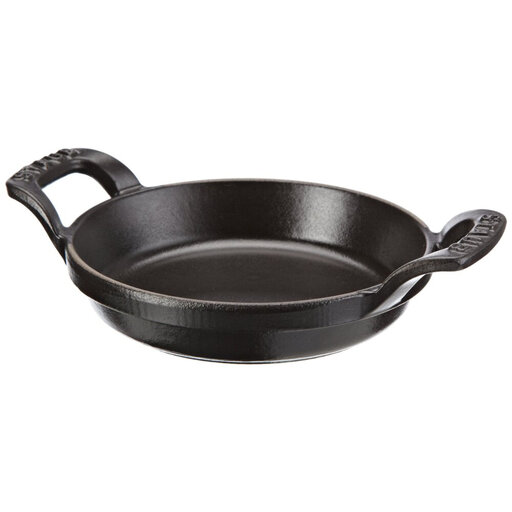
Why this model is a good fit: The shallow, enameled design is ideal for preparing and serving small bakes, gratins, side dishes or desserts.
The specifications state a capacity of 0.25 l, a base diameter of 9.5 cm and oven suitability up to 230°C. This provides a more realistic picture of the pan’s usable size.
Enameled cast iron, induction compatibility, two handles and a stackable design according to the product description.
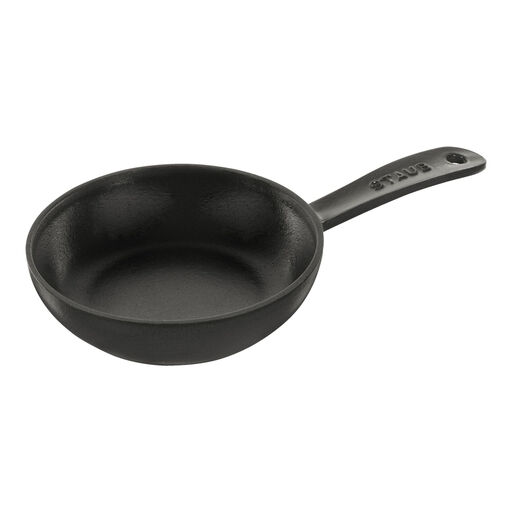
Why this model is a good fit: With a capacity of 0.60 l, this mini cast-iron pan is designed for tapas, vegetables, meat, fish and more substantial individual portions.
The 16 cm diameter and 12 cm base show that this pan requires more room than a 10 or 12 cm model. This helps prevent unsuitable purchases for small hobs or limited storage space.
Enameled surface, induction and oven compatibility, plus a stated heat resistance of up to 260°C.
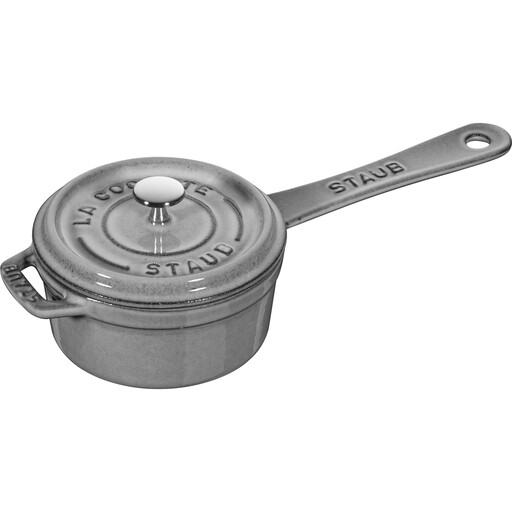
Why this model is a good fit: The tall design and 250 ml capacity are made for sauces, melted butter and small warm side dishes.
The product data distinguishes between the 10 cm upper diameter and the 7.5 cm base diameter. This makes it clear that the pan is more like a small pot than a shallow frying surface.
250 ml capacity, long handle, enameled cast iron and compatibility with all listed hob types, including induction.
With uncoated cast iron, care is an important part of the purchasing decision:
Enameled models generally require less day-to-day maintenance. Some product specifications state that they are dishwasher-safe; hand-washing is nevertheless recommended to protect the enamel surface. Cookware with visible chips or cracks should no longer be used.
Our full selection includes more small cast-iron pans and compact models for different hob types, portion sizes and serving occasions.
Many models are designed for induction. Before buying, however, check the manufacturer’s specifications for compatible hob types and the actual base diameter. On induction hobs, a low to medium heat setting is advisable to prevent overheating.
A 10 cm cast-iron pan or 12 cm cast-iron pan is generally sufficient for one egg. A 12 or 16 cm version provides more room for additional vegetables, bacon or a small side dish. The shape of the pan is just as important as its external diameter.
Cast iron can provide lifelong service when handled correctly. With uncoated models, proper care is particularly important for preventing rust. Enameled pans do not require seasoning, but they should be protected from impacts, thermal shock and metal utensils.