Fans of chunky salsa
When chopping onions, herbs and vegetables, you’ll want to check the ingredients between short bursts and control the texture yourself.


For chunky salsa at a dinner party, choose a chopper that lets you control it in short bursts, checking the texture between each one. If you’re preparing food for several guests, consider the permitted working capacity and how easy the individual parts are to clean. Electric models save you the effort of chopping by hand, while manual ones don’t need a socket but do require more work from you.
When chopping onions, herbs and vegetables, you’ll want to check the ingredients between short bursts and control the texture yourself.
When catering for several guests, the key question is whether the planned recipe will fit in the bowl or need to be prepared in batches.
If you’re preparing several ingredients, weigh up the reduced effort of an electric appliance against cleaning its individual parts. A manual model requires more work from you.
A good choice if: you’re processing small quantities and want to stop the chopper repeatedly. Kenwood lists push-button operation, two speeds and a 500-ml bowl for the Easy Chop CHP61.100WH.
Keep in mind: you may need several batches to make enough salsa for a group of guests. Bowl capacity alone doesn’t tell you how much food you’re allowed to process.
A good choice if: you’re preparing larger quantities and have room for a bigger bowl. Rommelsbacher lists a 1.5-litre glass bowl for the MZ 500.
Keep in mind: a larger bowl takes up more storage space and still needs to be able to process small quantities of ingredients.
A good choice if: you want to work without a socket and control the chopping with individual pulls of the cord. Tefal lists a 900-ml bowl for the K13204.
Keep in mind: you’ll power the chopper yourself when processing several batches. Also check the care instructions for each part.
| What matters to you | What to check before buying | Who is this important to? |
|---|---|---|
| Control over texture | Look for controls that allow short bursts and a clear view of the ingredients; check the instructions for the specific model. | If you want visible pieces in your salsa, you’ll need to check the consistency between bursts; around 36 % of consumers put control over texture first. |
| Quantity per batch | Compare the bowl capacity with the permitted fill level in the instructions. Kenwood lists 500 ml, Tefal 900 ml and Rommelsbacher 1.5 litres. | For a dinner party with several guests, consider whether you can prepare the recipe without too many batches; around 29 % of consumers prioritise the right quantity per batch. |
| Ease of use and cleaning | Check how each part is powered and cleaned; don’t assume removable parts are automatically dishwasher-safe. Rommelsbacher lists the MZ 500’s removable parts as dishwasher-safe. | If you’re preparing several ingredients, weigh up the effort of manual operation against the time needed for cleaning; around 21 % of consumers put these factors first. |
| Working without a socket | Consider a manual pull cord or an electric connection; with a manual appliance, also think about the effort needed to process several batches. | If there’s no socket where you’re preparing the food, a manual chopper could be an option, provided you’re happy to do the work yourself; around 14 % of consumers prioritise being able to work without a socket. |
The stated bowl capacities of the models mentioned range from 500 millilitres to 1.5 litres. The stated capacity doesn’t tell you how much salsa you can process in one batch.
Check your planned recipe quantity against the instructions for the exact model and allow for several batches if needed.
For the Tefal K13204, the product description says that the bowl and blade are dishwasher-safe, while the lid should only be wiped clean. The page also includes a separate, conflicting blanket statement about dishwasher suitability.
Before buying, check the cleaning instructions for each individual part.
F.A.Z. Kaufkompass named the Rommelsbacher MZ 500 the winner of a general chopper test. That doesn’t prove it’s the best choice for every quantity of salsa or the texture you’re after.
Choose first according to your needs for texture control, recipe quantity and ease of care; general test results can provide additional guidance.
Kenwood describes the Easy Chop CHP61.100WH as an electric mini chopper and specifically lists salsa as one of its uses.
The MZ 500 is an electric blade chopper with a glass bowl that the manufacturer says holds 1.5 litres.
The manual 5-Second Chopper K13204 uses a pull cord and, according to Tefal, has a 900-ml bowl.
This selection includes electric choppers with different bowl capacities, as well as a manual pull-cord option. For chunky salsa, choose a model you can control in short bursts and check its permitted fill level.
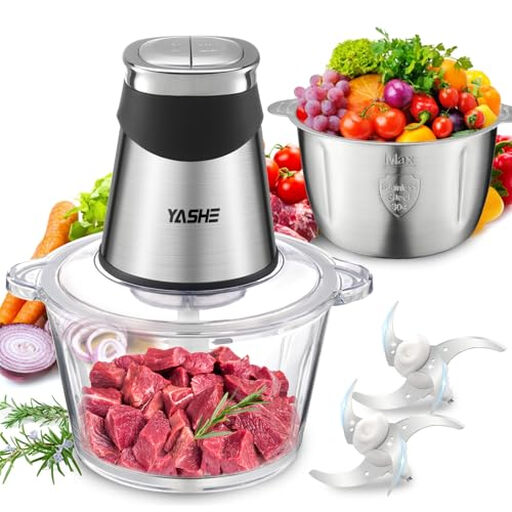 No image available
The two bowl sizes give you options for different amounts of food; check your planned salsa quantity against the instructions.
According to the product details on Joybuy: glass and stainless steel bowls, 1.8 l and 2 l, 500 W, two speeds and two blades.
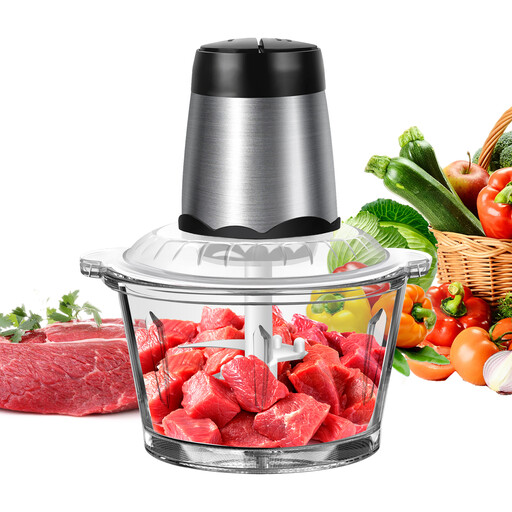 No image available
The 2-litre bowl could be useful when preparing larger quantities; check the permitted fill level for your specific recipe.
According to the product details on Joybuy: 2-litre glass bowl and stainless steel blades.
 No image available
The three stated bowl sizes give you options for different quantities of ingredients; check the model’s fill limit before use.
According to the product details on Joybuy: 350 W, three bowls measuring 2.5 l, 2.2 l and 1.8 l, and two speeds.
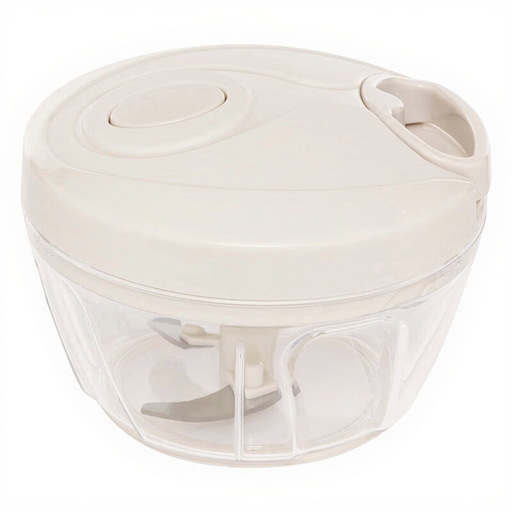 No image available
The product description lists salsa as one of its uses. The manual pull cord doesn’t need a power socket, but it does require you to do the work yourself.
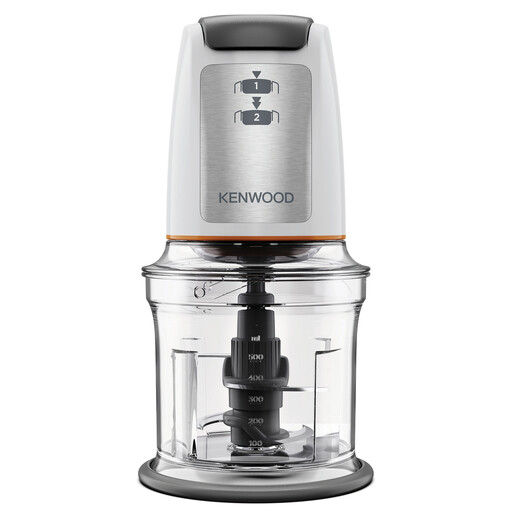 No image available
Kenwood lists salsa as one of its uses. Push-button operation and two speeds let you control the chopper in short bursts; you may need several batches when catering for several guests.
According to Kenwood: 0.5-litre working bowl and 500 W.
Process the ingredients in short, controlled bursts and check the texture in between. Kenwood describes the CHP61.100WH as having push-button operation with two speeds, while Tefal lists individual pulls of the cord for the K13204. These manufacturer specifications don’t guarantee a particular result.
Base your choice on the quantity of ingredients you plan to process and the permitted fill level for the specific model, not just its stated capacity. Kenwood lists 500 ml for the CHP61.100WH, Tefal 900 ml for the K13204 and Rommelsbacher 1.5 litres for the MZ 500; with smaller bowls, you may need to work in several batches.
Not necessarily. In the product description for the K13204, Tefal says the bowl and blade are dishwasher-safe, while the lid should only be wiped clean; the product page also includes a conflicting blanket statement. So check the instructions for every part of your specific appliance. Don’t assume the motor or pull-cord mechanism is dishwasher-safe just because some parts are removable.
Keeping perishable ingredients chilled helps slow the growth of most bacteria. The German Federal Institute for Risk Assessment recommends that people who are particularly vulnerable avoid fresh-cut products, or prepare fresh, thoroughly washed ingredients shortly before eating. A chopper is no substitute for hygienic food preparation or refrigeration.
EU rules on food-contact materials also cover food-processing appliances; what matters is which parts come into contact with food. EUR-Lex outlines the scope of the rules for food-contact materials, including kitchenware and food-processing equipment. Check the information for the food-contact parts of the specific model.