For family-sized portions
If you’re preparing a larger amount of cooked beetroot for a family meal, compare bowl sizes and remember that stated capacity isn’t the same as the maximum working capacity.


Choose a mini chopper based on how much you actually want to process in one go and how chunky you want the result to be. A larger stated bowl capacity may mean fewer batches, but it doesn’t tell you how much you can safely process at once. Short, controlled pulses can help you get pieces rather than a purée; also check which parts can be washed. The appliances mentioned haven’t been specifically tested with cooked beetroot.
If you’re preparing a larger amount of cooked beetroot for a family meal, compare bowl sizes and remember that stated capacity isn’t the same as the maximum working capacity.
If you want visible pieces to remain in your dish, short, controlled bursts are important. The models mentioned aren’t confirmed to produce a particular cut with cooked beetroot.
If you use your chopper frequently, check the care instructions for the bowl, blade and lid separately, as they may differ.
First, compare the amount you plan to prepare with the maximum working capacity. Then look at how the appliance operates and what the cleaning instructions say.
| What to look for | What to check | Who is it important to? |
|---|---|---|
| Amount per batch | Compare the amount you’ve prepared with the maximum working capacity stated in the instructions, not just the bowl’s stated capacity. | If I’m preparing food for the family, I want to get through it in as few batches as possible. That’s why around 36% of consumers put the amount per batch first. |
| Pieces rather than purée | Look for short bursts, a pulse function or controlled pull-cord movements, and check the result as you go. | If I’m making a dish with visible pieces of beetroot, I want to be able to control how it’s processed. Around 29% of consumers prioritise their preferred texture. |
| Cleaning | Check the care instructions for every removable part; the bowl and blade may need different cleaning from the lid. | If I want to do as little washing up by hand as possible after chopping, I check the instructions for every part I use. Around 21% of consumers put cleaning first. |
| Operation without electricity | Decide whether a pull-cord mechanism suits you, and check the lock and the recommended way to position it. | If I want to work without a plug socket, a manual pull-cord mechanism is an option, although it does require repeated pulls. Around 14% of consumers prefer an appliance that works without electricity. |
The capacity in millilitres describes the bowl. It doesn’t guarantee that you can process all your cooked beetroot in one go. Depending on the amount, you may need to work in several batches.
Check the working capacity in the instructions for the specific model and plan your portions accordingly.
Extra batches mean more steps and may mean more cleaning.
The care instructions for the Tefal K13204 vary by part: Tefal says the bowl and blade are dishwasher-safe, while the lid should be wiped with a damp cloth.
Read the cleaning instructions for each part you use.
The lid needs to be cleaned by hand.
The Braun MQ 30 is a chopper attachment and requires a compatible motor unit with a wave-cut coupling.
Before buying, check that your Braun motor unit is specifically listed as compatible.
Without a compatible motor unit, you’ll also need to buy a suitable appliance.
The Kult X chopper edition is described as having a 1-litre glass bowl, while the KÜCHENminis has a 0.3-litre bowl.
The manual 5-second choppers include models with bowl capacities of 900 ml and 500 ml.
The Easy Chop CHP61.100WH and Duo Prep CHP80.000SI are electric appliances, each with a 500 ml bowl.
The MQ 30 is a 500 ml chopper attachment for compatible Braun motor units.
The Joybuy products below include electric choppers with different bowl sizes and a manual pull-cord model. Stated bowl capacities don’t confirm how much cooked beetroot can be processed at once.
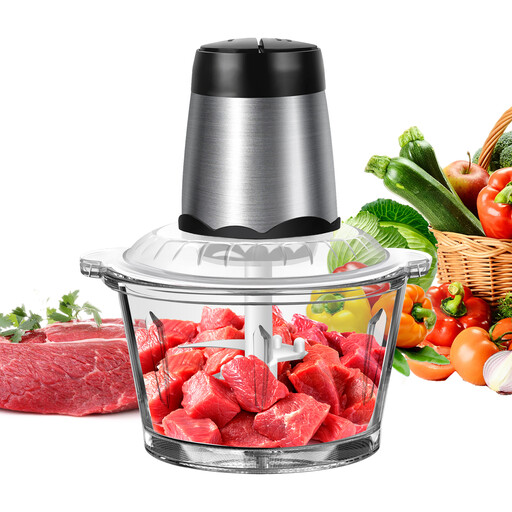 No image available
For anyone who wants to chop vegetables and control the process step by step. The product name specifies a 2-litre glass bowl, but that doesn’t confirm the working capacity.
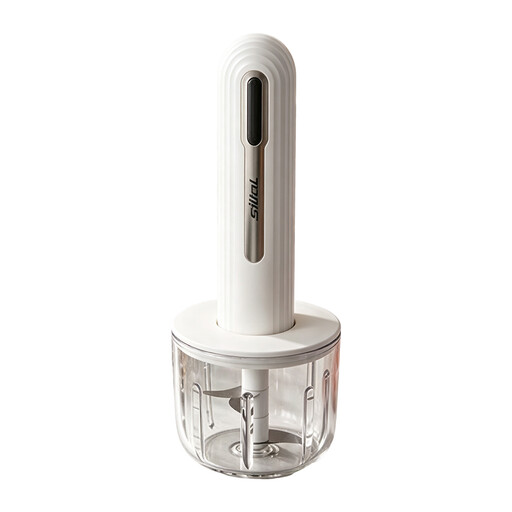 No image available
The product description says it’s designed for small portions and recommends short bursts for step-by-step processing. It doesn’t guarantee a particular result with cooked beetroot.
 No image available
For anyone who wants to process cooked ingredients and choose between several bowl sizes. The product name lists bowls of 2.5 l, 2.2 l and 1.8 l, as well as pulse control; these details don’t confirm how much beetroot can be processed per batch.
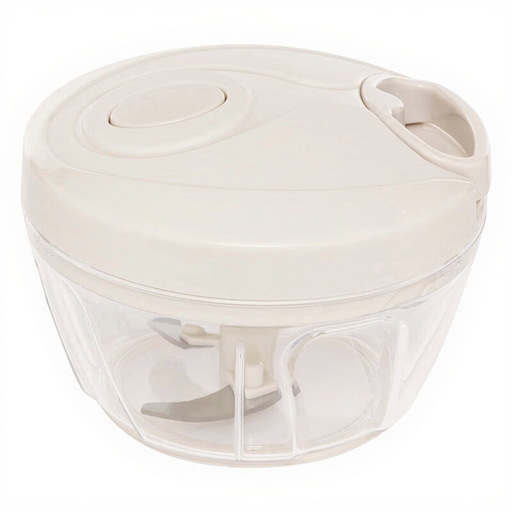 No image available
For anyone who wants to chop without electricity. The manual pull-cord mechanism requires repeated pulls, and you can adjust the results by varying the number of pulls.
 No image available
For anyone who wants to switch between two bowls for smaller and larger preparation jobs. The product name lists 2 l and 0.6 l glass bowls. According to the product information, the bowls and lid aren’t heat-resistant; sudden temperature changes of more than 50 °C should be avoided.
Start with short bursts and check the size of the pieces in between. Pulse functions, speed settings or individual pulls can help you control the process step by step, but they don’t guarantee a particular result with cooked beetroot.
No. The care instructions vary by part. Tefal says the bowl and blade are dishwasher-safe; the lid should be wiped with a damp sponge or cloth.
Follow the general food hygiene and refrigeration advice from the Federal Institute for Risk Assessment (BfR): preparing food cleanly helps prevent cross-contamination, and keeping it properly chilled slows the growth of many bacteria. The BfR also notes that beetroot can contain nitrate; this doesn’t provide a one-size-fits-all storage time for your dish.
Materials that come into contact with food are covered by Regulation (EC) No 1935/2004; a product name alone doesn’t confirm that a particular model is suitable. According to guidance from Germany’s Federal Ministry for the Environment, electrical appliances at the end of their life shouldn’t go in household waste. Take them to an authorised collection or take-back point instead. Retailers’ obligations depend on the relevant legal requirements.