Those chopping olives in small portions
If you’re chopping small quantities, a transparent bowl makes it easier to keep an eye on the process. Tefal and GEFU describe manual models that let you control the chopping with each pull.


For small portions of olives, or if you want to work without a plug socket, a manual chopper is an obvious choice. If you make dips more often and prefer push-button operation, an electric model may be a better fit. Check whether you can control the chopping in short bursts and which parts can actually be cleaned. Manufacturers’ specifications for features and capacity are no substitute for a practical test specifically with olives.
If you’re chopping small quantities, a transparent bowl makes it easier to keep an eye on the process. Tefal and GEFU describe manual models that let you control the chopping with each pull.
If you share appliances and worktops, check the cleaning instructions for the bowl, blade and lid separately. The German Federal Institute for Risk Assessment recommends using separate kitchen utensils for raw, cooked and ready-to-eat foods.
If you often process ingredients other than olives, ease of use, portion size and the additional features you’ll actually use may matter more than a particularly compact design. Kenwood describes the Duo Prep as including an additional grinding attachment; whether it’s worthwhile depends on whether you’ll use that function.
A good fit if: You want to process small quantities without a plug socket and check the size of the pieces after each pull.
Things to weigh up: Pulling the handle takes manual effort; the pull-cord lids on the Tefal and GEFU models described are not dishwasher-safe.
A good fit if: You often prepare ingredients for dips and prefer push-button operation.
Things to weigh up: You’ll need a power socket. Consider the motor unit and removable parts separately; the wattage or bowl capacity doesn’t prove how well a model will chop olives.
The percentages refer to consumers choosing a mini chopper for olives in a shared kitchen. Each figure reflects their main purchasing priority.
| Priority | What to check when buying | Who it matters most to |
|---|---|---|
| Piece size | Check whether you can see inside the bowl and pause the process with short pulls or presses of a button. | When I chop small portions of olives, I want to keep an eye on how finely they’re chopped as I go. Around 36% of consumers put control over piece size first. |
| Cleaning | Check the instructions for the bowl, blade, lid and motor unit separately. The German Federal Institute for Risk Assessment recommends using separate kitchen utensils for raw and ready-to-eat foods. | If several people use the appliance, I want to be able to clean the parts appropriately when switching between foods. For around 29% of consumers, cleaning is their main priority. |
| Space and power | Compare the appliance dimensions, including any accessories, and check whether there’s a socket where you plan to use it. | If storage space is limited or there’s no socket nearby, I want to know in advance which appliance will be practical where I’ll use it. Around 21% of consumers prioritise space requirements and being able to work without mains power. |
| Making dips regularly | Check the portion size, controls and included attachments for the specific model. Extra accessories are only useful if you’ll use them. | If I make dips regularly, I want to factor in the effort involved in repeatedly processing other ingredients. Around 14% of consumers say making dips more often is their main priority. |
For the Tefal K13304, the detailed description says the bowl and blade are dishwasher-safe, while a general specifications field says it is not dishwasher-safe. Tefal and GEFU list the pull-cord lid separately as not dishwasher-safe.
Check the cleaning instructions for each component against the manual for the specific model.
The comparison by Haus & Garten Test, dated 15 January 2025, covers manual and electric categories but doesn’t establish how well a particular model chops olives. Manufacturer specifications describe the features, not the size of the pieces you’ll get with olives.
Choose based on control and a suitable portion size, rather than treating wattage or a category-wide comparison as a practical test with olives.
Grinding or stirring attachments mean extra parts to clean and store.
Consider accessories only if you plan to use the relevant function regularly.
Extra attachments can mean more cleaning and storage.
According to Tefal, the manual K13304 5-Second Chopper has a 500 ml bowl.
The Easy Chop CHP61.100WH is an electric mini chopper with a 500 ml bowl. According to Kenwood, the Duo Prep CHP80.000SI combines a chopper and grinder.
The electric KÜCHENminis chopper has a capacity of 0.3 l.
The MMR08A1 is an electric universal chopper with a rated power input of 400 W.
According to GEFU, the manual ZIZO has a capacity of 450 ml and a pull-cord mechanism.
This selection includes manual and electric choppers for processing small quantities, as well as electric models with additional accessories. Bowl capacities and features vary; the Bear model’s 2-l bowl is generously sized for small portions of olives.
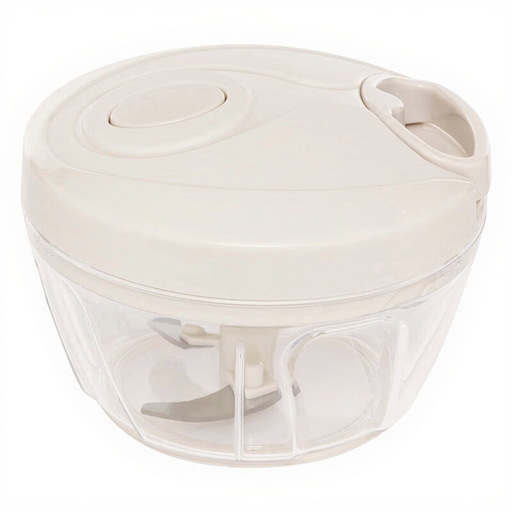 No product image available
The manual pull-cord mechanism is a good fit if you want to process small portions without electricity and watch the process through the transparent bowl.
The pull-cord mechanism requires manual effort.
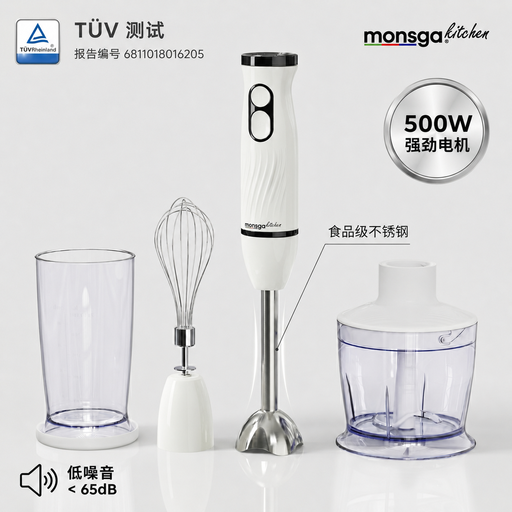 No product image available
This electric set is worth considering if you want push-button operation and to use other functions as well as the chopper.
The chopper and measuring beaker each hold 500 ml. It also has standard and turbo modes and a 1.5 m cable. It needs a power socket to operate.
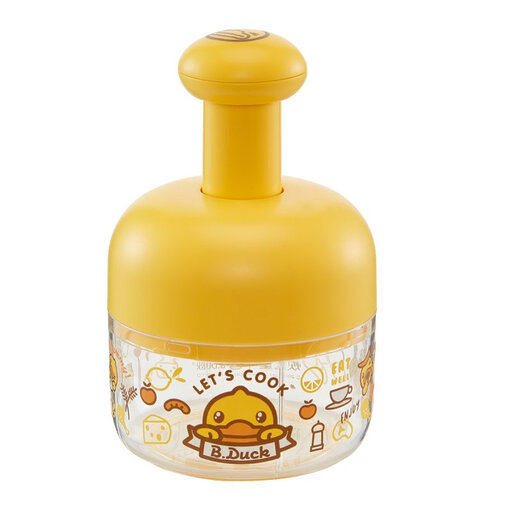 No product image available
The manual pull-cord mechanism and transparent bowl are a good fit if you want to process small quantities without electricity and keep an eye on how they’re chopping.
The bowl holds 220 ml. The pull-cord mechanism requires manual effort.
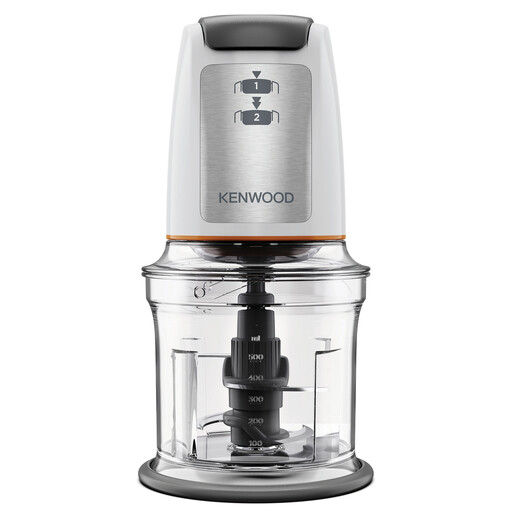 No product image available
This electric model is a good choice if you want to process smaller portions at the touch of a button, with two speeds to choose from.
The bowl holds 500 ml and the stated power is 500 W. It needs a power socket to operate.
 No product image available
This electric model has two speeds and a transparent glass bowl. Its 2-l capacity is generous for small portions of olives.
It has a stated power of 300 W and stainless-steel blades. According to the product description, the appliance must not run for more than 40 seconds at a time, followed by a break of at least 2 minutes. After three cycles, a longer cooling break is recommended.
The German Federal Institute for Risk Assessment recommends using separate kitchen utensils for raw, cooked and ready-to-eat foods. After each use, check the cleaning instructions for the blade, bowl and lid of the specific model; dishwasher-safe does not automatically mean that every part can go in the dishwasher.
It depends on the model and the component. For the K13304, Tefal lists the bowl and blade, but not the pull-cord lid; GEFU also excludes the ZIZO’s pull-cord lid. WMF describes the KÜCHENminis 0.3 l bowl, lid and blade as dishwasher-safe. Follow the manual for the model you buy.
Your statutory rights against the seller are separate from any voluntary manufacturer’s guarantee. According to the consumer advice centre, when a claim under statutory rights is valid, the seller is responsible for the costs of putting things right. For voluntary guarantees and replacement parts, check the relevant terms and the exact model number.
According to the European Commission, materials intended to come into contact with food must comply with Regulation (EC) No 1935/2004 when placed on the market in the EU. This is not an individual test report for any of the models mentioned. A worn-out electric chopper is waste electrical and electronic equipment. Germany’s Federal Environment Agency lists local collection points as a free return option.