People who cook small portions
If you usually only chop onions for one dish, check whether the blades and bowl can handle your usual amount. The bowl’s maximum capacity alone won’t tell you.


For small amounts of onion, the key things to consider are whether the blades and bowl can handle the portion and how much effort cleaning takes. A manual chopper works without electricity, but requires repeated pulls; an electric model does the chopping for you, but needs a socket and storage space. Bowl capacity and manufacturer descriptions don’t tell you how evenly a model will chop a single small onion.
If you usually only chop onions for one dish, check whether the blades and bowl can handle your usual amount. The bowl’s maximum capacity alone won’t tell you.
If you use it often, consider how easy the bowl, blade and lid are to clean. Care instructions can vary between parts and models.
If you want to chop without an electric appliance and are comfortable using a pull mechanism, a manual chopper may be worth considering.
| What matters | What to look for | Who is this important to? |
|---|---|---|
| Small portions and chopping results | Check your usual amount of onion, along with the bowl shape and blade position. Look at the specific model’s guidance for small quantities. | If I’m only chopping an onion for one dish, I want to know whether the blades and bowl can handle my small portion. Around 36% of consumers put finding the right portion size first. |
| Cleaning after chopping | Check separately whether the bowl, blade and lid should be washed by hand or in the dishwasher. | If I use the appliance often for small amounts, I want to be able to clean its parts without a lot of fuss. Around 29% of consumers pay particular attention to how much cleaning is involved. |
| Using it without electricity | For manual models, consider the pull mechanism and how securely the chopper sits. For electric appliances, make sure you have a socket and somewhere to store it. | If there’s no spare socket, I still want to be able to chop onions, so I’ll need to use the pull mechanism. Around 21% of consumers prioritise being able to use an appliance without electricity. |
| Extra uses | Compare only the attachments and functions you’ll actually use, and check exactly what comes with the model. | If I regularly prepare ingredients other than onions, a more versatile appliance could make sense for me. Around 14% of consumers prioritise extra uses. |
A capacity figure tells you how big the bowl is. On its own, it doesn’t show how well the appliance will handle a single small onion.
Compare your usual portion with the instructions for the specific model rather than making your decision based on litres or watts alone.
The lid or drive mechanism may need to be cleaned by hand.
With sets, the full model number can determine which chopper attachment is included.
Before you buy, compare the exact model number, bowl details and what’s included on the product page with the manufacturer’s information.
The manual 5-Second Chopper K13304 is one way to chop small amounts of onion without electricity.
The 0.3 l KÜCHENminis chopper is a compact electric option; WMF specifically lists onions as an ingredient it can chop.
The compact electric Daily Collection Chopper HR1393/00 is operated by pressing down.
The electricity-free SPEEDWING 13600 may suit buyers looking for extra attachments as well as a chopper.
The MQ50201M hand blender set is an option if you also want a hand blender.
The MZ 500 is a larger electric alternative for people who also prepare bigger quantities.
This selection includes manual pull choppers and electric appliances for vegetables. If you’re chopping a single onion, check the instructions and the recommended portion size for the specific model.
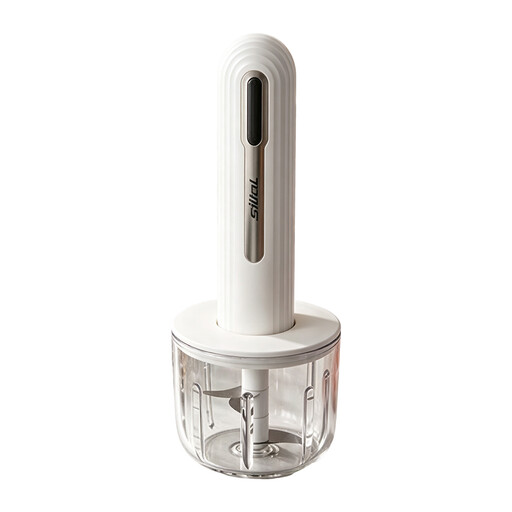 No image available
The description presents this appliance as suitable for small portions and vegetables; check whether the instructions say it can be used to chop onions.
It’s cordless and has a transparent bowl. The description recommends short bursts; take care when cleaning the sharp blades and use a brush.
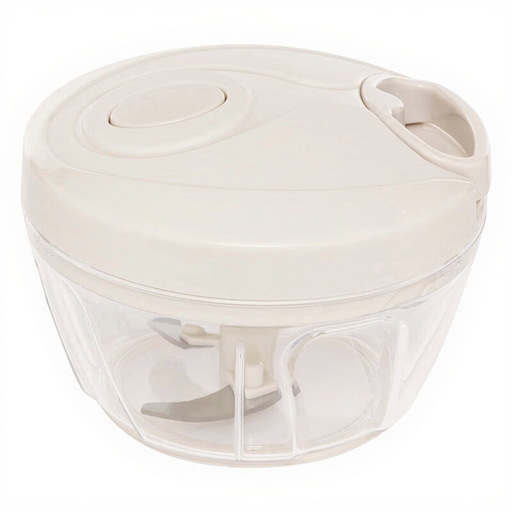 No image available
A manual option if you want to chop onions without using a socket.
It works by repeatedly pulling a cord; the pull mechanism requires manual effort.
 No image available
The product description recommends speed I for onions and lists a 0,6-l bowl for smaller quantities.
It comes with two glass bowls, measuring 2 l and 0,6 l, and two speed settings; the stated power is 300 W. According to the description, the bowls and lids aren’t heat-resistant or suitable for microwave use.
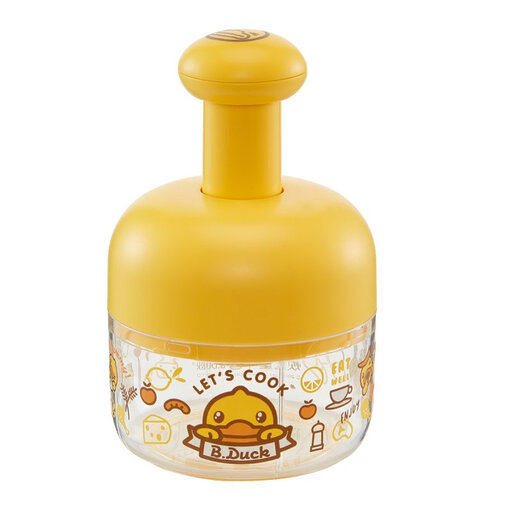 No image available
A manual option for chopping onions if you want to work without electricity.
The title specifies a 220 ml bowl. It chops ingredients by repeatedly pulling a cord.
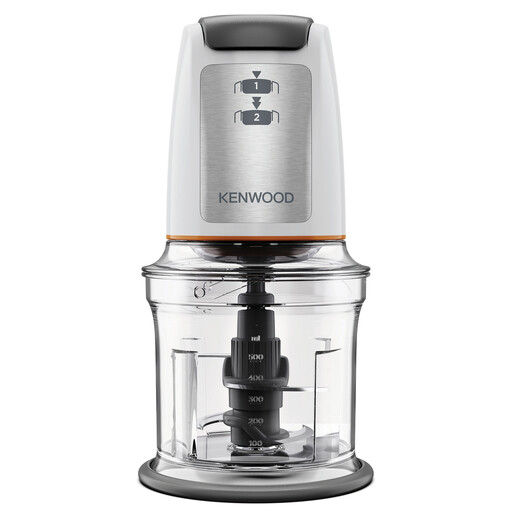 No image available
The description recommends the 0,5-l bowl for small to medium portions; check the instructions against the amount of onion you usually chop.
The product title lists two speed settings, a 0,5-l bowl and 500 W.
Not necessarily. For the K13304, Tefal says the bowl and blade can go in the dishwasher, but the lid should be wiped clean. GEFU also excludes the SPEEDWING’s pull-cord lid; always follow the instructions for your specific model.
No. Tefal lists a 500 ml bowl for the K13304 and Rommelsbacher lists a 1,5 l bowl for the MZ 500. These manufacturer figures describe bowl capacity, not a tested minimum quantity or the result when chopping a single onion.
The Verbraucherzentrale says that online purchases generally come with a 14-day right to cancel. For faulty goods, your statutory consumer rights are separate from any voluntary manufacturer’s warranty; check the conditions and the specific seller.
EU rules on materials that come into contact with food also cover food processing appliances and the parts that touch food. For electrical products that require a mark, the manufacturer uses the CE marking to declare that the product complies with the rules; it doesn’t automatically mean the product has undergone an independent quality check. Check the markings and safety information for the specific appliance.